
10 Common Household Tasks Most People Think Their Partner Does Wrong, Even If They'll Never Admit It
 Drazen Zigic | Shutterstock
 There’s really nothing as frustrating as feeling grateful that your partner took on a household task you didn’t want to deal with, only to realize that you have to redo it afterward.
For most chores, the only way to do it wrong is to miss the purpose completely. Everyone has different ways to reach that end result, though, which can lead to quiet resentment building up over time. These are some of the worst-case scenarios.
Most people disagree with the way their partner does these household tasks
1. Folding the laundry
 Yuganov Konstantin via Canva
Folding and putting away laundry is so annoying that even the executives of companies that make washing machines have complained about how they wish there was a better way to do it.
On top of how tedious folding laundry is, it’s made worse by partners who disagree about the best way to do it. Everyone has a different idea of how to properly fold clothes, meaning that it’s not uncommon for someone to cringe when they open a drawer after their partner put the clothes away.
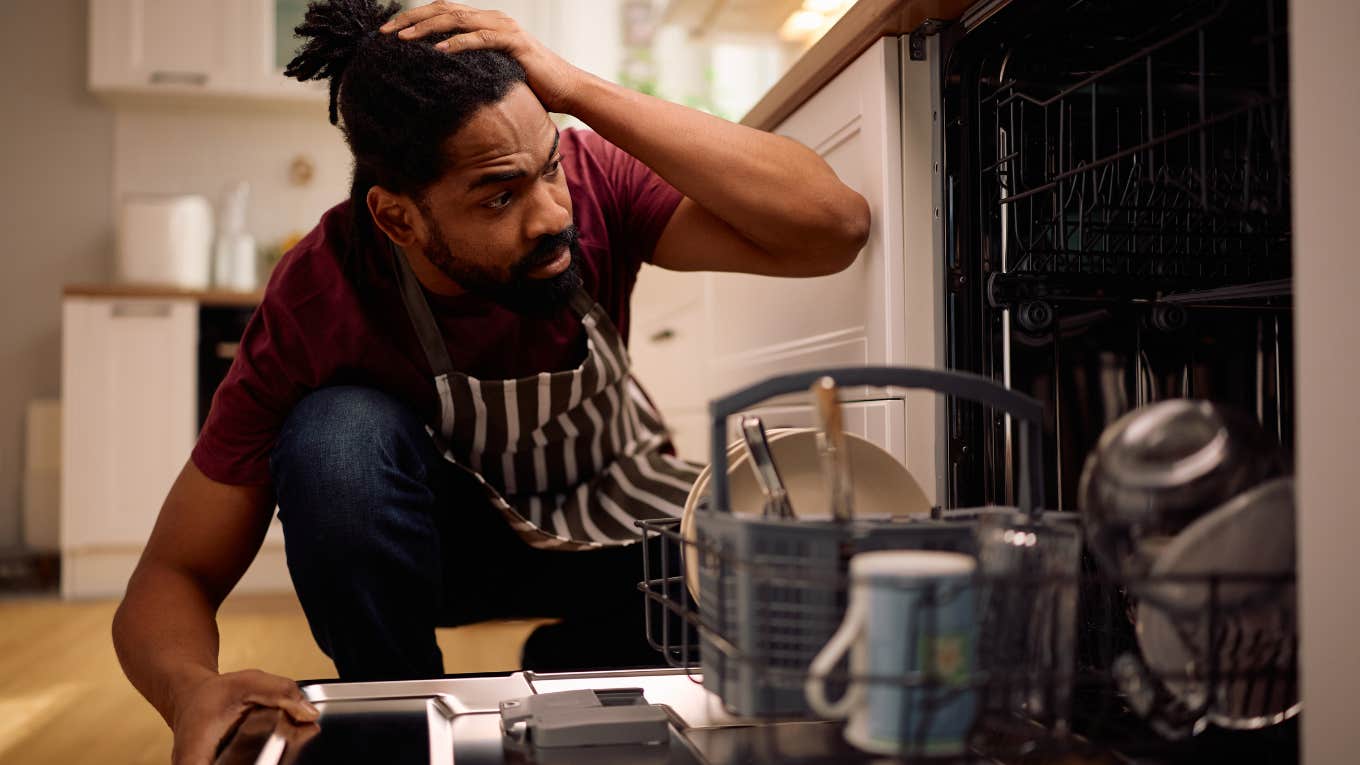
2. Loading the dishwasher
People might get into more debates over how to load a dishwasher than any other chore. It’s one of those things where everyone is convinced their way is the right way, and they aren’t willing to find some middle ground.
Psychologist Julie Gottman said that this regularly comes up in her couples therapy sessions, which she blames on it being such “a mundane task.” It’s honestly not a big deal as long as the dishes are actually clean, but that doesn’t stop couples from letting it become a sticking point in their relationship.
3. Replacing the toilet paper roll
Toilet paper seems to be particularly problematic for couples. It all starts with whether or not someone even replaces the roll when it runs out. But what might be an even bigger issue is if they hang the new roll over or under.
This sounds pretty unimportant, but there’s a reason everyone gets so heated over it. Psychiatrist Charles Sweet, MD, MPH, explained, “When someone changes the roll to the ‘wrong’ way, it can feel like a tiny violation of personal values or space. These little domestic rituals can surprisingly become battlegrounds for bigger, unspoken tensions.”
This matter of personal preference easily gets blown out of proportion when partners take their frustrations over something more serious out on the direction the toilet paper roll faces.
4. Washing clothes
It would be great if the only part of doing the laundry that puts partners at odds was folding it, but there’s a good chance they won’t agree on how the clothes should be washed, too. From how often clothes should be washed to how they should be sorted before going in the washing machine, there’s plenty of room for differences.
For example, one partner might have their heart set on doing fewer loads of laundry for environmental reasons while the other is too worried about cleanliness to even consider that option. It’s not the end of the world, but it’s still a daily annoyance to deal with.
5. Putting the groceries away
 cream_ph from Getty Images Signature via Canva
The way people organize their food is surprisingly personal. Some people’s instinct when putting groceries away might be to just squeeze things in wherever there’s room, but others will insist on a more systematic approach that groups certain foods together or even puts what will expire first in front.
As long as all of the food is stored safely so that nothing goes bad, the details aren’t all that significant. But each partner will have their own way of doing things that they think is correct, and they’ll have to roll their eyes when they aren’t the one who’s taking charge.
6. Washing the dishes
Not everyone has the luxury of using a dishwasher, but there can still be conflict even when the dishes are washed by hand. This is a chore that requires a lot of different choices that seem inconsequential, like what cloth or sponge to use and what order to wash the dishes in.
These small things can feel like they’re under a microscope when two people are trying to work together. Doing the dishes can actually make someone feel better because it’s a repetitive task that invokes a state of mindfulness, but any potential benefits are lost when one partner is stewing over the other’s choices.
7. Cleaning the bathroom
People don’t all clean the bathroom in the same way, but that’s not really because they have different systems or habits. This is more closely related to what someone’s individual standards for cleaning are.
Not everyone defines cleanliness the same way, which isn’t really an issue unless a couple has wildly different ideas of what it means. When one partner thinks the bathroom needs a weekly deep cleaning while the other is fine with just the basics, this can easily lead to conflict.
8. Organizing the fridge
Partners aren’t always on the same page with fridge organization even when they don’t have new groceries to put away. With videos of perfectly organized fridges going viral on social media, it’s easy for someone to overthink what’s going on in their own home.
The only specific recommendation experts have for organizing the fridge is based on temperature. For example, the doors stay the warmest, so they should be reserved for condiments. Beyond that, it’s up to the couple. But just because there isn’t a true wrong way to do it doesn’t mean they won’t feel that way.
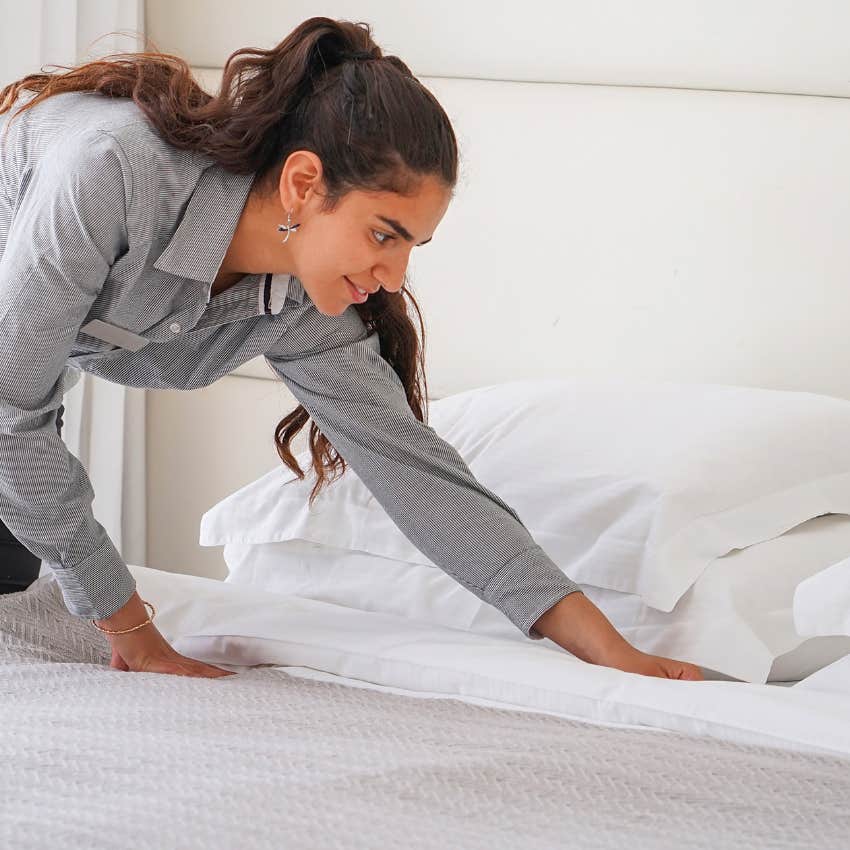
9. Making the bed
 Igor Vershinsky from Getty Images via Canva
Most of us have been encouraged to make the bed since we were kids, but people have still developed different opinions on it. Some say it should always be made for a mental health boost, while others have pointed to evidence that an unmade bed might make it harder for germs to grow.
Even if partners agree that they want to make their bed every morning, that might not be the end of the battle. If one expects bedding so neat that it could have been in a five-star hotel room but the other just pulls the spread up and calls it a day, there’s bound to be tension.
10. Putting things away
Whether it’s been with a partner or with a family member, everyone has argued about what needs to be put back in its place and what can be reasonably left out at some point. There are plenty of people who want everything as neat as possible 24/7, while other people don’t see a reason to not leave things they use every day sitting out.
Technically, clutter can increase someone’s stress levels, but it’s kind of hard to apply that to leaving a tube of toothpaste on the bathroom counter. When a couple isn’t dealing with a truly toxic amount of clutter, they might have to compromise to reach a resolution.
Mary-Faith Martinez is a writer with a bachelor’s degree in English and Journalism who covers news, psychology, lifestyle, and human interest topics.
