
11 Solid Reasons Some Parents Don't Really Like Their Grown Children
 ViDI Studio | Shutterstock
 Most parents do their best to build healthy relationships with their kids, but there are times when even the best parents love, but don't really like, their grown children. Usually, they have solid reasons for their irritation.
Not all adult children appreciate their parents' efforts to connect and may even initiate an estrangement, a phenomenon that is becoming more common with Gen Z grown children. This can create a domino effect where their once beautiful relationship is no more. This is when parents often decide to be the bigger person, so to speak, and weather the storm so they can build a bright future together.
Parents who don't really like their grown children usually have these 11 solid reasons
1. Their kids are entitled
 MDV Edwards | Shutterstock
Grown children who act entitled often inspire a sneaking feeling of dislike within their parents, even when their parents love them. This isn't easy, but having an entitled child can be unbearable, especially when what they act entitled to is their parents' money or resource, as if they're still young children.
An entitled adult doesn't express gratitude for what they have or what their parents have given them. They're simply looking to take more.
It's important for parents to not be too hard on themselves. They should realize that just because this person is their child, it doesn't mean parents owe their grown children anything other than love. As adults, they need to stand on their own two feet and learn that their entitlement has consequences.
2. Their kids try to manipulate almost everyone
 MDV Edwards | Shutterstock
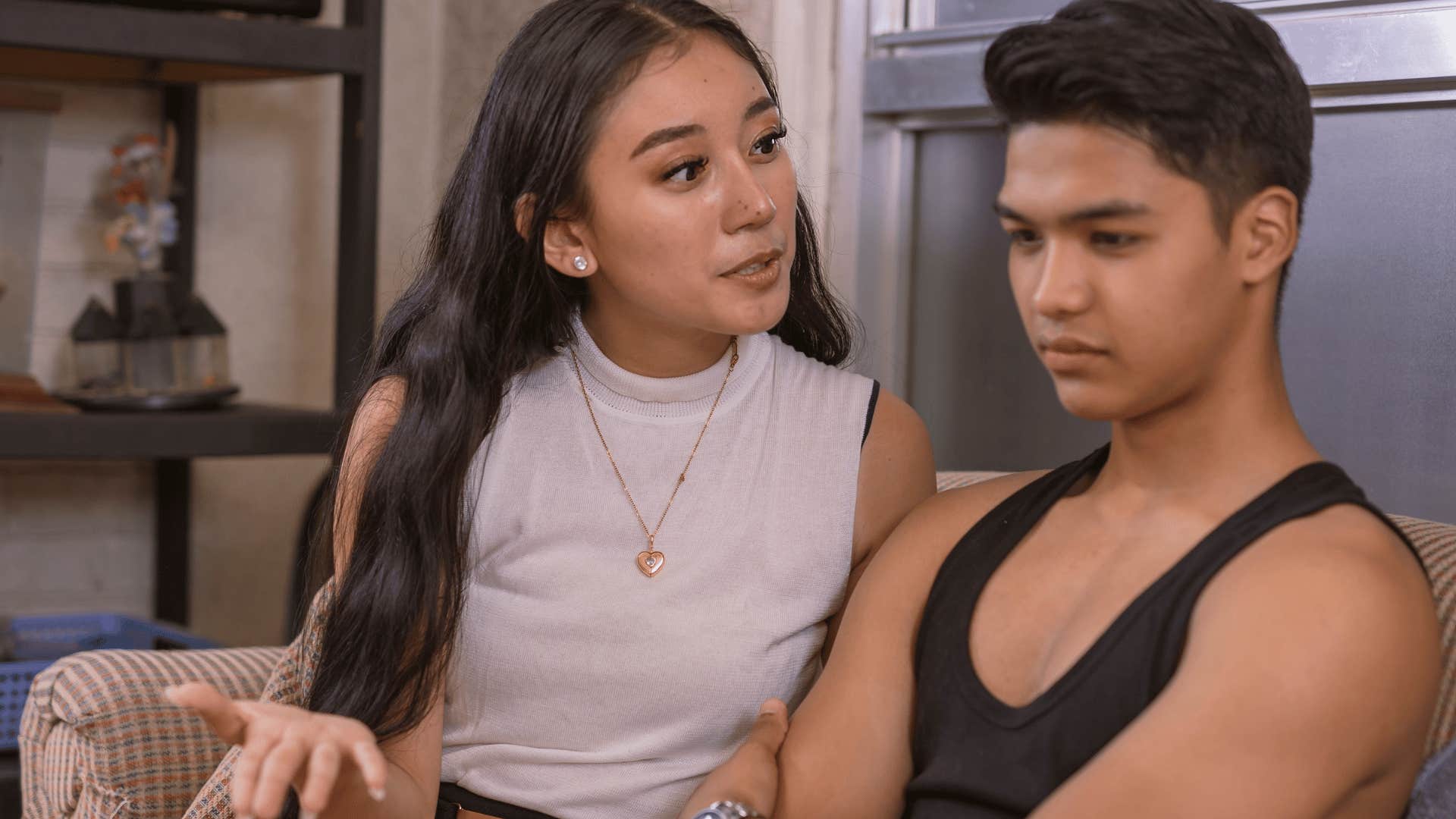
Grown children whose parents love them but don't always like them are often extremely manipulative. Sitting across from their parents, these adult children will use their tears or past experiences to get what they want out of a situation.
Parents might constantly hear, "Please, I just need a little help," from their adult children, but along with other requests, these favors usually end up with exhausted parents who feel used. It may also lead to parents asking themselves if all this effort is worth it, and how going along with these requests without consideration is harmful.
According to Jamie Cannon MS, LPC, "Manipulators are experts at understanding, and using, others' emotions to get what they want... It causes self-doubt and will drive you to question your own sense of reality." Cannon added that victims of emotional manipulation experience paranoia, difficulty trusting others, and an increase in anxiety.
All of this considered, parents should never feel bad for wanting to distance themselves from manipulative people, even if that manipulative person is their grown adult child.
3. They show almost zero respect
 AstroStar | Shutterstock
Parents who love but don't really like their grown children often deal with a lot of disrespect. It's not uncommon for parents and their adult kids to get into an argument and say things that are hurtful, but these particular adult kids take it too far.
A study published in the Journal of Experimental Social Psychology found that being disrespected had a greater impact on feelings of aggression than being disliked. This make sense, considering that disrespect often happens when someone holds contempt for another. According to the Gottman Institute, contempt is one of the Four Horsemen, which are predictors of divorce. However, they can certainly be applied to familial relationships, too.
While you don't want your grown children to become estranged, it's important to set boundaries with them and enforce them in healthy ways. Establish baseline respectful behaviors, and show that respect to them, too.
4. They're thoughtless and reckless
 Aloha Hawaii | Shutterstock
Adult children who make reckless decisions cause their parents to distance themselves or feel like they can no longer have their kids in their life. No parent wants to see their child harmed or going down a dark path, but parents can only do so much before their efforts become pointless. Worse, they can even become enablers of self-destructive behavior.
If parents have tried counseling, group therapy, open conversations, planning activities or sharing feelings and it's still not enough, it might be high time to let things go. If not, parents risk putting their mental health in jeopardy.
According to NAMI California, "Untreated mental health conditions can result in unnecessary disability, unemployment, substance abuse, homelessness, inappropriate incarceration, suicide, and poor quality of life. The impact on society as a whole is also staggering, with the economic cost of untreated mental illness is more than 100 billion dollars each year in the United States."
Parents of adult children who act recklessly without any remorse should prioritize their well-being first. Otherwise, it can ruin their lives and cause an even bigger rift.
5. Their kids try to scapegoat them
 NTshutterth | Shutterstock
Parents who often feel like they don't really like their grown children often reach the end of their rope when their children try to scapegoat them or blame them for every problem they encounter.
Adult children need to understand that not everything is their parents' fault; for instance, their parents didn't cause them to break up with their partner or to avoid taking a job opportunity. Sometimes, the reason why their life didn't turn out the way they wanted to falls on their own shoulders.
What many scapegoating grown children don't understand is how empowering it is to take responsibility. Not only does it help ease the burden on their aging parents, but it can help an adult child who feels like a victim reclaim their power.
Parents of adult children who are "blamers" or "scapegoaters" shouldn't be hard on themselves. They can't force their kids to see reason. And sometimes, parents must make the difficult decision of distancing themselves from their children if they want to keep their mental health in check.
6. They don't appreciate what their parents do for them
 Evgeny Atamanenko | Shutterstock
Another reason parents love but don't really like their grown children is their tendency to show zero appreciation for their parents' sacrifices. They don't care about all the things their parents provided for them, or how their parents had to work extremely hard to give them the opportunities they, themselves, may not have been afforded.
If these adults lived a privileged life for far too long, it can be hard to make them see reason, leading to parents cutting ties altogether. The truth is, no matter how hard these parents worked, their adult kids often don't appreciate what they have until it's far too late.
Though difficult, parents shouldn't regret their decision to set boundaries or eventually distance themselves. Feeling unappreciated can lead to feelings of confusion, frustration, and overall heartache. All of this can negatively impact a person's mental health. And for parents, their happiness and peace should come first, even if it means cutting off the people they love.
7. They are overreactive to criticism
 fizkes | Shutterstock
People who overreact to criticism can damage almost any relationship, including with their parents. Overreacting causes tension and resentment to build up over time. They may scream at their parents, telling them they are being rude, without trying to understand their parents' intentions. This can cause parents to love but not really like these grown children.
Even if their parents want to discuss their emotions and find healthy ways to move forward, an dult child like this will not give in, and could potentially lead to estrangement. Unfortunately for parents who choose to keep their children in their lives, research published by the International Journal of Environmental Research and Public Health found that dealing with aggressive people is bad for a person's health. When looking at romantic relationships specifically, researchers determined that things like raised voices are detrimental.
But these results don't just apply to romantic relationships; they can also apply to parent-child relationships, giving parents another reason to not feel less connected with these grown children, and maybe even like they don't like them very much.
8. They're inconsiderate
 fizkes | Shutterstock
One of the most glaring traits of adult children who often cause their parents to want to distance themselves is being inconsiderate. When parents make their boundaries crystal clear, it can feel like a punch in the gut when their children bulldoze those lines.
Parents set those boundaries for a reason, after all. Maybe they're struggling financially or their mental health has taken a turn for the worse. Regardless, not honoring boundaries can have major consequences.
According to the UC Davis Health, not having healthy boundaries leads to burnout. This is because boundaries are put in place to protect a person's mental and physical health. Unfortunately, it gives parents another valid reason to distance themselves from their adult kids, as they don't care about anyone but themselves.
Marielisa Reyes is a writer with a bachelor's in psychology who covers self-help, relationships, career, family, and astrology topics.
9. They bring off-putting people around their parents
 Krakenimages | Shutterstock
Parents who love their children will not stop loving their kids, but when those grown children start bringing weird, creepy, unkind or otherwise off-putting people around their parents, it's easy for parents to stop wanting them around. This happens in their grown kids' romantic relationships, but also with friends.
If parents have tried to communicate their discomfort and been dismissed by grown children, this dynamic can even become alienating. Sometimes, parents may worry these friends will be a bad influence on their grown children, other times parents may worry for themselves and their property.
Regardless of the "why," any time one adult tries to communicate discomfort or concern to an other adult and is dismissed or ignored, tension is inevitable. It's better for both parties to listen, reflect on what they hear, and try to find a middle ground.
10. Their kids are shallow or materialistic
 PeopleImages | Shutterstock
We already discussed what happens when grown children act entitled, especially when they act like their parents owe them money or financial support beyond what is reasonable for education or in a crisis. What makes that even worse is when their grown kids are shallow or materialistic, and what they want is excessive and all about appearances.
For example, parents who love but don't really like their grown children may have offered to buy their child a car when they graduate from college. That is a very generous gift, but an ungrateful and materialistic child may demand a luxury vehicle or something brand new rather than being grateful for whatever their parent can afford or decides is appropriate.
Materialism is normal in teens and young adults, but that doesn't mean we have to tolerate or encourage it. In a research experiment, a financial expert and a college professor studied what actually decreases materialism in kids and adolescents. Even if your grown kids are older, their advice can help.
They discovered a 6-step process, at the core of which is simply talking about money openly. Discussing the "why" and "how" of the ways you spend, save and invest seemed to help kids get a big-picture understanding and decrease their materialism. When they can see why you make the decisions you do, it can help them in their own spending, and in their relationship with your spending.
11. Their kids' values don't match their parents' any longer
 BearFotos | Sutterstock
It's relatively easy to like your children when they're little. After all, their life experiences, values and priorities are centered around you and your life together.
Parents who love but don't always like their grown children face a different challenge when their kids grow up and their values change. Whether it's political differences, spending or simple social habits, grown children are going to step outside of your sphere of influence, and that is normal.
In order to bring them closer, parenting expert and co-author of the book Talk To Your Boys, Joanna Schroeder, says to keep conversations open and non-judgmental. "As hard as it is when your values diverge, try to listen to your teen and adult children's opinions the way you would any other adult, and respond in kind."
Schroeder knows it's tempting to snap at them or flat-out tell them their opinions are wrong, but insists parents should try to refrain.
"Teens and young adults are trying on identities and testing out values systems. It's normal," she explained. "When you reject these things without thoughtful consideration, you become someone they can't come to with questions or when something goes wrong. That means they're less likely to listen to you or apologize, too."
