
People Raised By Strict Parents Still Use These 11 Phrases Today
 VH-studio / Shutterstock
 Children who grow up with strict parents aren’t only at risk for more mental health struggles in adulthood, but studies show that they also tend to exhibit more aggressive behaviors. So, even if the parents' intentions aren’t malicious and are meant to protect or safeguard their kids from harm, their kids are often worse off later in life because they missed out on chances to practice emotional regulation and independence.
Even in passing conversations, people raised by strict parents still use certain phrases today that reflect their harsh upbringing. Because of the way they frame things, their well-being and relationships may suffer at the hands of their childhood trauma.
People raised by strict parents still use these 11 phrases today
1. ‘I don’t want to be a burden’
 pixelshot via Canva
According to a study published in the Developmental Cognitive Neuroscience journal, kids with strict parents who were faced with harsh, punitive parenting styles often develop more anxiety as they get older. Because of this struggle with walking on eggshells, they’re more likely to worry about being a burden to the people in their lives, largely because they were made to feel like one as a child growing up.
Whether it’s asking for the bare minimum at work or expressing needs in a relationship, these adult children are far more likely to suppress themselves into smaller versions to make everyone else more comfortable, at their own expense.
2. ‘I don’t need help’
 Maridav via Canva
Hyper-independence is often a common byproduct of strict parenting styles early in life. Kids who felt helpless and powerless in their homes cling to avoidance and control later in life for a sense of security. Even if a certain level of independence and autonomy is empowering, overusing it to block out vulnerability, connection, and balanced relationships can lead to a spiral of unhappiness and isolation.
It’s essentially a trauma response, according to relationship expert Annie Tanasugarn, that often manifests in dismissive and avoidant behaviors. While it may offer a fleeting sense of comfort, security, and control, in the end, these adult kids only feel more resentful and alone.
3. ‘I’m probably overreacting’
 supapornjarpimai via Canva
Gaslighting from parents can negatively affect a child’s self-esteem, leading to an adulthood plagued by indecision, toxic relationships, and similar patterns of low self-worth. It’s also possible that a child will start to gaslight and invalidate themselves in similar ways to their authoritarian parents, dismissing their feelings and avoiding boundaries that urge them to stand up for themselves.
They don’t feel safe expressing their emotions without consequences, so they bottle them up and dismiss their own needs, seeking the fleeting security of people-pleasing relationships.
4. ‘I don’t have a choice’
 dimaberlinphotos via Canva
While many people with strict parents lean into hyper-independence for a sense of control, others go to the opposite end of the spectrum, seeking out controlling partners and maintaining a relatively passive relationship with their own life. They feel like someone else always needs to be in control for them to feel secure, whether that’s a boss at work or a controlling partner.
They’re used to being told what to do, following rules, and placing their self-worth in another person’s praise, so it’s not surprising that they’re more vulnerable to being taken advantage of and overworked as adults.
5. ‘I should’ve tried harder’
 Nathan Cowley via Canva
According to a study published in the Journal of Family Psychology, harsh, strict parents don’t just sabotage their kids' ability to practice emotional regulation, but they also ensure that they’ll grow up with low self-esteem and self-worth. So, when they make a mistake or struggle with adversity in adulthood, they’re far more likely to use phrases like “I should’ve tried harder” instead of giving themselves grace.
They miss out on all the social, emotional, and mental health benefits of self-forgiveness because they’re stuck in a cycle of shame, denial, and low self-esteem.
6. ‘I deserve it’
 Jordi Carne Sanchez from Getty Images via Canva
Experts agree that adult children often form blueprints of what relationships should look like based on their parents. From the way they were treated and offered love to the modeled relationships their parents exemplified, if someone tolerates misbehavior, struggles with boundaries, and never sticks up for themselves, chances are their parents set the groundwork.
So, if a child’s parents were overly strict, chances are they still use phrases like “I deserve it” in the face of controlling behaviors from a friend or partner today. They believe, whether subconsciously or not, that a relationship is founded on harshness, emotional disconnection, and control, because that’s what their parents taught and modeled to them from a young, impressionable age.
7. ‘Nobody understands me’
 Nicoleta Ionescu via Canva
Many kids are demonized and punished at home and in school for “acting out” in aggressive ways, but the truth is, these behaviors often stem from misleading and misguided parenting styles. Strict, authoritarian parents urge their kids to suppress their feelings and bottle everything up, so it’s not surprising that disproportionate reactions and aggressive behaviors become their only outlet for expressing them without support in other areas of their lives.
That’s part of the reason why people raised by strict parents still use phrases like “nobody understands me” today. They struggle with authenticity and vulnerability that craft feelings of understanding in relationships, and often feel chronically misunderstood by the world around them because of it.
8. ‘I need to do better’
 Africa Images via Canva
Instead of being graceful with themselves and setting goals that align with realistic standards, many adult children who grew up with strict parents constantly use phrases like “I can do better.” Their perfectionism, no matter how misguided it really is, is inherently tied to their self-worth as a result of their upbringing.
Their parents punished them for making mistakes, were emotionally cold and distant, and held them to expectations that they could never reach. Of course, they’re struggling with these beliefs now.
9. ‘That’s not what I said’
 Syda Productions via Canva
On top of mirroring the gaslighting behaviors of their parents in their own relationships as adults, many adult kids who grew up with strict parents act defiantly and defensively to feel in control.
They use phrases like “you just don’t understand” or “that’s not what I said” to protect their narrative and self-image, even if it comes at the expense of their relationship well-being.
10. ‘I’ll fix it’
 Karola G from Pexels via Canva
Considering many kids who grew up with strict parents were parentified from a young age, expected to fix everyone’s problems, meet unrealistic expectations, care for their siblings, and protect the peace at home, it’s no surprise that they become “fixers” in adulthood. Often at the expense of their own well-being, mental health, and needs, these adult children use phrases like “I’ll fix it,” even when they’re not in the wrong.
They inevitably become burnt-out caretakers, overworked employees, and victims of controlling relationships, all because they’ve been taught to intertwine their self-worth with their ability to care for everyone but themselves.
11. ‘I’m fine’
 Dragonimages via Canva
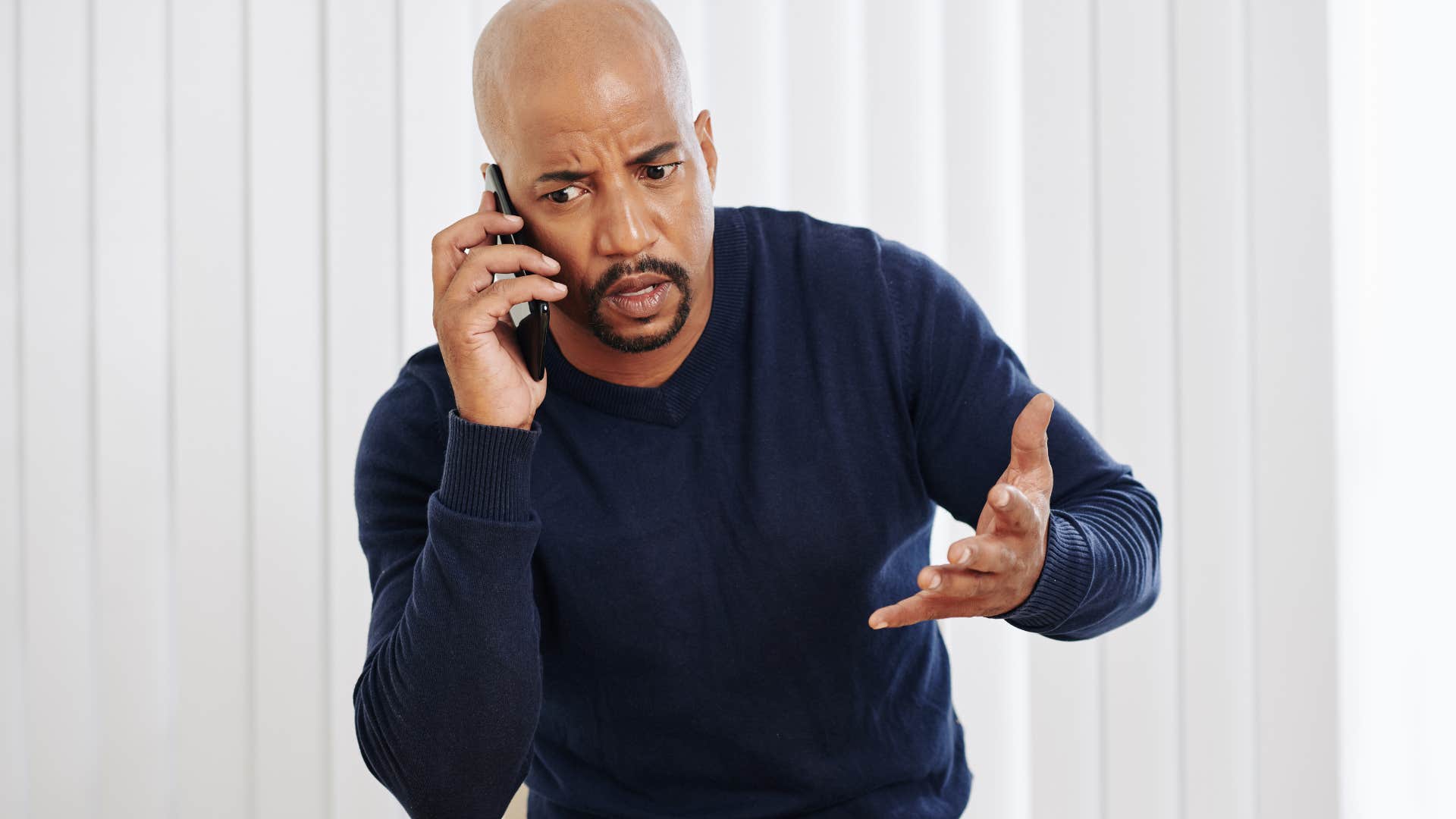
Kids with strict parents often learned to internalize their own issues and suppress their own feelings, even if it came at the expense of their own long-term mental health, self-esteem, and well-being, at least according to a study published in the Journal of Personality and Social Psychology.
That’s why they’re always saying things like “I’m fine” today. They don’t want to feel like a burden to the people around them, and they’re largely uncomfortable with feelings and expressing emotions because of a lack of practice anyway.
Zayda Slabbekoorn is a senior editorial strategist with a bachelor’s degree in social relations & policy and gender studies who focuses on psychology, relationships, self-help, and human interest stories.
