
People Raised In The 80s & 90s Were Allowed To Do 8 Things That Made Them Better Humans
 Anastasiya Aleksandrenko / Shutterstock
 Growing up in the 80s and 90s was special. I’m a 90s girl, and I look back on my childhood with joy. We had inflatable furniture and Walkmans, and my friends and I spent the day riding our bikes all over the neighborhood.
That was back before constant screen time and helicopter parenting, and I believe our simpler childhoods shaped us into unique adults. Today's parents may have the best of intentions, but many of the things kids were allowed to do in the 80s and 90s that kids today aren't actually made us into better humans than we probably would have been otherwise.
People who grew up in the 80s and 90s became better humans because they were allowed to do these things
1. Riding their bikes until the streetlights came on
 Rob Byron's images via Canva
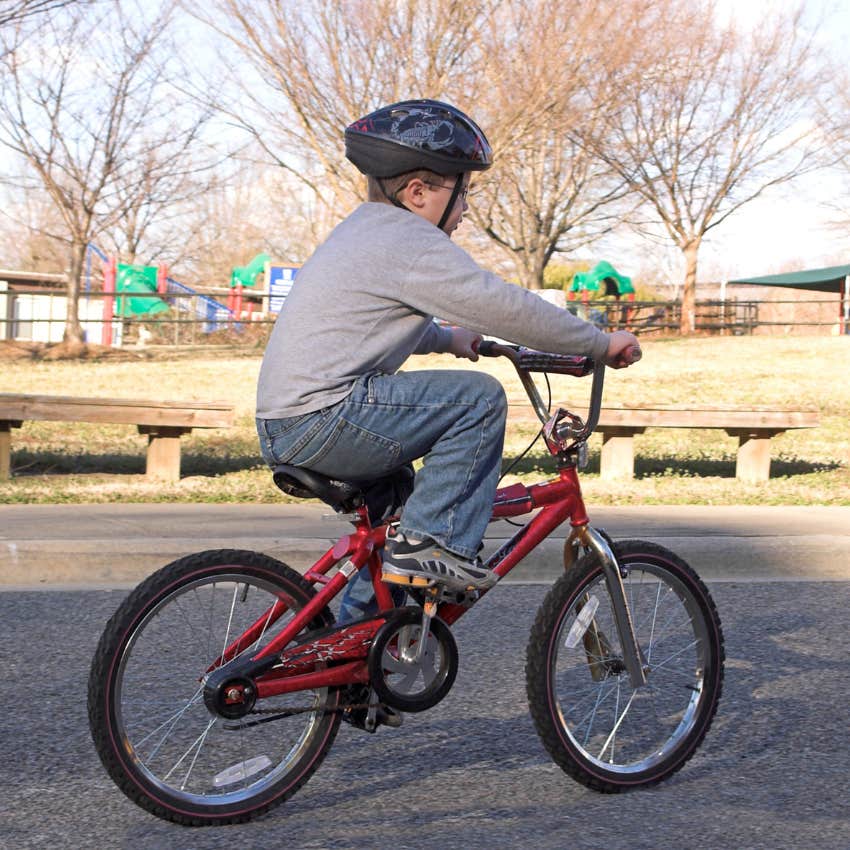
Nothing could beat the sweet feeling of freedom as the wind blew through your hair back in the 80s and 90s. Our parents trusted us to ride around outside without any real supervision. It was a different time, and people were more trusting, but I can still remember running outside when I fell off and scraped my knee, begging for a band-aid and comfort from my parents. Of course, I wouldn’t start crying until I got away from my friends, duh. We had reputations to maintain.
We may not have realized it then, but cycling has a positive impact on our mental health. There was a reason why the time we spent riding around outside felt so good. We were getting boosts of serotonin that iPad kids are missing out on.
2. Solving problems on their own while their parents were at work
During this period, both parents often worked outside of the home. In 1975, only 41% of mothers were employed full-time. It jumped to 65% in 1993. This meant we were home alone after school until our parents got home. This left us navigating our problems on our own. Usually, these problems were rather mild. We would have to figure out how to do a specific math problem or why the TV wasn’t working. Regardless, it gave us the ability to problem-solve.
Problem-solving skills aren’t easy to acquire when your parents do everything for you as children. Learned helplessness comes from expecting others to pick up the pieces because you’re incapable of doing it yourself. 80s and 90s kids didn’t have a choice; they had to figure it out for themselves.
3. Exploring the world without parental supervision
I have to share a bizarre activity my friends and I did in our neighborhood. We were allowed to play outside without supervision, as long as we stayed close by. We had a large tree in the front yard of my childhood home. We used to pick the leaves off and throw them in the gutter. Why? Because we had pet snakes, and we were feeding them... foliage? Kids do incredibly silly things, and we were free to roam and act strangely.
We had limited independence, but it made us feel free. It allowed me and other kids my age to gain confidence and, in my case, create some very odd games with their friends.
4. Being expected to help around the house
 DGLImages via Canva
For most kids who grew up during this period, cleaning up after themselves was a non-negotiable. In fact, we also had to do chores for the rest of the household. There was no getting off easily. Expectations were high, and when we didn’t follow through, our privileges like watching TV and playing outside were taken away.
Now, parents might shoo their kids away from the kitchen and the laundry room while they’re doing household chores. Whether it’s because they don’t want to be bothered explaining a task or think their children should have fun instead, this leaves a lasting impact. They may not have the life skills older generations have from being forced to take on chores.
5. Taking responsibility for their mistakes
Our parents made us take accountability for our mistakes. We had to prove we wouldn’t do it again and take action to make it better. It seems like today’s kids struggle with accountability. I’ve seen kids make a mess in public or cause a scene without being reprimanded. Of course, we don’t know if they were punished after they left, but I know 80s and 90s kids wouldn’t try these stunts because they knew their parents wouldn’t stand for it.
It’s hard to admit when we’re wrong. It can be especially difficult when someone is coddled for most of their lives. Parents who encourage bad behavior may be setting their children up for failure.
6. Sitting with boredom
I need my fellow 90s kids to back me up on this. When we were in school, we all had those plastic pencil cases. In the center was a carved rectangle. When we were bored, we would color it with markers, put glue in that space, let it harden, and pick it off. Why? I couldn’t tell you. We had to do something to entertain ourselves.
Kids who grew up with iPads struggle with boredom. They’ve been overstimulated for most of their lives. However, being bored is good for kids. It helps them manage time and work through moments of uncertainty. Those of us who had to be creative might have an advantage over the younger crowd.
7. Experiencing real consequences
Being grounded was a true horror story. When you weren’t allowed to play outside with your friends because you did something wrong, it felt like the end of the world. I remember looking out the window like a sullen woman waiting for her husband to return from war. My parents didn’t play when it came to consequences, and I think it has made me a better person. I know my behavior can lead me down a path I’d prefer not to take, so I am mindful of every decision I make.
Without consequences comes a sense of entitlement. Someone may feel the world revolves around them because, growing up, it did. They could get away with whatever they wanted, and often feel the real world operates that way too. That’s far from the truth.
8. Calling friends and family members on the phone
 EvgenilAnd from Getty Images via Canva
You may be wondering how talking on the phone made those who grew up in the 80s and 90s better people. The younger generation is struggling with phone calls. Many have a genuine fear of picking up the phone, especially when they don’t know who is calling. It’s gotten so bad that they are taking courses to help them face their fear.
Not to be that person, but back in my day, we would answer the landline like it was a prize to be won. I remember specifically asking my parents to let me pick up the phone when they were standing right by it. Sure, as a Millennial, I prefer texting over phone calls, but I am more than capable of making them. Cell phones and caller ID have changed how the current generation views phones.
Haley Van Horn is a freelance writer with a master’s degree in Humanities living in Los Angeles. Her focus includes entertainment and lifestyle stories.
