
6 Everyday Things 70s And 80s Kids Were Expected To Learn All On Their Own
 Lyudmila2509 | Shutterstock
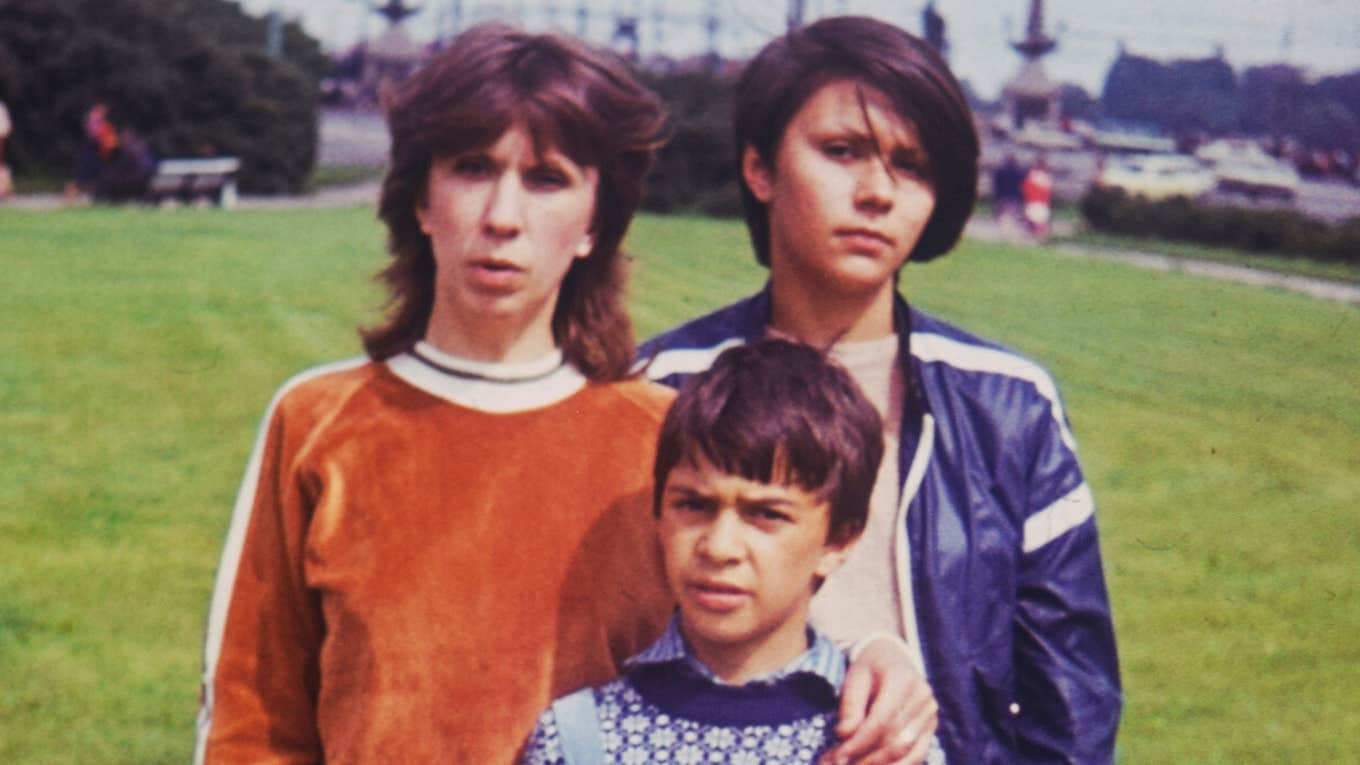
 At a recent salon appointment, my stylist commented that she would never want to go back and relive her high school years. That's a shame, because high school rocked — at least for the Class of '82 at my alma mater, anyway. Of course, even way back in the late 1970s and early '80s, we still had to deal with teen angst and drama, pimples and braces, homework and the high-stakes SATs. That stuff apparently never goes out of style.
But when I reflect on my teen years, I've got nothing but I-finally-got-my-braces-off smiles. The passage of time and my patchy memory seem to have blotted out the most mortifying moments, the heartbreak of unrequited crushes, and the majority of my fashion faux pas. Instead, I remember the things I learned and the bittersweet fashions in which I learned them. Without the technology we have today, we children of the '70s and '80s had to learn to deal with challenges that present-day teenagers can't even imagine.
Here are 6 everyday things 70s and 80s kids were expected to learn all on their own:
1. Delayed gratification
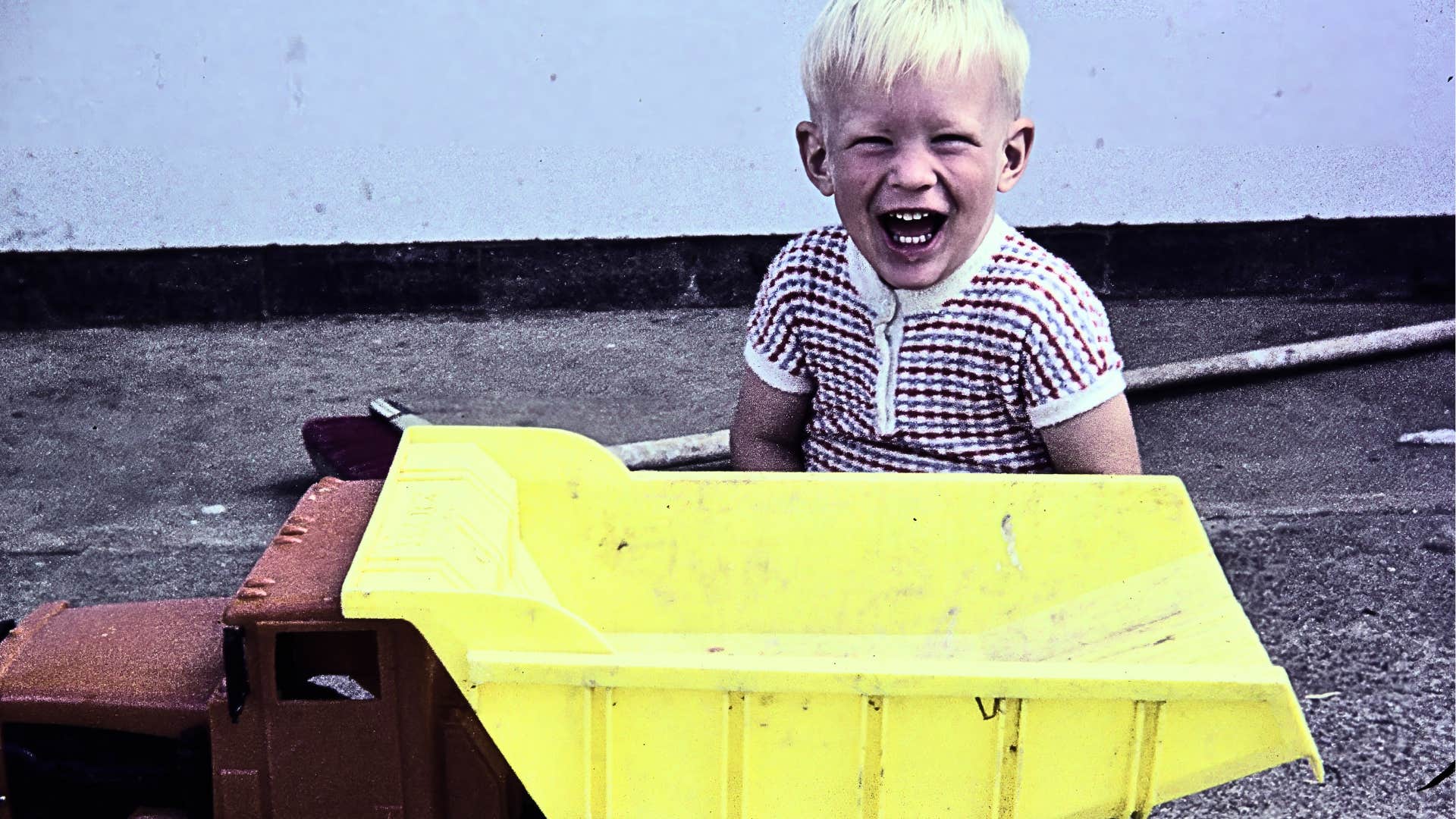
They were called Saturday morning cartoons for a reason — we had to wait until Saturday to watch them. We couldn't binge-watch Josie and the Pussycats on Netflix or pull up The Flintstones on YouTube. Even if we were watching reruns of Scooby-Doo or Tom and Jerry, they still only aired once a week.
So after waiting for seven long days each week, we'd fill our cereal bowl with Alpha-Bits or Corn Pops, grab a glass of freshly mixed Donald Duck frozen concentrate orange juice, set it all up on a TV tray, and zone out in a sugar coma for about three hours. The results were good since a study of Saturday morning cartoons showed children gain value from cartoons regardless of their educational content.
2. To get along, include others, and accept differences
 BJP7images via Shutterstock
I went to school with a boy named Mike who had a disability, cerebral palsy, but it didn't really matter. Mike was one of the most popular kids in school. Everybody loved Mike — the students, the teachers, the custodians, the lunch ladies.
Why? Not because we pitied Mike, but because we genuinely liked him. He was so funny and friendly, and such a flirt! We didn't need bullying seminars, diversity workshops, or character curriculum to help us "play nice together."
3. To live with limits and not feel entitled
We couldn't pick from hundreds of TV channels; we had just three major networks and PBS. We couldn't choose between crispy, peanut butter, mint, pretzel, coconut, or dark chocolate M&Ms; we had just plain and peanut. We couldn't choose from thousands of photo-realistic video games and complain when the downloadable content didn't download instantly; we satisfied ourselves with bare-bones Pong and watched the market slowly expand to include Space Invaders, Pac-Man, and Donkey Kong.
We couldn't appease our every dietary whim; we had one major category called "food" — not organic, diet, lite, low-fat, no-fat, gluten-free, trans-fat-free, preservative-free, food-free. So like the Pioneers before us, we learned to rough it. We ate Slim Jims, Pringles, and washed them all down with a can of Tab, and we survived.
4. To be resourceful
Remember when we had this thing called "study hall"? We were supposed to use this free period during the school day to actually study. Instead, we creative little geniuses took a simple piece of paper and transformed it into paper footballs for friendly desktop games (complete with finger goal posts).
Or, created fortune-telling origami to predict our wedding mate simply by choosing a number and a color. Or we collected gum wrappers and (again with origami-like craftiness) made an insanely long Juicy Fruit chain. Like MacGyver, we learned to make do with what we had. It was either that or study.
5. Good manners and communication skills
 jeffy11390 via Shutterstock
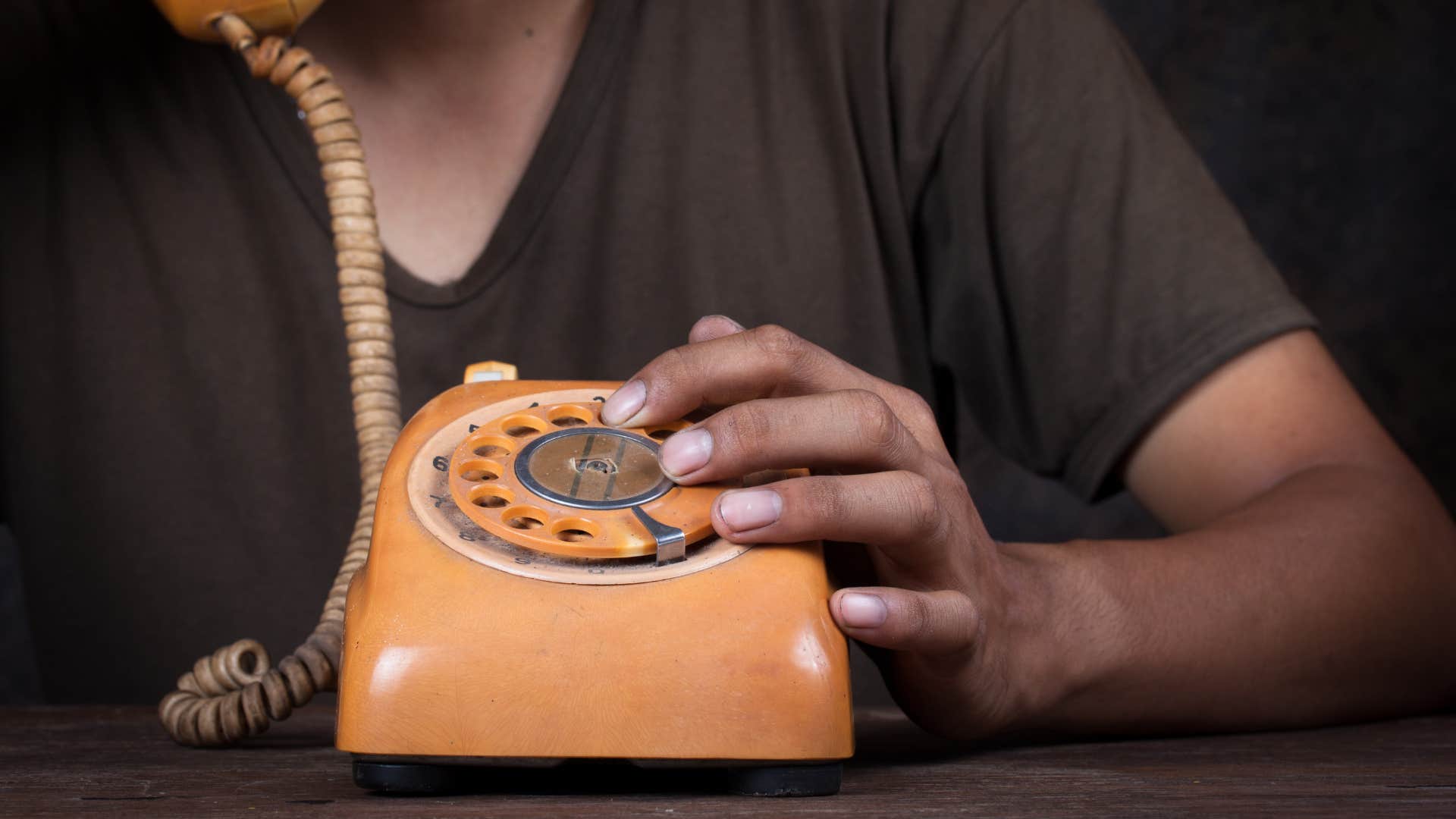
We called each other on real corded phones and talked for hours. We nervously chatted with parents when they answered the home phone that the entire family shared. We walked up to a friend's house and rang the doorbell instead of just texting from our car.
We knew the thrill of slipping an actual written note to a friend two seats in front of us without getting caught or the humiliation of having a teacher intercept the note (and read it out loud). One study stressed the importance of face-to-face communication for mental health. You just can't get this kind of experience sending texts. Where's the risky fun in that?
6. Explore the most epic entertainment of all time
From movies to TV shows to music, everything was classic, even at the time it was released. Thank you, John Hughes, for defining my high school and college years with your on-target Brat Pack films like Sixteen Candles, The Breakfast Club, and Ferris Bueller's Day Off. Thank you, '80s sitcoms, for giving us Three's Company, Family Ties, and Cheers.
Thank you, music industry, for filling my proms with Styx, Cheap Trick, Queen, Bon Jovi, Journey, Billy Joel, Michael Jackson, Prince, Pat Benatar, Blondie, and Stevie Nicks. Thank you, MTV, for actually showing original music videos instead of dumb game shows and even dumber reality shows. Thank you, God, for letting me grow up during Mr. Bill and the original cast of Saturday Night Live.
Lisa Beach has three decades of experience covering content marketing, journalism, copywriting, public relations, and business writing for a variety of clients, from Fortune 500 corporations and small businesses to associations and nonprofits. She now primarily focuses on consumer and B2B writing about travel/food/lifestyle/wellness.
