
'But You Had A Good Childhood' — How To Think Differently About The Emotional Distance Between Parents And Their Adult Children
 aral tasher | Unsplash
 Your child telling you about everything that went wrong in their childhood is strangely a positive sign.
But you had a good childhood. This is what so many parents say in my office when adult children tell them how unhappy they were growing up.
You may have said or thought this yourself if you’re currently estranged from (or in a very difficult or low-contact relationship with) your adult child. The truth is, your child telling you about everything that went wrong in their childhood is strangely a positive sign.
It means that your child is trying to communicate their sadness and anger to you, which they would not try to do unless they still considered you an important person in their life. You are so important, in fact, that they deeply yearn for your empathy and validation of their perspective.
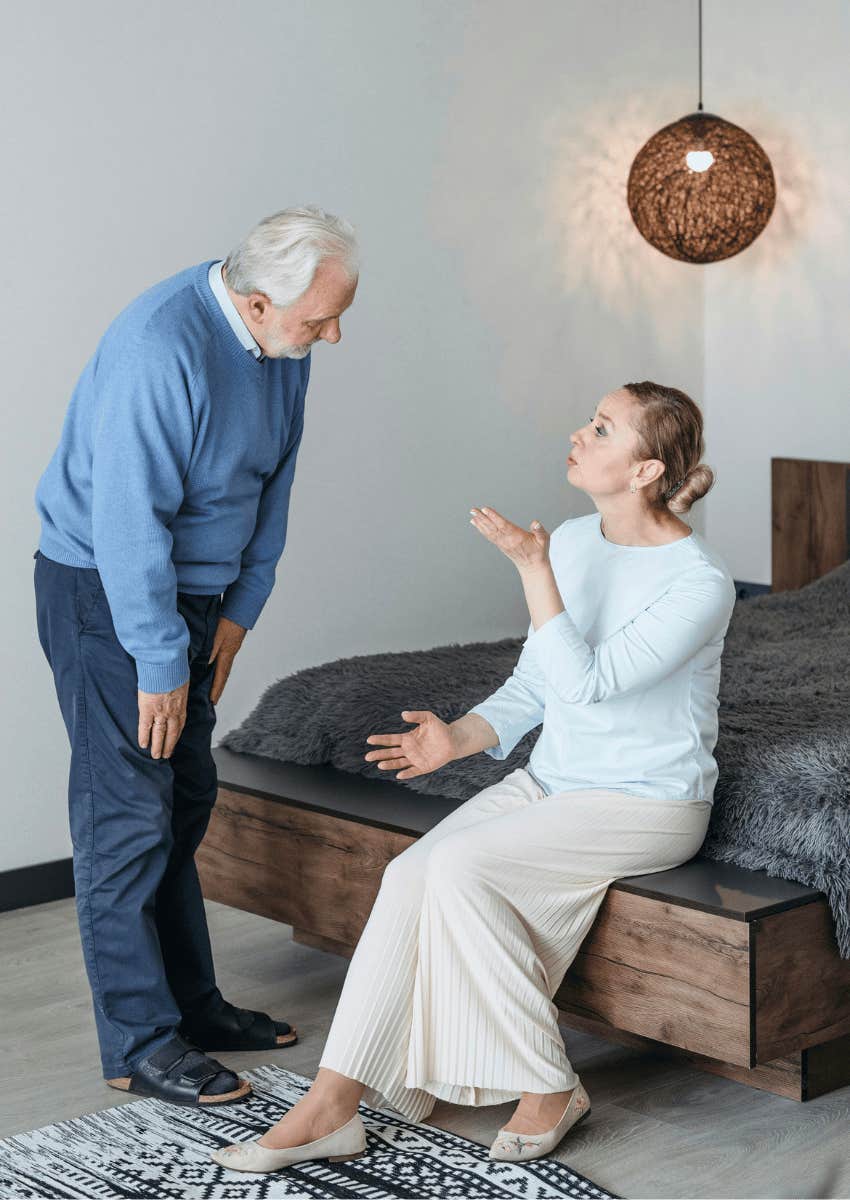
It is when you can’t listen to their perspective about their childhood, and counter their reality with your own, marshaling evidence about their “good childhood,” that your relationship really implodes. If you’re in this situation, the change that is most likely to help your relationship with your adult child is to develop a new and more objective perspective on childhood: both yours and your adult child’s.
 Pavel Danilyuk / Pexels
The best way that I know how to do that is going to therapy that focuses on your own family of origin and how your own upbringing led to blind spots in your relationship and interactions with your child.
This is a difficult process, and requires commitment to the hard work of owning your contribution to the estrangement, doing deep introspective work about your own background and how it shaped your perspective and behavior, learning alternate ways to think about the parent-child relationship that are more useful and healthy, empathizing deeply with your child even if their perspective is painful, and acquiring concrete strategies to communicate differently, both in an initial reach out and in your future relationship.
This work is hard, but there is nothing more fulfilling than digging deep to understand yourself in the service of improving relationships with those you love most. If your adult child sends you this article, it is a tremendously positive sign: they are invested in the relationship and are hoping that you are as well, and they see you as someone who may be open-minded enough to change how you interact in the service of a closer and more genuine parent-child relationship.
Keep in mind that no childhood is 100% good or 100% bad. The more you focus on how good your child’s upbringing was, the more they feel pulled to convince you about the bad parts. This is what we call “polarization,” and it means two people drawn into more extreme positions out of the desire to convince the other of their perspective.
In my office, I see polarization occur between parents and children and between spouses, as these are arguably the closest and most meaningful relationships in most people’s lives.
That’s why both people feel deeply hurt when the other seems to be unable to share their memories, feelings, and perspective. When you can finally deeply understand your child’s feelings about what went wrong in their childhood, the more they may start to recall some of the positives.
Or, even if they don’t, they will see that you are trying to process and respect their perspective instead of defending against it, for possibly the first time. This empathy and understanding can transform your relationship moving forward. Remember, you can preserve your own cherished memories of your child’s childhood.
Your child’s estrangement or behavior isn’t solely due to sociological changes or trends. While it is common to say that rates of estrangement are skyrocketing, this is not actually the case. Estrangement used to be a secret, sensitive topic, and was not studied or quantified.
Parents would say to kids, “My sister and I don’t talk,” or “We don’t like that side of the family,” and nothing else was said about it. But this has changed massively in recent years. Today, estrangement has become an open topic of conversation.
All over social media, which of course did not used to exist at all, people discuss going “low contact” or “no contact” with their parents, and saying how they can’t engage in relationships that are “toxic.” This means that your adult child now has a language to discuss estrangement with you and others openly, but they would likely have had issues with you in any generation.
The idea that estrangement is new is soothing, but false, and even if it were correct, it would not give you any insight into your own contribution to the issues or any practical tools to reconnect with your adult child.
When therapists validate parents blaming their kids’ estrangement on “trends,” this does them a massive disservice.
 Mikhail Nilov / Pexels
The reality that you will have to face is that estrangement is not random. “Toxic” may be a buzzword, but the idea behind the term is real and true: some relationships are very unhealthy, and your relationship with your adult child likely is or was one of them, even if this is difficult to admit.
Your communication was likely characterized by anger, passive aggression, guilt trips, power struggles, and disrespect, on both sides, instead of positivity and love. It can be an epiphany for many to recognize that estrangement happens most when parents and children are similar, whether or not this similarity is acknowledged by either one.
In addition to being a psychologist with a decade and a half of experience treating relationship issues of all kinds in private practice, I have also experienced periods of low and even no contact from my own parents. To this end, I bring youthe perspective of an adult child rather than only the experience of an estranged parent.
I have been open in my writing about growing up in a home that was characterized by marital conflict, anxiety, and other mental health issues, and a lot of my own personal work has focused on understanding the impact of my upbringing on my own relationships, including those with my children. And in fact, the reason I work with couples is the long-term trickle-down effect of those happier relationships on the next generation.
Estranged adult children often think that their parent only goes to therapists who comfort them and make them feel validated.
 cottonbro studio / Pexels
Others feel that their parents want to repair their relationship out of a combination of panic, shame, and image management, but have no interest in genuinely changing the way that they relate moving forward.
This conception of your intentions pushes your child further away, as they view you as a self-interested individual who wants to end the estrangement for your own sake, versus a loving parent who is invested in a healthy and respectful relationship in perpetuity.
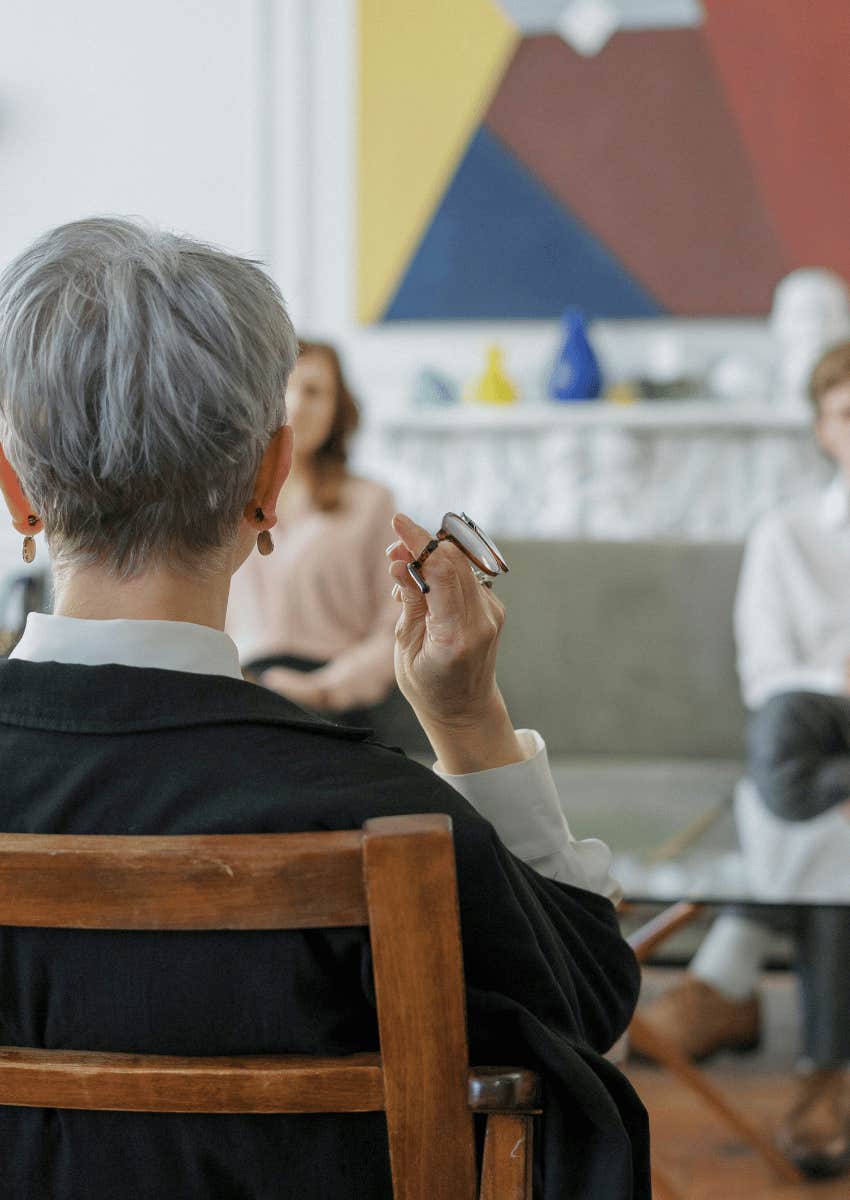
If you start therapy, be sure it is not with what I call a “ChatGPT” therapist who primarily tries to comfort you or validate your perspective. There are many therapists and support groups, in person and online, that can serve to support you emotionally through the deep pain and loss associated with estrangement. Instead, work with a therapist who strives to open up the possibility that perhaps you can change in new ways that you have been closed off to recognizing.
There are many at my practice, where I hire people who are direct like myself, and who understand the importance of their own family of origin experiences in understanding how they relate to their own child.
From my own personal and clinical work over the years, I can assure you that there is no human, therapist or otherwise, who cannot benefit from understanding their upbringing better. I deeply believe that understanding your own past is the most effective way to improve your relationships with your loved ones on a deep level. Therapy can profoundly change your self-concept and, by extension, your relationship with your adult child as well as everyone else in your life.
Dr. Samantha Rodman Whiten, aka Dr. Psych Mom, is a clinical psychologist in private practice and the founder of DrPsychMom. She works with adults and couples in her group practice, Best Life Behavioral Health.
