
Why Women's Revenge Fantasies Are Taking Over Pop Culture
 snob | Shutterstock
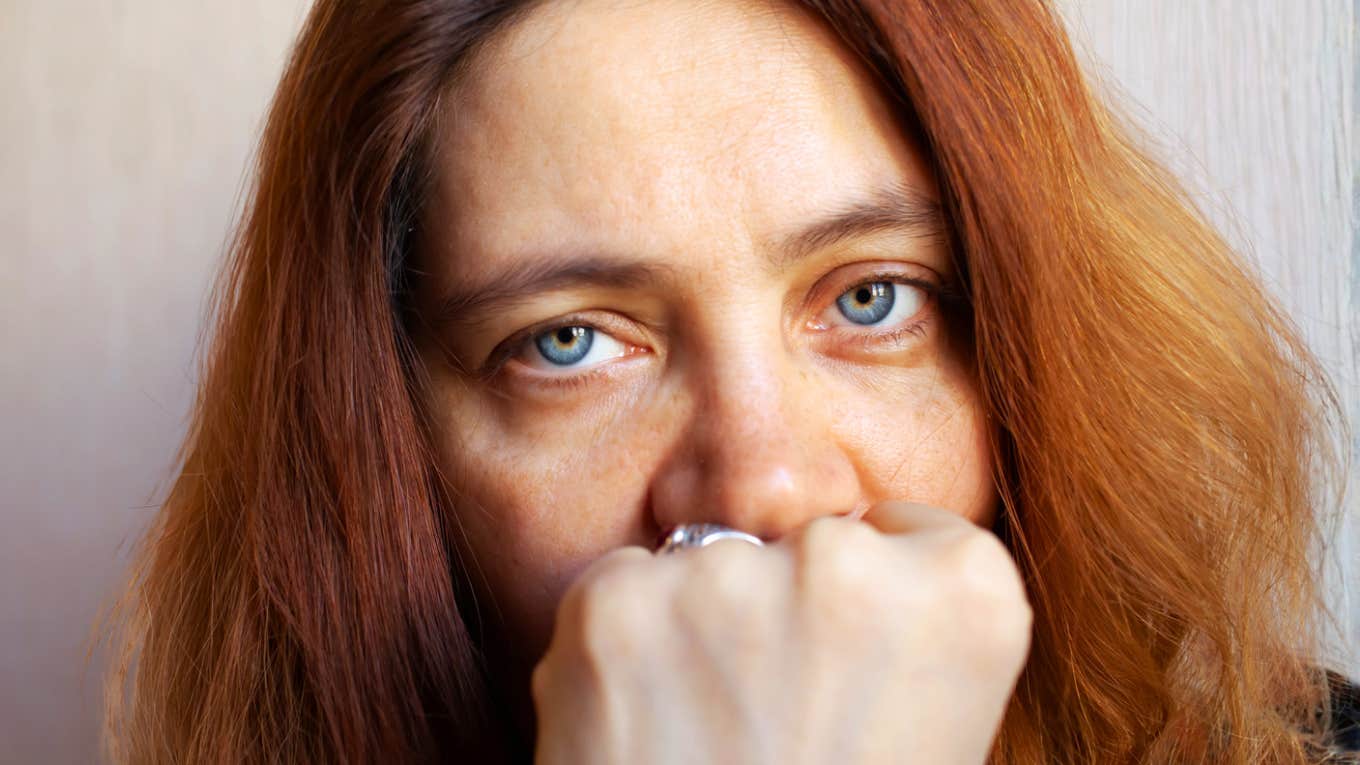
The most viral article I ever wrote was about the power of female rage. It discussed how anger is an emotion commonly reserved for men — but right now, women have a lot to be angry about, and when we let that rage rip, our predators suddenly feel like prey themselves.
The female rage subgenre is currently dominating movies, television shows, and books. I just finished Hulu’s new show Furious, about a woman who was trafficked as a teenager. Now, she’s going around murdering all the men who were involved. It was easily one of the best shows I’ve seen in years, and I’m not the only one who thinks so.
The show reached 6.2 million views in five weeks, and it currently has a score of 98% on Rotten Tomatoes. Other popular revenge fantasies include the movie Promising Young Woman (2020), about a woman who pretends to be blackout drunk in bars to see how many men take advantage of her. Send Help (2026) is about a talented strategist who’s teased and overlooked at work, but the power dynamic shifts when she’s stranded on a deserted island with her awful boss.
Art usually mirrors our innermost feelings and desires, and these revenge fantasies are any indication.
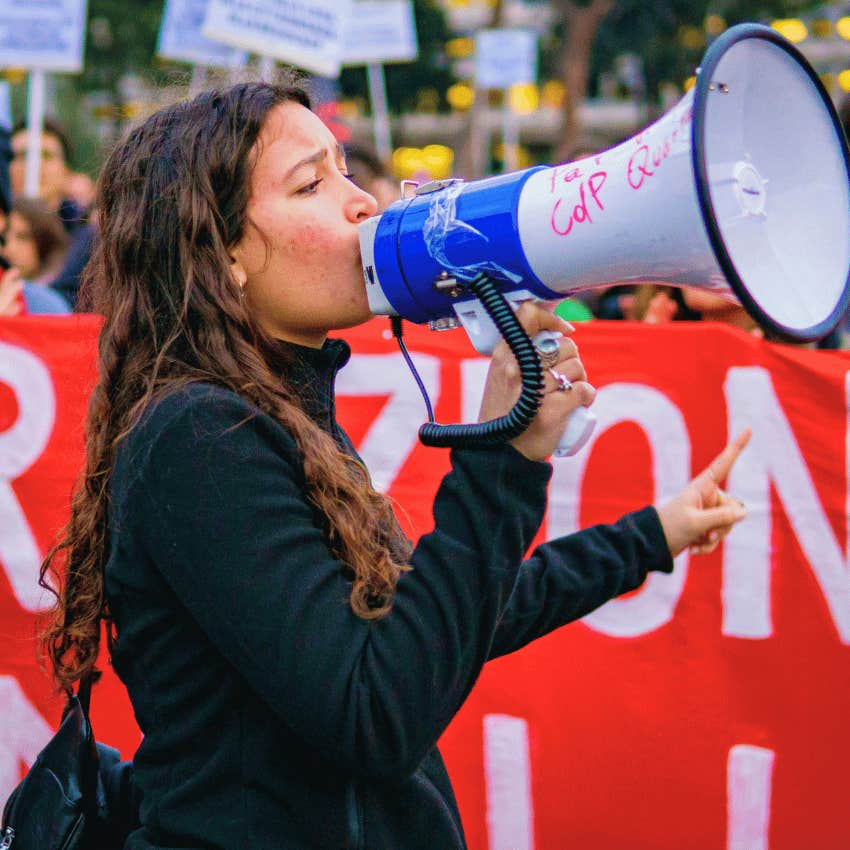
Women's revenge fantasies have taken over pop culture because many women desire justice
 Leonardo Basso | Unsplash
One in three women will experience physical violence in their lifetime. I’m one of them.
Before some dude accuses me of endorsing extrajudicial punishment: Do I plan on becoming a vigilante murderess in order to exact my revenge? No. On a moral level, I don’t even believe in the death penalty. But it feels good to imagine abusive, predatory men getting their comeuppance — for once.
In real life, research shows that men perpetrate up to 99% of all crimes.
An estimated 443,634 assaults occur each year. Out of every 1,000 reported assaults (most go unreported), only about 50 lead to an arrest. Less than 4% of reported assaults and child abuse allegations result in a crime conviction.
Men also commit up to 80% of violent crimes, and less than 2% of domestic abusers see any jail time.
“Women are writing revenge fantasies because we do not get — and have never gotten — justice in the real world,” said New York Times bestselling author Kirsten Miller. “The news is filled with men who’ve committed heinous acts against women and have gotten little more than a slap on the wrist. To be perfectly honest, I’m surprised women have kept their fury confined to the page.”
This week, I read Kirsten Miller’s novel The Change
And the second I finished it, I reached out to her for an interview. The book came out in 2022, so I was a little late to the party, but the story is just as relevant (if not more so) as it was four years ago.
A Good Morning America Book Club pick, The Change follows three women who develop witchy powers as they enter menopause. Teen girls on the elite island of Mattauk are going missing, and the cops aren’t doing anything to stop it — so these women decide to take justice into their own hands.
I devoured this novel within days. I also couldn’t help but notice its parallels to the Epstein case.
Sure enough, in 2018, Miller read Julie K. Brown’s Epstein exposé in The Miami Herald, and it made her furious. “The fact that Epstein and Maxwell targeted vulnerable girls really got to me,” Miller said. “Every big shot in America seems to have known what was happening and no one did a thing to stop it.”
Eight years later, men still haven’t done a single thing.
When the American government finally released the files in January 2026, they exposed the names of the victims while redacting the names of the child rapists. According to an NPR investigation, the Justice Department withheld countless documents that involved the President of the United States, who was one of Epstein’s close personal friends.
Currently, the only person serving any jail time is a woman.
But while The Change borrows details from the Epstein case, the real inspiration was Julie K. Brown herself: “Here’s a woman who almost single-handedly brought a supervillain to justice,” Miller said. “She proved to me that it can be done. And if it’s going to be done, it will be done by women our age.”
By women our age, Miller means women in menopause
 Konstantin_Konovalov | Shutterstock
The same way our culture shames women for their rage, it shames women for their loss of youth. But Miller believes that we should embrace both: Anger and aging are both extremely potent sources of women’s power.
“In menopause, we’re more powerful than at any other stage of life,” Miller said. “All of the energy our bodies once focused on reproduction is now ours to make use of as we see fit.” Older women also “know how to get [things] done. We have knowledge, experience, and resources we didn’t have when we were younger.”
I was particularly fascinated to learn that Miller’s first 13 books were Young Adult. In 2006, she wrote her debut YA novel, Kiki Strike: Inside the Shadow City, for her 12-year-old self. Then, 16 years later, she switched genres and wrote The Change, her first adult novel.
This one, Miller wrote for her 48-year-old self: “I was absolutely enraged and terrified that my 12-year-old daughter was setting off into a world in which she could not expect safety, equality, or justice. The book was wish fulfillment (as someone told me, “everyone who needs to die dies”), but also a call to arms. I want to inspire women to start kicking behinds so we can leave a safer, better world for our daughters and nieces.”
So what, exactly, does channeling female rage look like?
If female rage is energy, as The Change suggests, what should real-life women do with it? After all, developing witchy powers and using them on the worst of the worst isn’t realistic for most of us (though plenty of Etsy witches are giving it their best shot).
“We need to recognize that we’re the most powerful generation of women in the history of the world and start putting that power to use,” Miller said.
In the 185 years since a woman first earned a bachelor’s degree, women now outpace men in secondary education. Since the Equal Credit Opportunity Act was passed 50 years ago, single women now own more houses than single men. Women in America now make up 50.1% of the workforce and 50.9% of the population — and without our participation, the economy would collapse overnight.
We are the majority now.
We are the journalists exposing the corruption. The researchers producing the evidence. The lawyers and judges upholding the law. The teachers shaping young minds, the healers caring for the vulnerable, and the voters choosing who governs us.
“We need to rally around other women,” Miller said. “Hire them. Defend them. Champion them. Always protect the young. Be brave and do what you know in your heart must be done.”
Most importantly, we need to focus our female power (our rage, our knowledge, our experiences, and the resources we fought tooth and nail to secure) toward something that matters: “Choose your cause — just one — and do everything in your power to move the world in the right direction.”
Maria Cassano is a writer, editor, and journalist whose work has appeared in HuffPost, NBC, Bustle, CNN, The Daily Beast, Food & Wine, and USA Today, among others.
