
The Sudden Urge To Get A Tattoo Is Usually A Sign Something Big Is Happening In Your Life
 antoniodiaz | Shutterstock
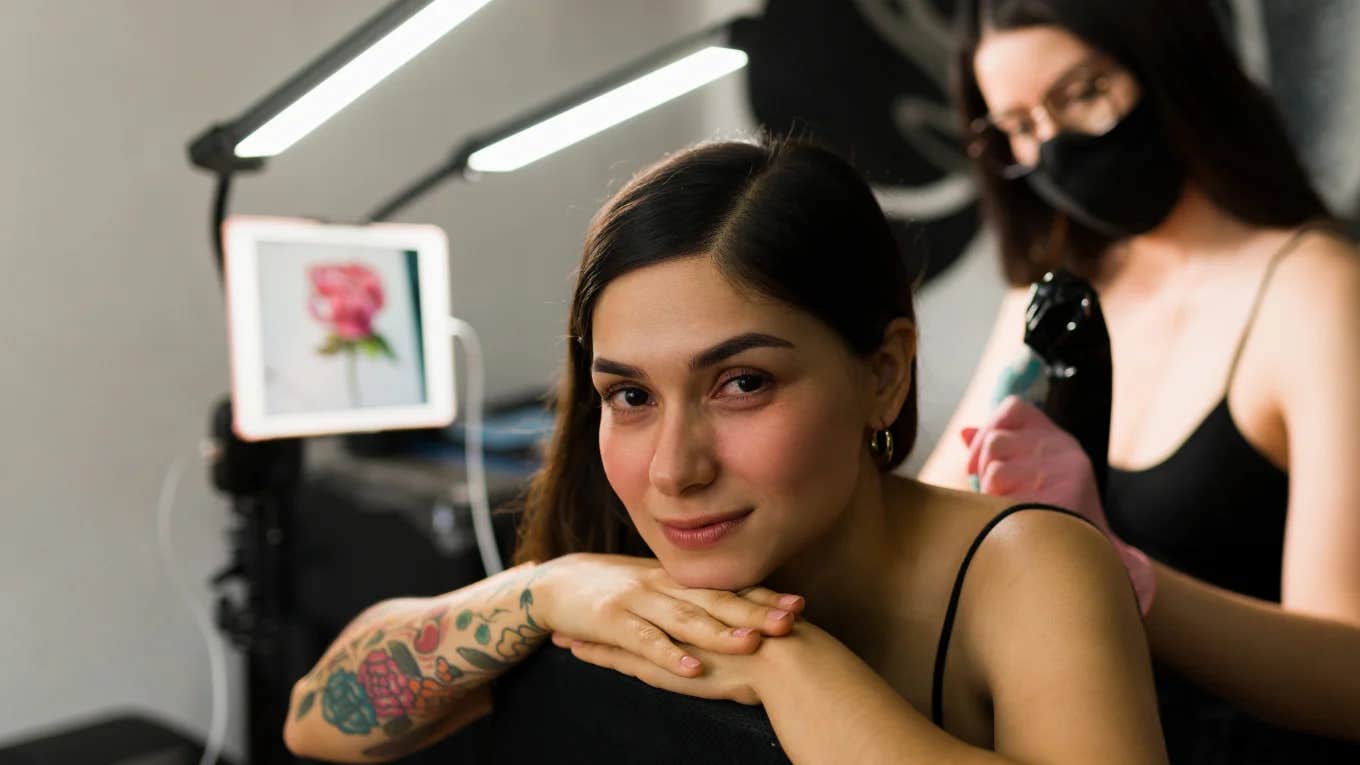
 Have you ever had the urge to get a new tattoo out of nowhere? It could be a sign that something major is about to happen in your life, and you definitely shouldn't ignore it.
When you get that sudden feeling to change something about your appearance, specifically some new ink, that sudden craving for a tattoo can signify an awakening. Something about you is changing, and your subconscious is doing everything it can to get you on board.
The sudden urge to get a tattoo is a sign that something big is happening in your life.
Manifestation and spiritual experts have pointed out that getting a tattoo is often a sign of an awakening happening in your life. If you're someone who's drawn to tattoos during big internal shifts like empowerment or shadow work, it's usually because the brain is trying to reorganize its identity. It's why, subconsciously, you want to help your brain solidify a new identity.
A tattoo also carries the energetic frequency of who you were when you got it. Old tattoos are like a time capsule of the loop you were inside of and what your body may have been trying to tell you at that time. It's why it's considered therapy for so many people.
Apart from being a way people can express themselves and have a chance of getting permanent art on their bodies, tattoos can also serve as a representation of new identities and phases of life.
The main reason people get tattoos is to express identity.
 FXQuadro | Shutterstock
A study led by psychologist Luzelle Naudé and her team sought to understand why college students chose to get or not get a tattoo. Most participants in the study (78%) did not have tattoos, but most of their friends (74%) did.
The study found that the primary motivation for those who got tattoos was their personal meaning (such as marking a significant experience or struggle). Some participants revealed that their tattoos were an extension or expression of who they were.
Social Graces Tattoo explained, "At their core, tattoos are about identity. For many, they are a way to express who they are, what they believe in, or what they've been through. Tattoos can act as a permanent reminder of significant life moments, such as the birth of a child, the loss of a loved one, or a personal achievement. They can also be used to reflect inner values, such as a love for nature, spirituality, or a passion for art. In this sense, tattoos serve as a visual representation of one's personal journey."
It stands to reason, then, that the urge to get a tattoo is also an urge to identify the self at that moment in time. That means it's usually a time of change.
Tattoos often serve as markers for life milestones.
One of the most significant psychological aspects of a tattoo is its role in reflecting the self. For many people, getting a tattoo is often a marker for a life transition. Think of a breast cancer survivor getting a pink ribbon or a tattoo that is a memorial for a passed loved one.
It's a medium of self-expression, too, but at the same time, many people get tattoos to distinguish themselves from their family or even just societal expectations.
 STEKLO | Shutterstock
There are so many reasons why people choose to get a tattoo. There is something interesting about tattoos being synonymous with change, considering that's the whole point. They can make someone feel like a brand new person. They tell that person's story.
Some people get tattoos during pivotal moments in their lives, whether that's after losing someone close to them and getting a memory of them etched onto their body, or even after becoming parents and getting something related to their new baby. So, the sudden desire for a tattoo can truly be a sign that a brand-new chapter is beginning or that a particular chapter is closed and deserves representation.
Nia Tipton is a staff writer with a bachelor's degree in creative writing and journalism who covers news and lifestyle topics that focus on psychology, relationships, and the human experience.
