
Study Finds Grandparents Who Prioritize This Once Common Activity Have The Strongest Brains
 Evgeny Atamanenko | Shutterstock
 The mores around grandparents have definitely changed, but a study shows that the old-fashioned way is best: Grandparents who babysit have been found to have better brain health than those who don't.
Ask any millennial parent, and they'll tell you that many of today's grandparents are taking a very different, more hands-off approach than previous generations, often characterizing helping their grandkids as an unfair, one-sided demand. But the newly released study says it's actually the opposite, and they're not just missing out on connection, but protective brain activity.
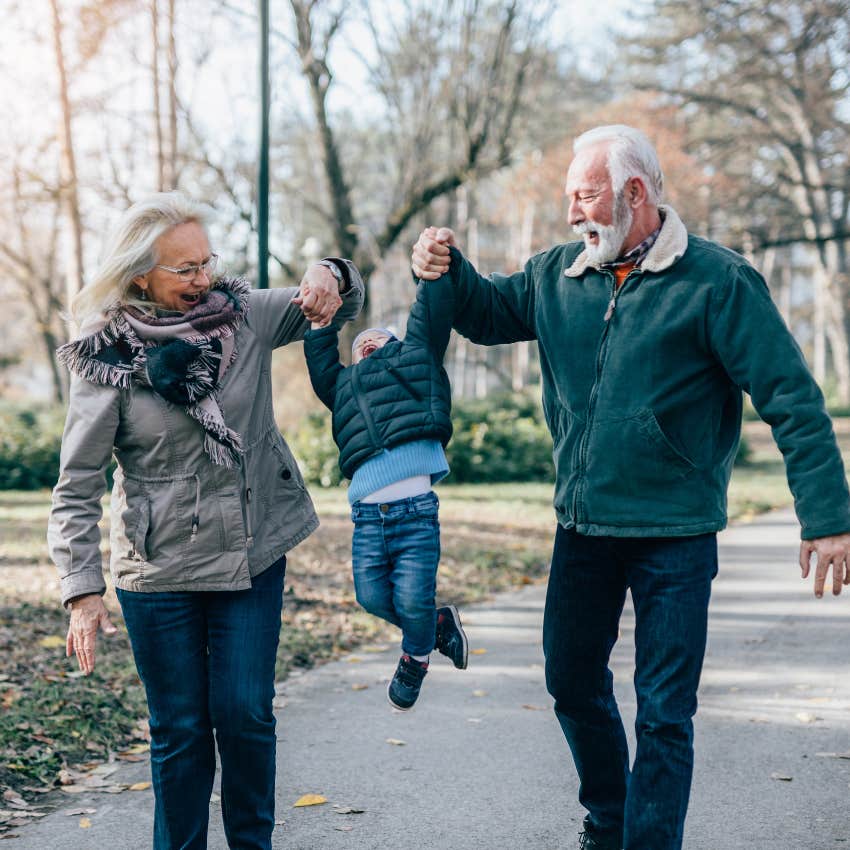
Grandparents who babysit and are involved in their grandchildren's lives have better brain health.
The study conducted at Tilburg University in the Netherlands observed 2,887 British grandmas and grandpas with an average age of 67 between 2016 and 2022. During that time, grandparents completed questionnaires about their grandparenting activities and underwent cognitive testing.
 hedgehog94 | Shutterstock
Among the questions was whether they had helped out with their grandchildren at least once in the past year, how often they did so, and what sort of assistance they offered when they did, including watching them overnight, caring for them when they're sick, helping them with homework, school runs, and other activities.
They found not only that caring for grandkids had health benefits, but also that it wasn't dependent on the type of care or the frequency with which it was provided. As long as they did it at all, they got vitally important benefits from it.
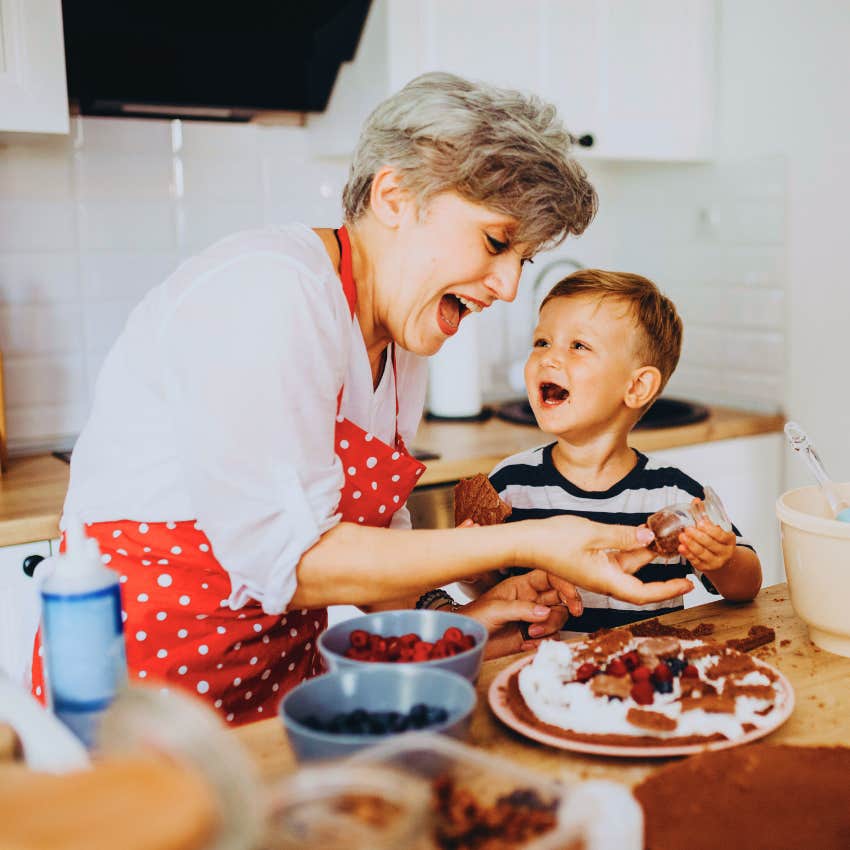
Involved grandparents were found to have better cognitive skills that protected against dementia.
 StudioKreativa | Getty Images Signature | Canva Pro
The researchers found that grandparents who helped with childcare not only scored higher on tests of memory and verbal skills than grandparents who didn't, but they still scored higher even after adjusting results for things like age or health problems.
Whether they were providing care daily or only once a year, it didn't seem to matter; the benefits were there. Even more striking, the involved grandparents who exhibited cognitive decline over the course of the study showed slower decline than those who didn't have dementia-related health issues.
Lead researcher Flavia Chereches said that more research is needed in order to conclusively determine the relationship between being an involved grandparent and brain health.
But this study's data illustrated that it was "the broader experience of being involved with caregiving" that was providing the benefit, making clear that being a caregiving grandparent is not the one-sided relationship many grandparents today seem to think it is.
Boomer and Gen X grandparents seem to be less involved than previous generations.
Like everything else they've touched, boomers have greatly changed norms around grandparenting. Gone are the days of grandma in her apron baking cookies for her little darlings, for myriad reasons, not least of which is that many of them are still in the workforce and have neither the time nor the money to help with their grandkids.
In fact, according to AARP, the average age of first-time grandparents in the U.S. is 50. That's much younger than retirement age.
Social psychologist Susan Newman, Ph.D., told Parents, "Many of them have been working for decades, so they're programmed to be busy. This is a health-obsessed group too, so they work out a lot, and they're social: They volunteer, go on trips, have book clubs." She went on to say, "This generation isn't sitting in their housecoats, getting batches of cookies ready for the grandkids."
But there is also a fairly pervasive attitude among boomer grandparents, according to millennial parents, of simply not wanting to be bothered and wanting to enjoy their lives and their money in their older years. The internet is full of millennial parents lamenting how desperately they need their parents' help, and how vehemently they refuse to give it.
And from the sounds of it, the older end of Gen X is even worse as they now approach their grandparenting years. They were recently branded "the worst grandparents" online by the youngest millennials and oldest Gen Z'ers (aka Zillennials) who are their kids.
The chatter suggests that many Gen Xers feel too "burned out" to help, while others share a similar attitude to boomers: they feel that too much is being expected of them in a one-sided relationship.
Studies like this Dutch one show that, at least on a clinical level, that isn't the case. Not only do many of today's parents desperately need help as our economy crumbles, long after "the village" did, but it seems grandparents' brains need care and connection as they age as well. Perhaps it's time to swing the grandparenting pendulum a little bit back in the other direction.
John Sundholm is a writer, editor, and video personality with 20 years of experience in media and entertainment. He covers culture, mental health, and human interest topics.
