
Psychology Says People Who Get Separation Anxiety When They Don’t Have Their Phone Usually Have These 4 Reasons
 insta_photos | Shutterstock
 In a 2013 study, researchers found that approximately 60% of mobile phone users experience nomophobia, a combination of the words no, mobile, and phobia, meaning a fear of being separated from one’s phone. Even now, 13 years later, people are probably more addicted to their phones than ever before, and some have immense trouble disentangling themselves from their devices 24/7.
Researchers were also able to determine why the separation anxiety occurs in the first place. They found that people who were most anxious about being away from their smartphones often shared one or more of these four fears.
60% of people get separation anxiety when they don't have their phones for these 4 reasons:
1. Fear of not being able to communicate with other people
 Drazen Zigic | Shutterstock
A YouGov survey asked people across 17 international markets about the methods of communication they use most often to communicate with friends and family. SMS or text messages come out on top with two in five (40%) saying they text when they need or want to communicate with loved ones. Nearly three in ten respondents (29%) prefer to communicate with their friends and family over mobile phone calls.
Basically, when people want to communicate, they do it through their phones, and we're not talking about landlines. For a lot of people, the idea of being unreachable can feel unsettling. If anything, this fear has more to do with connection than anything else. People rely on their smartphones as a literal lifeline to the outside world in many instances.
2. Fear of not feeling connected to others
Phones are truly the way that we can all stay connected with each other. With social media, it's so easy to see what our friends are doing and how they're feeling. It's also how we figure out what's going on in the world around us.
Social media definitely plays a large role in this. Even if you're not actively posting, seeing others' updates can still provide a sense of belonging. In a survey from the Survey Center on American Life, nearly half of Americans who use social media reported that they connect with close friends often when using it. For some people, having that digital communication is honestly something they prefer over face-to-face communication.
The problem is that the social media algorithm feeds that fear, making it seem as if any length of time that we can't check on who is posting what and what's being said, we will somehow be separated from that sense of connection and belonging. That's certainly not the case, but it doesn't make the feelings go away.
3. Fear of not being able to have immediate access to information
 Tero Vesalainen | Shutterstock
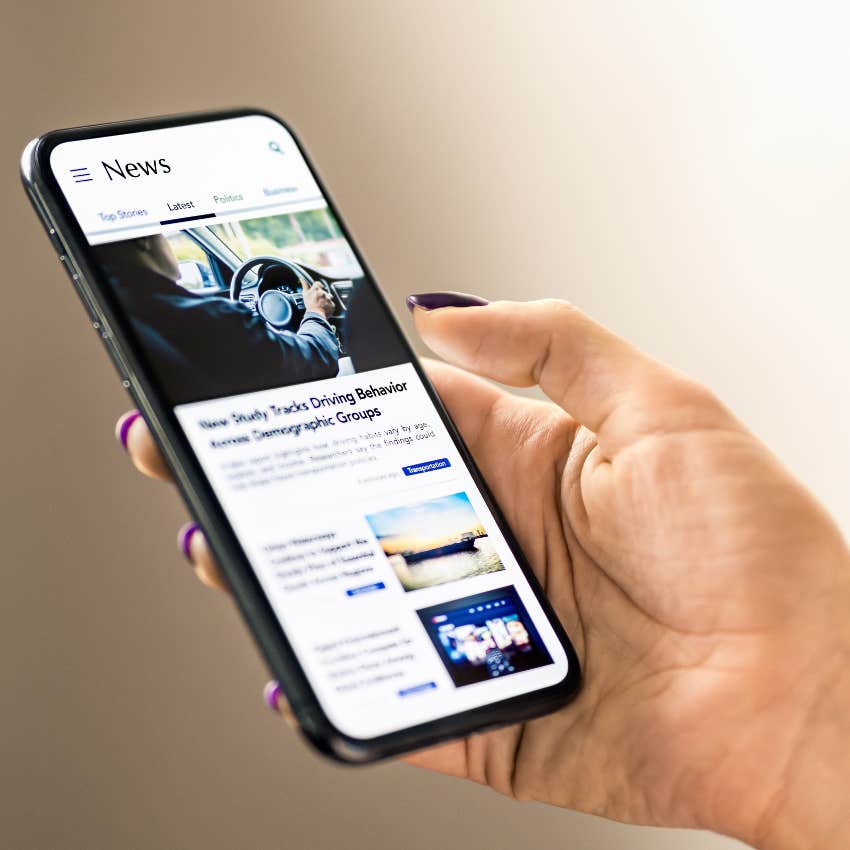
In research from Oxford’s Reuters Institute for the Study of Journalism (RISJ), 54% of people in the U.S. get news via social media and video networks, overtaking TV broadcast news and news websites. According to the study, back in 2013, social media and video were a source of news for just 27% of the U.S. population.
Only 14% get news from print in comparison. Considering most people get their information from their phones, it's not surprising that they feel fear when they can't see what's happening in the world. Long gone are the days when you got your news at 11 p.m. or you actually waited to read the morning paper.
4. Fear of not having the peace of mind or convenience of a smartphone
Our smartphones are how most of us organize our lives. It's where we put important appointments in the calendar app, set reminders, and even get from one place to the next with GPS. There's also just the comfort of knowing that anything we need is just a tap away on our phones.
Without that convenience, people start to feel a bit unsettled because they don't feel as prepared for everyday life as they do with their phones in their hands. Without access to a smartphone, everything takes just a bit more effort, which can feel overwhelming when you're so used to having everything at your fingertips.
Nia Tipton is a staff writer with a bachelor’s degree in creative writing and journalism who covers news and lifestyle topics that focus on psychology, relationships, and the human experience.
