
People Who Treat Their Pets Like Royalty Often Have A Strange Personality Quirk, Research Says
 Vitalii Khodzinskyi | Unsplash
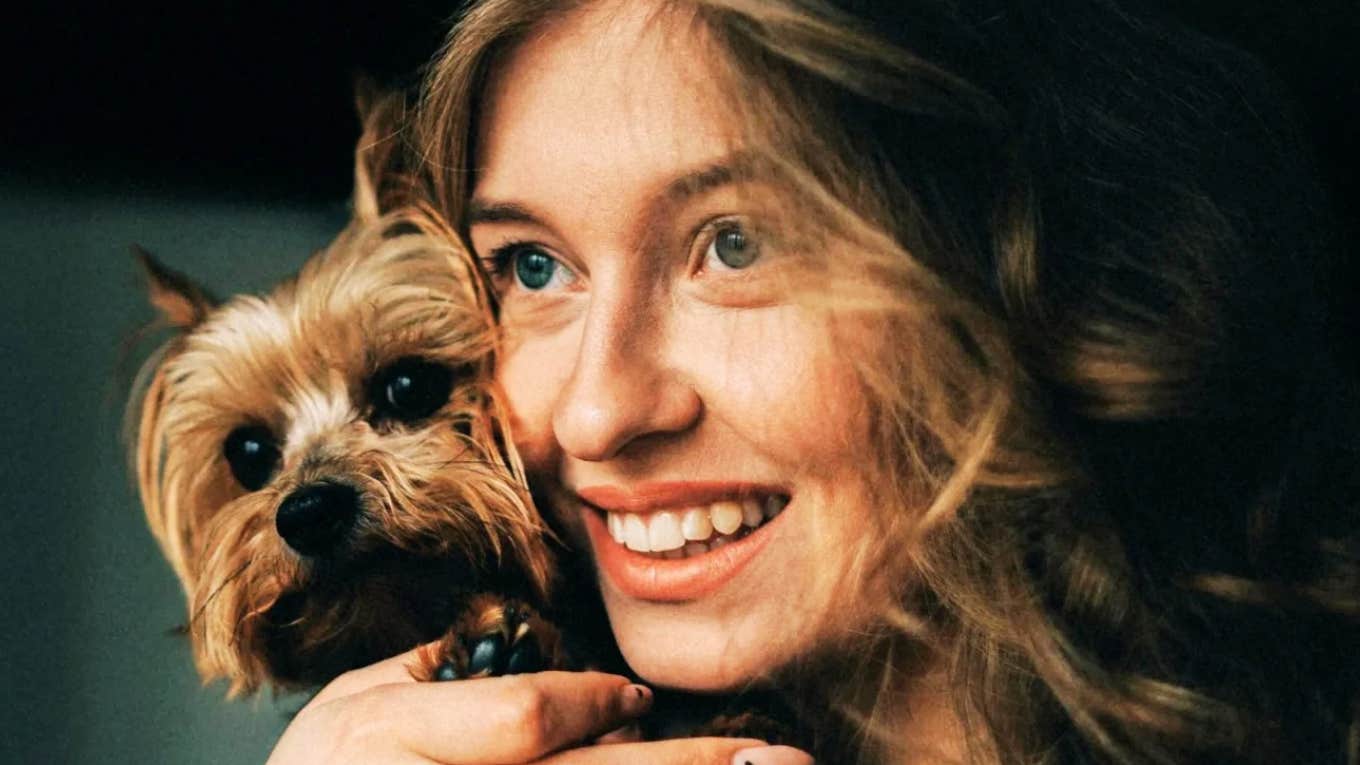
Take a look around you. Do you have photos of your pet everywhere? Do you find the compulsion to talk about your pet at any given opportunity, even if it doesn't fit in with the conversation?
Are you the type of person who is over the top, madly in love with your pet (like me), and the thought of functioning in this world without them wreaks such havoc on your soul that you can't even allow yourself to go there with those wickedly dark thoughts?
Research says if you treat your pet like royalty, chances are you're probably neurotic
 Yuri A | Shutterstock
A study of pets and their owners found a link between the affection of one's pet and anxious attachment and neuroticism
As co-author Mikel Delgado pointed out, "The fact that higher levels of neuroticism are associated with affection and anxious attachment suggests that people who score higher on that dimension may have high levels of affection and dependence on their pets, which may be a good thing for pets."
Unlike human babies, furry babies need constant care for their entire lives. Human babies eventually jump out of the nest. Furry babies are in it to win it until the end, so they need to smother them with affection and provide for them, which makes for a great pet owner.
Conducted by researchers from California State University, East Bay, the survey of 1,000 pet owners had each participant identify themselves as a dog person, a cat person, neither, or both. They were measured by five human characteristic traits and whether they suffered from "anxious attachment" or "avoidant attachment."
Those who scored high on the former were more needy in reassurance of their affection, many of whom happened to be cat people who were on the younger side of the participants.
The study also found that both groups, dog and cat people, scored low on the scale of avoidant attachment, whereas people who would score high on such a scale could be labeled commitment-phobes. Most pet owners happen to be anything but that.
What does this mean? Attachment mixed with high doses of neuroticism is great for a pet
You may be heckled for your neurotic ways, and you may even drive the humans around you crazy with your need to be reassured about things, but the research, which was done in conjunction with the University of California, Berkeley, holds that your pets are greatly benefiting from your neuroses.
It's the neurotics of the world, although somewhat grating to others, who are better providers and have a greater "understanding of their pet's needs."
So go ahead and add yet another photo of Max to the wall above your desk at work, you crazed pet owner, you! You're doing wonders for your furry buddy with all that love, so don't let some weird non-pet person tell you anything different or shame you for being so obsessed.
They just don't get it. But you get it, I get it, and a lot of others get it. That's all that matters.
Amanda Chatel has been a wellness and relationship journalist for over a decade. Her work has been featured in Glamour, Shape, Self, and other outlets.
