
People Who Sleep Way Too Much Are Usually Trying To Escape 8 Uncomfortable Realities
 Krakenimages.com | Shutterstock
 Sleeping when you're tired is important. Sleeping when you are overwhelmed and don't want to deal can be a problem, however.
We all like to escape from stress and problems once in a while, but when napping becomes more than just a guilty Sunday afternoon pleasure, it might be time to find a better coping mechanism. Sleep is an important resource. When people are sleep-deficient, it can negatively impact their work and social lives. However, there is a balance, and too much snoozing can lead to its own slew of problems.
People who like to nap a whole lot might be using sleep to escape these uncomfortable realities:
1. Emotionally painful experiences
 Antonio Guillem | Shutterstock
Whether it’s going through a breakup or dealing with a layoff at work, shutting down can be our body’s stress response. There is a strong link between depression and oversleeping. Fifteen percent of people with depression were found to spend more time in bed to deal with their symptoms, and it’s often because of more complex emotional issues.
Someone who escapes with sleep may not realize they are depressed. Oversleeping might be a sign from their body. If they don’t have anything to look forward to after a moment of heartbreak, they might use sleep as a crutch that becomes a bad habit.
2. Stress and burnout
Dealing with constant stress and burnout can lead to chronic fatigue. Someone can become so consumed by their struggles that they find themselves exhausted from carrying the weight, even if they don’t notice the cause. Under stress, our bodies have difficulty entering REM sleep, which can make us feel sleepier throughout the day.
Stress can also cause issues with falling asleep and staying asleep. This can cause someone to stay in bed too long, trying to make up for the hours they’ve lost.
3. Feeling insecure and bad about themselves
Low self-esteem can cause two different sleep responses. For some, it means having interrupted sleep that leaves them feeling even less optimistic when they wake up. Some others have a difficult time getting out of bed because the insecurity of not being enough makes them want to stay home and away from others.
If someone isn’t confident in themselves, they may not want to participate in social situations. Instead, they keep to themselves and find comfort in bed, away from the people they don’t feel good enough to be around.
4. Unaddressed feelings of grief and loss
 Dikushin Dmitry | Shutterstock
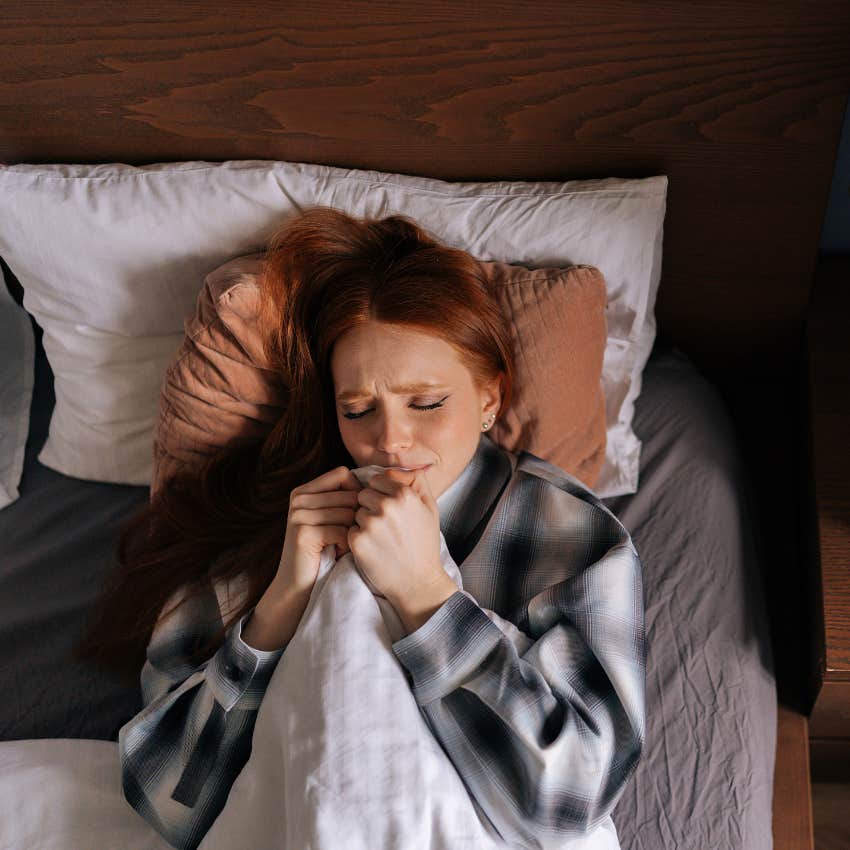
It’s not easy to go through the motions of life when you’re suffering a tremendous loss. Grief impacts everyone differently, but for some, it can suck the energy out of them. It can be hard for our bodies to understand the change that comes from this pain. Some may find themselves in bed for longer periods of time, drained by the pain they’re going through.
Losing someone or something can completely uproot our lives. What was once considered normal can change in the blink of an eye. For some, it comes up as oversleeping and struggling to get out of bed.
5. Feeling lonely
It’s not uncommon for people to choose to stay in bed when they are struggling. If they’re having a hard time socializing, it can be easy to try to escape this feeling. Often, this type of person feels isolated from the world around them. This can cause depression and symptoms like constant exhaustion.
What a lonely person may not realize is that they might improve their mental state through sleep. There’s a link between sleep deprivation and the ability to get close to other people. By focusing on sleep, they may find they become less lonely and more open to human connection.
6. Guilt
When people are dealing with guilt, they want to escape their feelings. They don’t want to be overwhelmed by what they did wrong. An easy way to avoid that feeling is to sleep. Being sensitive about letting people down can affect every reaction they have. Avoiding people and social situations can alleviate the stress.
While guilt can be remedied by working through the problem, it’s not always easy. Admitting to yourself and others that your actions were a problem can feel impossible. Staying in bed is the perfect way to avoid them completely.
7. Pain or medical problems
Many medical conditions can leave people bedridden. For some disorders, fatigue is a common symptom. From mental illnesses to physical ones like Parkinson’s disease and hypothyroidism, oversleeping can be a serious symptom. These conditions leave the body feeling exhausted and drained.
Chronic pain can also cause people to oversleep. Resting may be the only time they feel relief from their pain. Like serious medical conditions, recurring pain can be both exhausting and debilitating.
8. Disappointment
 MAYA LAB | Shutterstock
Chronic disappointment can rewire our brains. Life can become difficult to live when someone loses motivation. If they feel constantly disappointed, whether through friends and family or outcomes at work or school, it can become debilitating. They may lose that spark that keeps them motivated. Instead of having the mental capacity to work through these feelings, it can be easier to shut down entirely.
Disappointment is often linked to depression, which we know causes constant fatigue. Many factors go into why someone with constant disappointment feels exhausted, but they all lead to staying in bed for long periods.
Haley Van Horn is a freelance writer with a master’s degree in Humanities, living in Los Angeles. Her focus includes entertainment and lifestyle stories.
