
You Can Usually Tell How Smart Someone Is By What Time They Go To Bed, Says Study
 Monkey Business Images | Shutterstock
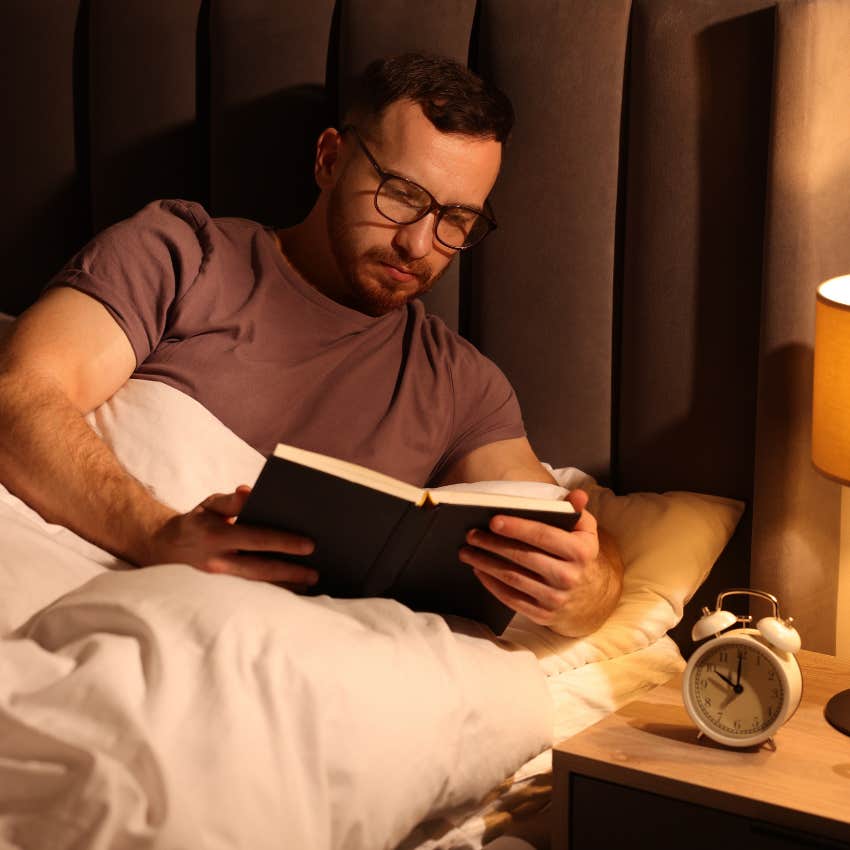
 Early risers have been labeled as smart for their Type A tendencies. They go to bed at a decent hour, perhaps reading a book before turning off the light, and don't snooze their alarm when it goes off at six a.m.
However, a recent study is reversing what we think we know about sleep schedules. In research conducted by Add Health, a large group of highly intelligent individuals was surveyed, and results showed that the smartest of the bunch went to bed the latest.
The time you go to bed may be linked to your intelligence level, according to a study.
Researchers drew from a pool of individuals at Mensa, an organization that includes those with the highest IQs in society, via its German branch. The study included 1,172 adults of varying ages, races, and genders to provide the most accurate results possible.
 New Africa | Shutterstock
Using a survey, researchers compared data about the IQ score that correlated with the individual, as well as the free day and work day sleep schedules they followed. While previous studies connected students who had earlier chronotypes, which is the body's ability to get sleepy, with better grades, the Add Health study connected those in the workforce with high intelligence rates with later chronotypes.
Higher IQ individuals tend to go to bed later, but the reason is a matter of opportunity rather than physiology.
When looking at the results from the study, researchers found that later bedtimes were most common among higher-IQ individuals on weekdays, when there was work the next morning. When it came to free days or weekends, most people's bedtimes were pushed later, disproving their theory that a person's intelligence was biologically linked to their sleep schedule.
 antoniodiaz | Shutterstock
The bedtime of these individuals at Mensa has everything to do with their job start time and little to do with their circadian rhythm. Many of the test subjects have access to jobs that start later in the day, with some being as late as 10 a.m. or noon.
This gave them the opportunity to stay up later, knowing they could sleep in the next day, allowing for healthy rest regardless of late-night habits.
IQ is often associated with job prestige, which assumes that smarter individuals are in white-collar jobs.
The reason those with high IQs are provided this opportunity is their ability to secure white-collar jobs. Since workplaces so often view test results as a sign of intelligence, those who score well are rewarded with jobs that have luxuries such as later start times.
Blue-collar jobs, which are wrongfully associated with lower IQs or less education, tend to have earlier start times that suit the conditions of their work. Construction workers, HVAC technicians, electricians, and mechanics are all well-paying but under-appreciated jobs that fall within this category.
On average, many people in these roles wake up between 4 a.m. and 6:30 a.m.; their workdays can range from 8 to 12 hours. This is in consideration of weather conditions (like UV or incoming storms) and client appointments.
White-collar jobs, in comparison, have start times that range from 6 a.m. to 10 a.m., leaving wiggle room for a proper breakfast or an extra hour or two of sleep. Many individuals in this type of career might work only about 8 to 9 hours a day.
Establishing a healthy sleep schedule will lead to higher productivity and a clear mind.
Regardless of your job type, the key to a strong mind is establishing a sleep schedule that benefits your body. It's not so much about when you go to bed as the quality of sleep you get.
While the study showed a link between later bedtimes and higher IQ, the researchers noted that many factors may have influenced the results. For one, Germans are known for having a more conservative bedtime than Americans, so if the study had been conducted in the U.S., the results may have presented differently. They also stressed that there has not been sufficient evidence to refute the claim that the correlation between late bedtime and intelligence is biological, so this option remains open.
 AYO Production | Shutterstock
All that is to say that being a night owl isn't necessarily a bad thing as long as you are getting enough sleep so your brain can perform at its best. Being mindful of your work hours in relation to your sleep will help you wake up feeling refreshed, so you don't have to snooze your alarm even once, let alone five times.
Gabrielle Mattes is a writer working towards a Creative Writing degree. Her work focuses on lifestyle, wellness, human interest, and relationship topics.
