
People With Neurodivergent Traits Have A Rare Social Superpower That Most Neurotypical Brains Never Develop, Says Study
 Kampus Production | Pexels
 Historically, society has made the assumption that individuals with autism or other neurodivergent conditions lack social cues. This thinking has created a space where neurodivergent people are belittled or even infantilized.
Determined to discover the reason behind the misunderstanding, scientists have started to research the way the neurodivergent brain reacts within interpersonal relationships. A study conducted recently combats this idea of "lacking social cues" by presenting the idea that the disconnect is due to mismatched communication styles.
Those with neurodivergent tendencies communicate differently due to unique social processing.
Neurodivergent people have often been categorized as "socially awkward", with others assuming that it is due to a lack of theory of mind. The "theory of mind" is a term in psychology used to define our ability to understand what others are thinking and feeling as a cognitive resource.
However, being neurodivergent doesn't stop you from comprehending others' emotional states; you just respond to them differently.
 Polina Zimmerman | Pixels
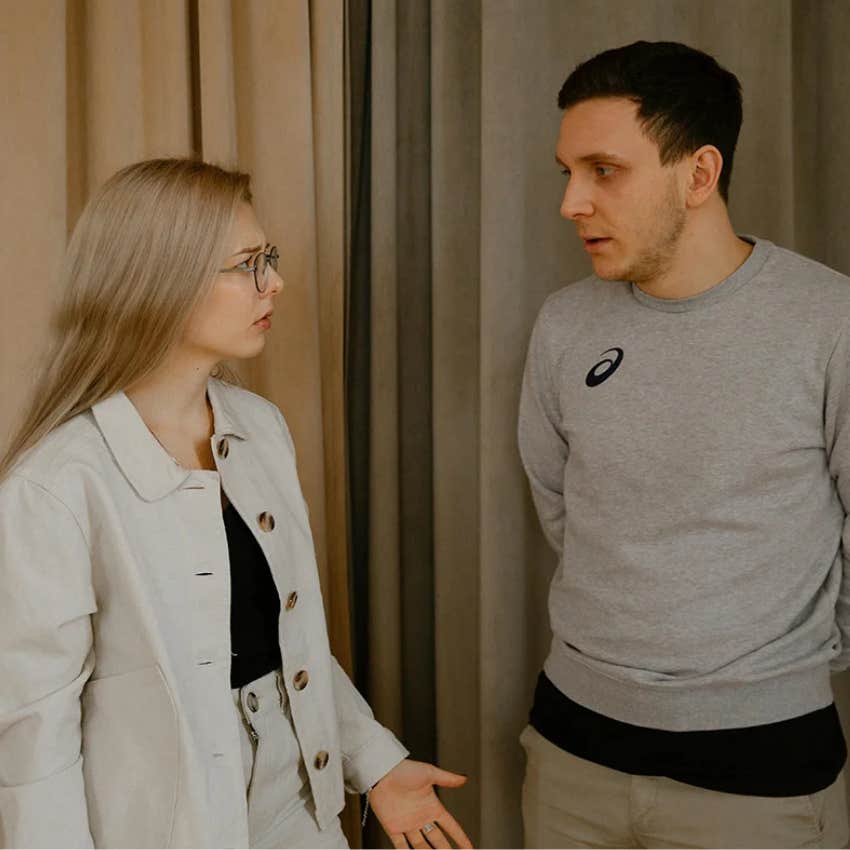
The Double Empathy Problem highlights that neurotypical and neurodivergent people may not communicate as smoothly together because they process sensory details differently. While those with autism may not make eye contact while speaking, neurotypical people like to maintain it.
When we speak with like-minded people, the conversation flows much better thanks to predictive coding, which helps us anticipate what the other speaker will say or feel next. We can empathize with those who have the form of thinking we do, drawing from our own experiences, which is why there may be a disconnect when two different groups of thinkers combine.
A group of neuroscientists tested this theory about neurological variation and found that those with similar brain traits bonded more closely.
The researchers conducted a group study involving college students with varying degrees of neurodivergent symptoms. Some ended up higher on the scale regarding tendencies, while others ranked lower.
The idea of the study was to see if those who are on similar levels of autism or other forms of neurodivergence connect better in a social setting.
The researchers clustered four random students together from the pool of people and had them interact within group activities. During the process, the neuroscientists used a brain-imaging device called functional near-infrared spectroscopy in order to monitor the brain waves and analyze the interactions occurring.
 fizkes | Shutterstock
Throughout the sessions, the subjects listened to an audiobook and then engaged in a group discussion regarding a survival scenario. All elements were structured so that everyone's voice could be heard.
The results came back in support of their hypothesis: participants with similar rankings on the scale showed a stronger desire to speak to one another.
This could be credited to inter-brain synchronization, which is when two individuals' brains synchronize while doing a shared activity, creating an intuitive bond with their partner. The scientists noticed this when seeing that the participants had similar reactions to their partners, but varied compared to the rest of the group.
Those who are neurodivergent use a different part of their brain in order to process social interactions.
The testing also revealed a shocking discovery about the way neurodivergent people's brains fire socially. In neurotypical brains, or those with low levels of autism, brain synchronization during interactions occurs within the right temporoparietal junction. This region is responsible for social perception and stores our ability to understand like-minded thinkers.
Rather than this area of the brain being activated during these settings, those displaying more features of neurodivergence are synced via their right dorsolateral prefrontal cortex. This zone is linked to our cognition and problem-solving skills.
While there is not always a disconnect, this explains why two neurologically different people may be in an awkward conversation. Those with autism are coming at the situation with a more logic-focused mindset, while neurotypical individuals lean on the side of emotion and strategies from previous social experiences.
Having one way of thinking should not categorize anyone as socially awkward, though. It's like Type A and Type B people: they both have unique forms of problem-solving, but neither is right nor wrong.
If anything, having a unique perspective socially is the greatest gift you can have; you're bringing a fresh mindset to the table, and all forms of communication are important. Just make sure you're flexing your prefrontal cortex whenever you can!
Gabrielle Mattes is a writer working towards a Creative Writing degree. Her focus is lifestyle, wellness, human interest, and relationships.
