
Experts Say The Hardest Part Of Retirement Isn't Boredom, It's The Strange Loss Of Purpose Nobody Prepares You For
 Hirurg | Canva
 Humans tend to fear change, and retirement is a massive change to someone's lifestyle. Retirement's effects can resonate through all parts of your existence and leave you feeling like the roots of your soul have been torn out and replaced with nothing else.
For many retirees, a sense of boredom can settle in, and the mundane becomes a lifestyle. "Social isolation and loneliness often intertwine with boredom, and chronic conditions are major factors that increase the risk of experiencing boredom in later life," explained researchers in a study of boredom and leisure in later life.
Yet, boredom has a million and one cures, so trying to get back to being active is not always a long-term issue. That leaves the hardest parts of retirement, and those can make feeling uprooted or bored seem like a holiday in the sun by comparison.
Experts say the hardest part of retirement isn't boredom; it's these factors:
1. Loneliness is a hard part of retirement
 PeopleImages.com - Yuri A via Shutterstock
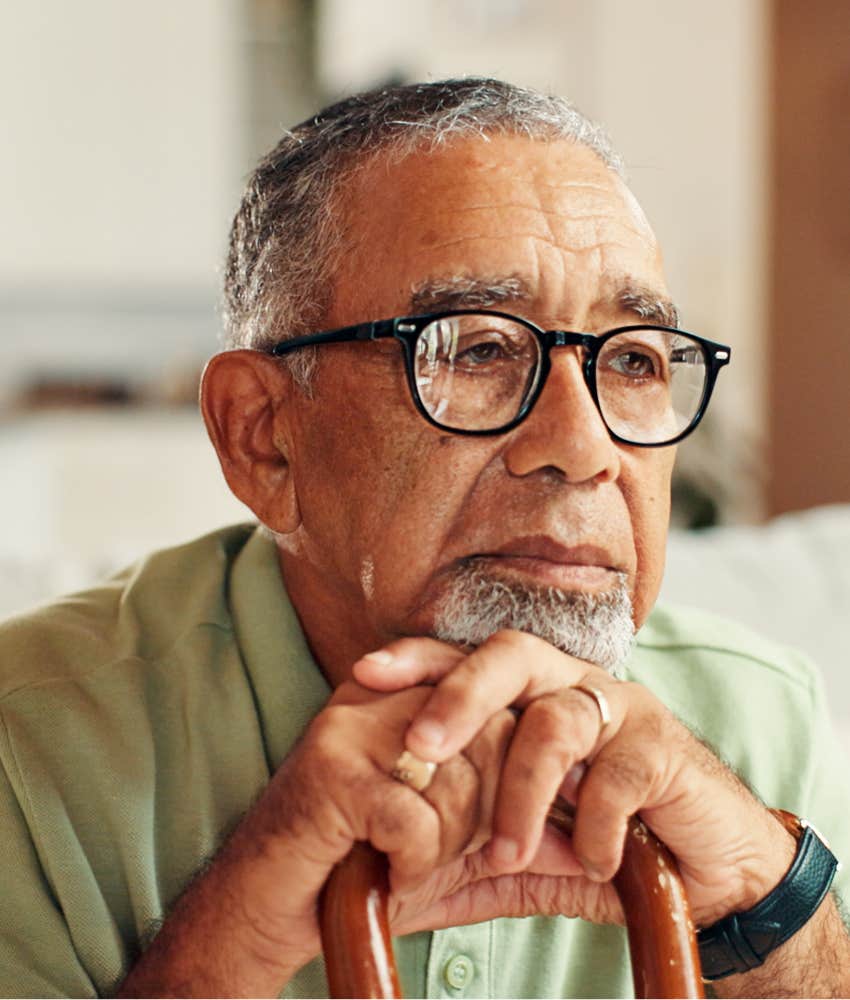
Therapist Dr. Gloria Brame, Ph.D., explains how loneliness has become a defining crisis for older people. The empty nest, widowhood, divorce, and geographic separation from adult children create a perfect storm of social isolation. Parents who spent decades as the emotional center of their families suddenly find themselves with no one to care for and no clear role.
Women seem to be especially at risk, in part because their lives revolved around being an indispensable figure in their family's lives, at least up until the kids move out and they face divorce or widowhood. Research consistently shows that women over 50 report higher rates of loneliness than men. But men suffer in other ways, particularly if they viewed the work they did as part of their self-definition.
Even men who profess they can't wait to retire, and make plans to travel or learn new skills, find themselves at a loss when a lifetime of patterns and hard-won self-assurance all vanish with their career. Whether you're a teacher or tire-maker, sales clerk or CEO, most people tend to associate you with your occupation, and often, that's how you define yourself. We become the embodiment of the jobs we do.
Retirement takes that away. Seemingly overnight, you're old and irrelevant. Even if you are lucky to have a spouse living with you, you feel antsy staying at home all the time. You drive restlessly and pass your old place, but you're stuck on the outside looking in, and noticing someone you've never seen before is sitting at your desk.
So the hardest part of retirement comes when you don't prepare for the emotions that accompany retirement. Even when you've saved enough and have kids and grandkids you love, you still need a sense of purpose in life. A road trip? A new job? Volunteer work? Building that thing you always wanted to build?
You don't have to leave home, either. You can join a walking or dining club in your local area. Start a book or movie club online, or invite family and friends to weekly gaming events. It's never too soon or too late to be happier.
2. Loss of identity is a hard part of retirement
 GBALLGIGGSPHOTO vika Shutterstock
Psychologist Aline Zoldbrod, Ph.D., says retirement can be an existential crisis. The people I personally know who retired easily and happily are people who did not enjoy their work. They did not find meaning in their job (even if they were well paid).
For a different group of people I have run into, their job was enjoyable. They felt proud of their contribution to group functioning or group projects. They liked the compliments they got from co-workers or the mission of the organization that employed them. Their job was an essential aspect of their identity and self-worth. The loss of their role at work equated to a loss of purpose in the world, almost a loss of self.
Another aspect is the loss of self-esteem that comes from not having an opportunity to dress up nicely to go to work. For people who did not prepare for all these losses ahead of time by experimenting with other activities or getting connected to a new group of people ahead of retirement, the loss leads to sadness or even depression.
3. Forging a new identity is a hard part of retirement
 PeopleImages.com - Yuri A via Shutterstock
Astrologer Aria Gmitter suggests the hardest part of retirement isn't solely the boredom or the lack of a solid schedule. It's the feeling of relevance and the formation of a new identity that is somehow mingled with one reality that we all face: death.
There are so many new ways for a retiree to fill their time that are exciting in their own right.:
- Getting organized
- Making new friends
- Finally doing the things that you've always wanted to do but didn't have the time to do due to working for someone else
- Contributing to others as a mentor.
There's been a lingering list of things to do waiting for the big day, where the last day of work has been clocked, and the fixed income starts. The garage awaits clearing. Grandkids and places to see are now the new go-to. Yet, the question, "Who am I?" hits hardest, and most don't want to say it aloud.
Gmitter has seen it in her mother, her former father-in-law, retired bosses, and retirees who are acquaintances. There's an identity struggle, and they try to sort it all out. Part of the problem is that there is more life behind them than in front of them. So they have to be selective with how they spend their time. Then, there's the grief when time is misspent, and they have to learn to tighten the schedule a little more.
All those "in the future, I'm going to" moments have an expiration date. We always know death can happen at any age, but it's most obvious when you're older and retired, and you don't want to be a spectator to a life unfolding before you. You want it to be filled with new things.
Yet, every baby shower reminds you it's not you having a baby. Every new job event is a nudge that you're not the one who's getting a big promotion. Instead, it's your children or your friend's grandchildren. There's no regret for having lived a life well enough to retire, but their wins are bittersweet reminders of who you used to be, and who you don't want to be again.
For highly successful people, the hunger for winning can no longer be the same. As we grow older, we slowly understand why. It's because time has an end cap when you age, and the title 'retiree' at the top of your resume is the set point. It's the final promotion before you go off to full retirement across the rainbow!
But the persistent struggle in retirement is how your identity changes. Each year, one more thing is removed away with a sense of finality. So, unless you truly set a meaningful goal, making lasting memories for others is the highest achievement.
Will Curtis is YourTango's expert editor. Will has over 14 years of experience as an editor covering relationships, spirituality, and human interest topics.
