
Woman Decides To Call Off Her Engagement So She Doesn’t Have To Deal With Her Fiancé’s Lifelong Girl Best Friend
 voronaman | Shutterstock
 A bride-to-be is questioning whether people in relationships should have friends of their spouse's gender after explaining why she's decided to call off her engagement.
With her wedding day approaching, Debra claimed that she couldn't move forward with her relationship, which was probably a good plan. But the reason for the break was much deeper than simply that his best friend is a woman. Without trust, a relationship cannot flourish, and the same goes for open communication.
A woman said she was calling off her engagement so she didn't have to deal with her fiancé's lifelong girl best friend.
"So I'm breaking off my engagement the second my man walks through that door because I am literally so sick of his insane girl best friend," Debra began in her video. "Listen, I knew this man had a girl best friend when I first started dating him, which was years ago."
Debra explained that her fiancé and this woman have been best friends since they were children. Despite meeting him and knowing he had a girl best friend, she decided to see where things could go, even though she had a strict rule against dating a man with female friends. She argued that it's "weird" for a man to have a best friend of the opposite gender, and that they shouldn't need a girl as a best friend at all.
When she and her fiancé first started dating, his best friend didn't live in the same state, so she didn't feel threatened by the idea at first. However, Debra recalled a time when his girl best friend came into town and stayed with him. She felt it was an issue that her fiancé, boyfriend at the time, hadn't invited her over to meet her.
"The girl you're dating is not invited to meet your female best friend? Okay? Red flag right there. But you know what? I blew it off. We got in a huge fight. Literally, that was the first fight we ever got into," Debra continued.
Eventually, his girl best friend moved to the same city they were living in after getting a divorce.
Debra recalled that she eventually met her fiancé's friend after she moved to the same city they were living in. Despite the fact that they hadn't met until she and her significant other were engaged, Debra was doing her best to be nice to her. She helped move her into a new place and even offered some emotional support.
But Debra claimed that her fiancé's girlfriend was being incredibly rude to her. She kept calling her by a different name and even bringing up some of his past ex-girlfriend's as a way to get under her skin. When Debra tried to bring this up with her fiancé, he simply brushed her off and said his friend was just "hard to get along with."
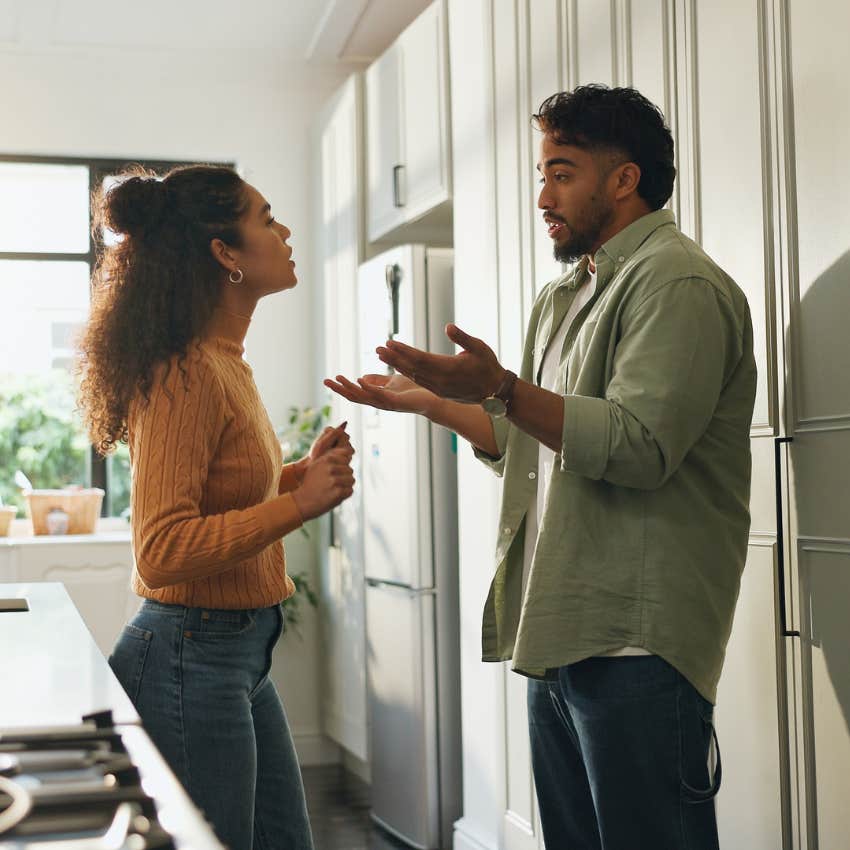 PeopleImages | Shutterstock
The breaking point for Debra was that she felt her fiancé was putting his girlfriend ahead of her. He would invite her over to their house even though he knew Debra wanted to spend time with him, and he wouldn't stick up for her when his best friend was clearly being rude and dismissive of her.
"There's no way I'm marrying somebody, and I have to deal with that," Debra insisted. "You're gonna choose a girl best friend over me? The woman that you chose to marry? Go marry her." While her frustration is warranted, the underlying issue in all of this is that Debra doesn't trust her fiancé. This isn't just about fidelity, either. This is about trusting her partner to have her back and to put her first.
Psychosocial rehabilitation specialist Kendra Cherry, MSEd, explained, "Trust is important in relationships because it allows you the opportunity to relax, be yourself, and depend on another person. It provides you with the safety and security you need to turn to another person for comfort, reassurance, assistance, and affection."
Debra's fiancé was not giving her that sense of safety and security. The girl best friend was simply the catalyst that brought this underlying issue to the surface. She was not the cause of their problems.
Having friendships of the opposite gender can be a truly enriching experience.
There's been a longstanding debate on social media for years about being in a relationship with someone who has good friends of the opposite gender. Both men and women alike will argue that it feels "weird" and "out of place" for their significant other to have a male or female best friend.
 we.bond.creations | Shutterstock
However, having friends of the opposite gender can be a rewarding experience. In Debra's case, however, it seemed that her fiancé's best friend might not have been a good example of healthy boundaries in a friendship. It wasn't the friendship itself that bothered her, but the fact that it made her feel consistently disrespected and dismissed. Ultimately, that's a problem with her fiancé, and it's probably something that has been festering for a while.
As psychologist Linda Sapadin explained to PsychologyToday, "The belief that men and women can't be friends comes from another era in which women were at home, and men were in the workplace, and the only way they could get together was for romance."
Healthy opposite-gender friendships can absolutely coexist with romantic relationships. But the key has to be mutual respect among all parties and a partner who doesn't just let tensions go unaddressed.
Nia Tipton is a staff writer with a bachelor’s degree in creative writing and journalism who covers news and lifestyle topics that focus on psychology, relationships, and the human experience.
