
Every Morning My Son Shuts Down At Drop-Off — And I Can’t Reach Him
 Iryna Inshyna | Shutterstock
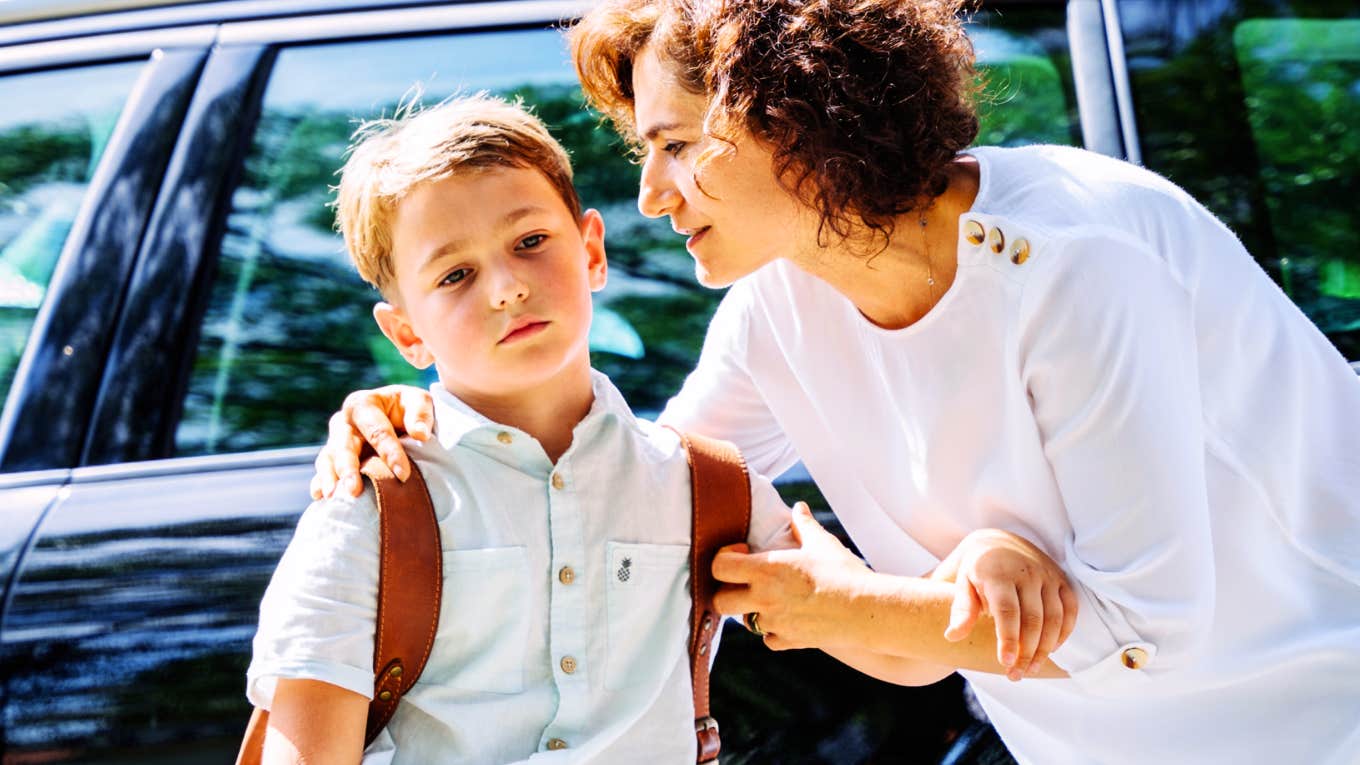
 In the car, he’s a chatterbox. He kicks his legs, narrates the passing world, asks about pipes in buildings and whether vacuum cleaners live inside walls, laughs at his own jokes. And then we pull up to the school. The door opens, cold air slips in, and something in him folds.
His eyes turn glassy. His body droops. He won’t look at his sister or at me. She leans forward and says, “Poka, Roma!” our little Russian goodbye, soft and cheerful. I say, “Ya tebya lyublyu, Romachka,” I love you, my little Roma. And from him sometimes I get a whisper of “poka,” so quiet it barely exists outside his breath.
It happens every day. The shift is always the same. Every morning, I watch something in him recede. Not a different child appearing, but the same one quietly closing a door only he can see. The drop-off is where reality shatters through every illusion I had that morning.
When he walks away, I feel like I’m staring into an abyss I don’t have the language to describe. It’s the moment I’m reminded that his inner world moves on rules I can’t see, a logic I can feel but never fully reach.
This is what autism looks like for him: Every morning, my son shuts down at drop-off, and I can't reach him.
At home, he is limitless. He doesn’t stop talking, about numbers, directions, rules he invents, tiny details only he notices. He laughs constantly, finds humor in corners of the world I never thought to look at. He dances, sings, paints, and builds.
His mind is alive, structured, playful. He is bilingual, flipping between Russian and English effortlessly. Not just vocabulary, but syntax, the tiny moving parts that are most difficult to master. He grasps numbers intuitively, makes connections I didn’t expect a child his age to make.
He rides bikes, explores parks, finds bugs, plays joyfully, loudly, without hesitation. Sometimes, he dissolves into a joy so pure it feels impossible to describe. Every night we play hide and seek, and he hides behind curtains or inside closets or under the bed, always in the same places, always unable to contain himself.
Before I even start counting, I can hear him laughing, a bright, uncontrollable sound that gives him away instantly. I pretend not to notice, and his laughter only grows louder, spilling through the house like light.
But only at home. Outside, he shuts the door. At school, he hasn’t spoken since January, almost a year of silence.
At my parents’ home, he rarely says a word, but now and then he’ll start talking, suddenly and completely normally, as if nothing had ever been different. At my in-laws’ place, he is mostly silent too, except at their cottage, where sometimes he talks to us, even to his cousins, as if the forest loosens something inside him.
We ask why he doesn’t speak in these places, and he gives no reason. He simply states the fact: “I don’t speak here.” For him, speech seems sorted by location, the way other kids sort toys: home is “speak,” school is “don’t speak,” grandparents’ house is “maybe,” cottage is “sometimes.” He never explains it, but the categories feel firm.
Maybe he isn’t different inside and outside — maybe it’s the world that changes, demanding something he can’t give.
 Mikhail Nilov / Pexels
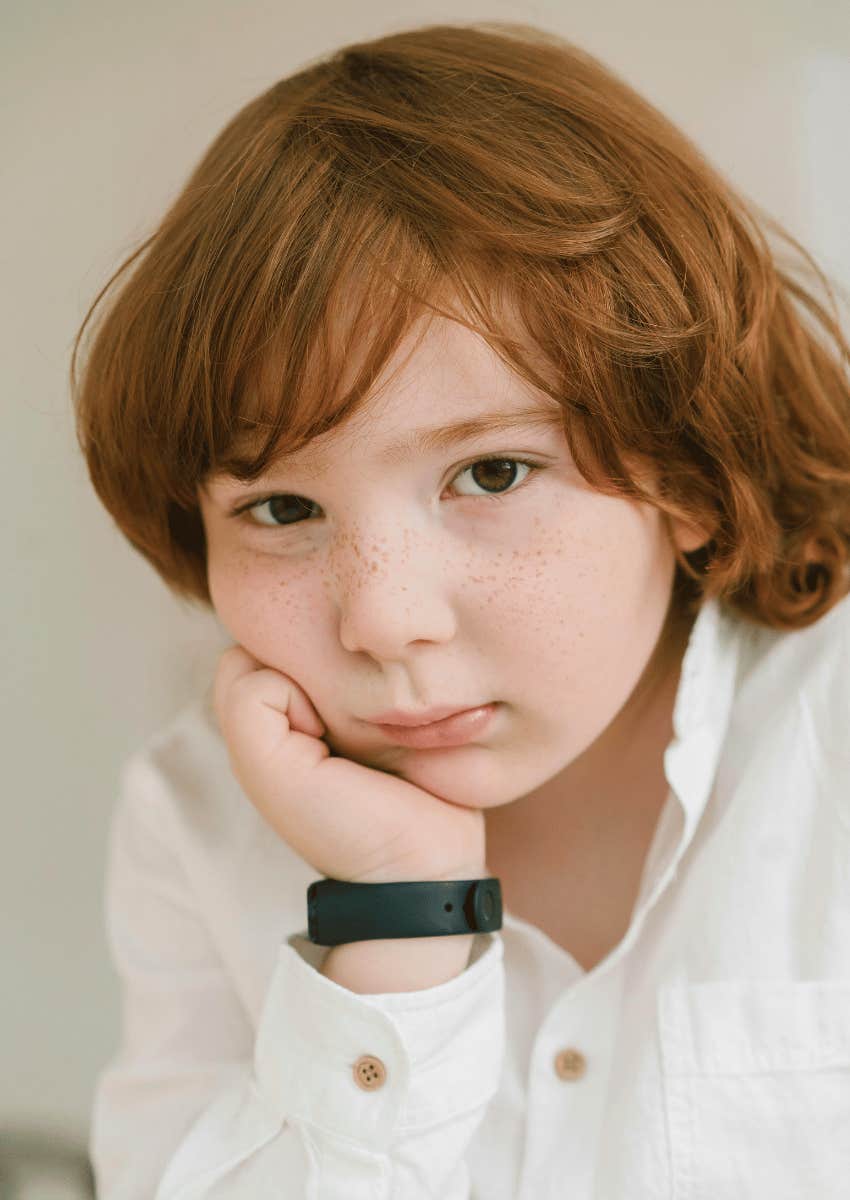
Daily life is a mixture of these two worlds, stitched together by routines. He loves playing with his sister and with his sister but play always follows his internal architecture. He directs everything—the rules, the sequence, the structure.
He accepts new ideas from me, sometimes eagerly, but he absorbs them into his system and reshapes them. The moment his sister introduces her own imagination, something unplanned, something he can’t absorb, the whole game fractures.
In his world, we haven’t just changed the game; we’ve broken it. The sequence he’s holding in his head shatters, and there’s no obvious way for him to glue it back together. Sometimes this results in a tantrum. Sometimes he abandons the game entirely. Sometimes he keeps playing with me but shuts her out.
Side by side, they can coexist peacefully. Actual two-way play is fragile, fleeting, delicate. My wife and I watch these dynamics together; whatever fears I carry, she carries beside me, every step of the way.
I used to fear his sister would outgrow him, but I've realized something more complicated: they’re both growing, but in different directions.
Her imagination expands outward into stories and characters and social worlds. His expands inward into structure, pattern, and control. They meet in the middle sometimes, beautifully, unexpectedly, and then drift apart again. Not through distance, but through divergence. And yet she keeps reaching for him.
In the mornings, she brings him his favorite toys, hoping they’ll pull him into her world. She tells him to come play tag or hide and seek, always trying to include him, always looking up to him—her big brother. And at night, when she pretends to tuck him in after dinner, she leans close and tells him, “ya tebya lyublyu, Roma”—I love you, Roma.
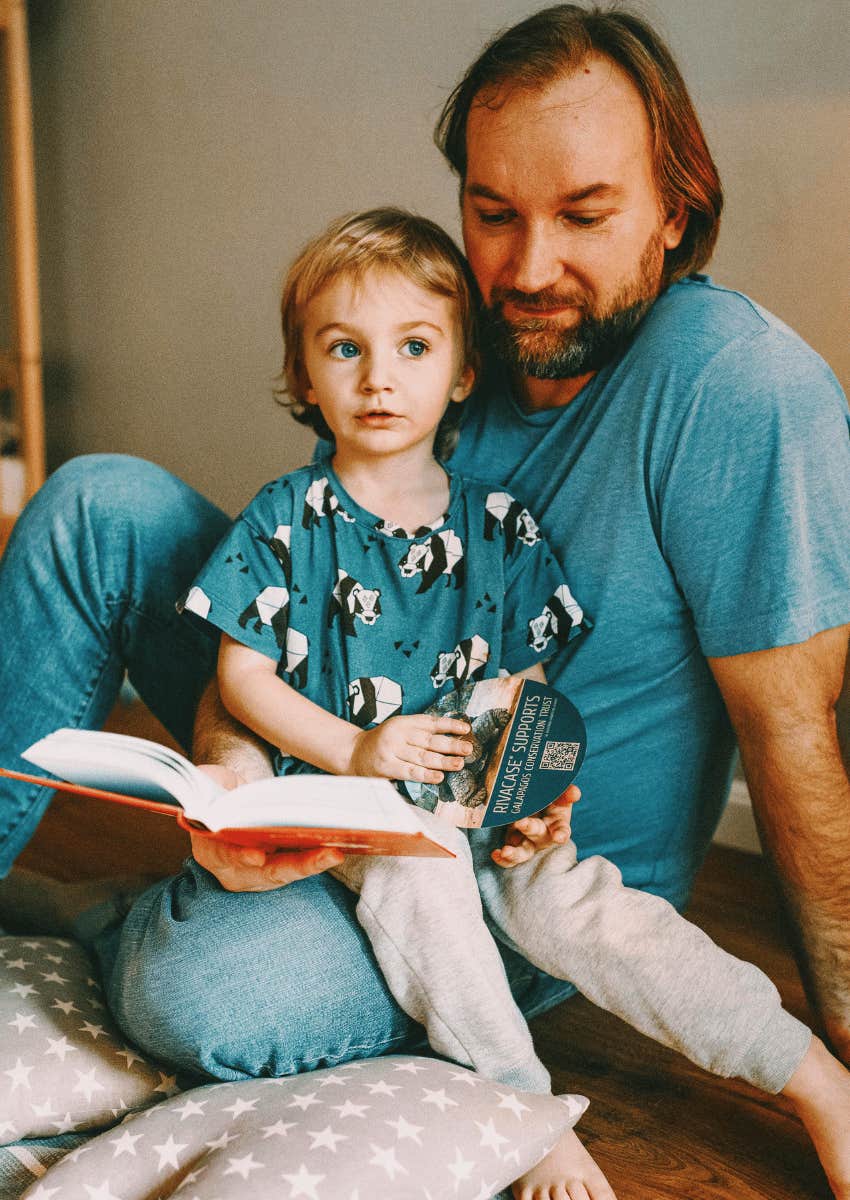
Even bedtime is its own architecture. He has rituals that must be followed in precise order. Reading books isn’t about story; it’s about rhythm, the feel of the sentences, the sound of the words. Sometimes he stares at pictures and doesn’t seem to hear me at all. Sometimes he memorizes a line I thought he ignored.
He never asks about the plot, never about the bigger picture. Instead, he zeroes in on tiny, irrelevant objects: pipes in illustrations, corners of buildings, little details that have nothing to do with the narrative. The ritual soothes him. The meaning is secondary. At least, the meaning I look for is secondary.
For him, the story might be about that one pipe that appears on every page, or the way the corners of the buildings never move even when everything else does. Why is it that I assume my interpretation is the correct one?
This is what being his father feels like: living side by side with him, separated by something enormous but invisible.
 Ksenia Chernaya / Pexels
At home, he is fully himself, and the wall between us thins, letting me see him with a clarity I don’t get anywhere else. But I can never step through it. Outside, that same wall thickens until only flickers reach me: a glance, a moment, a breath of connection.
It’s like we stand on opposite sides of something neither of us chose. Sometimes he opens a small window in it, and when he does, I see him, unmistakably him, but never for long enough. When I try to peer in uninvited, I usually see only shadows. It’s a kind of feeling I don’t have a name for.
I don’t know how a person could survive the world like this, closed off, speaking only through narrow cracks of light. He is overflowing with potential. If he could speak beyond the walls of home, he could connect, explain himself, ask for what he needs, learn from others, and move through the world with some measure of independence.
In my mind, everything would widen for him. But then I hesitate. Would it truly widen? Or is that simply the narrative I cling to because his inner life is a place I cannot picture at all?
People say he’s shy, or stubborn, or takes time to warm up. They say adults retreat inward, too. Or that he’s too smart and uninterested in childish things. To us, these explanations feel like a refusal to see what’s actually happening. It often feels like no one outside our family feels this ache, or carries it the way we do.
Raising a child you cannot reach on a 'normal' level creates a pressure I can’t articulate.
It feels helpless. It feels isolating. It feels like carrying something heavy in the dark, with no map and no way to put it down. I fear for my son’s future. I fear for how he will survive in a world that demands reciprocity, speech, and adaptability.
I fear he won’t be able to care for himself. I fear for my daughter, too, that she’ll inherit more than feels fair for her shoulders. And through all of it, my love for him stays fixed, the one thing that never shifts or closes or recedes.
Living with this means carrying a weight that never lifts. Loneliness, a constant pressure, and a fear that simmers quietly beneath everything. And that pressure doesn’t stay contained. It leaks into the rest of life — thinning our patience, shortening our tempers, making us snap at each other over nothing.
It’s not who we are; it’s just the overflow. But it also means love and joy, and flashes of warmth that cut through the darkness like light. Those moments keep me going.
Tomorrow morning, I’ll open the car door again, and he’ll step into the world that takes him from reach. And in the evening, the window will open, bright and luminous, and for a moment, our two worlds will touch.
Danil Volodarsky is a Russian-born, Canadian-raised writer who writes about culture, identity, and the invisible rules we inherit.
