
If Your Cat Does These 3 Things Around You, Research Says They Think Of You As Their Baby
 Vergani Fotografia | Shutterstock
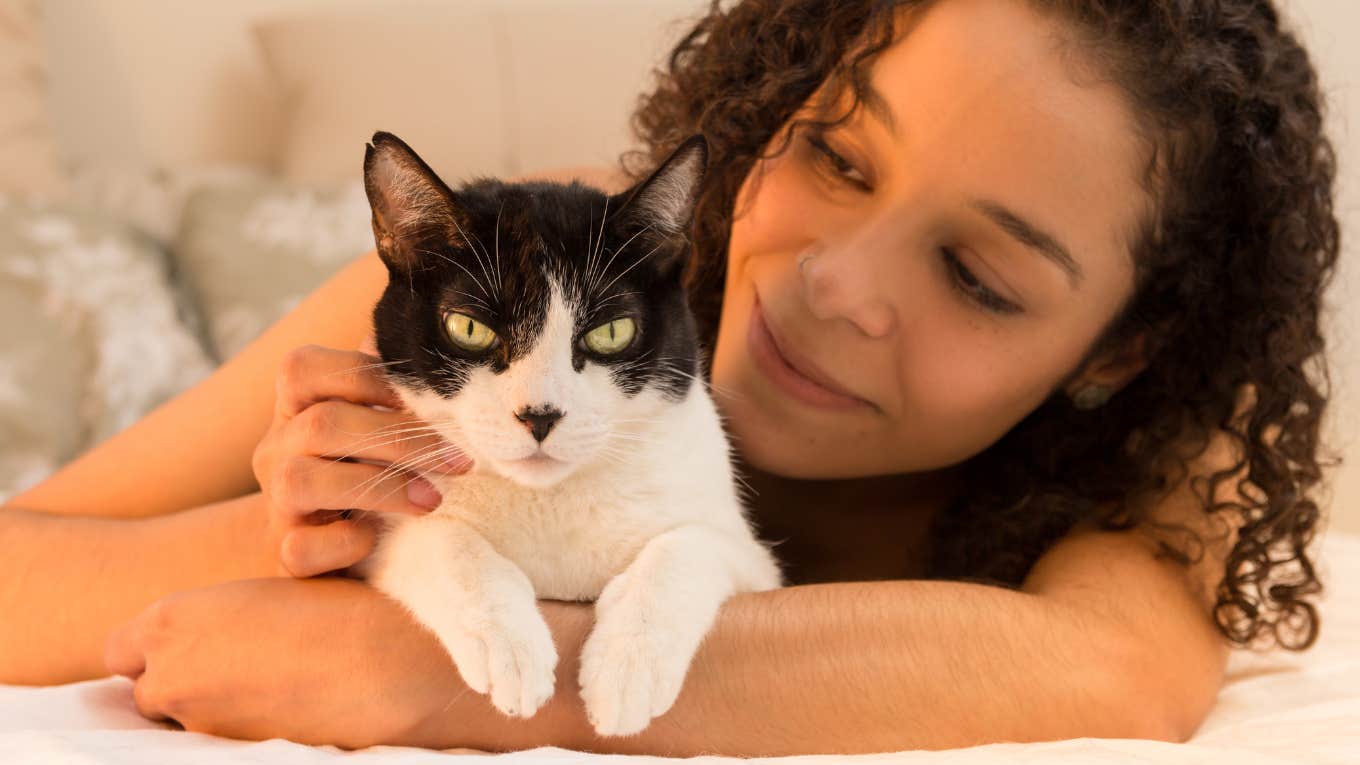
 It's often said that cats truly don't need us humans; we just have the better food. Research shows that cats actually think we're their baby, and some of the classic cat behavior is actually caretaking.
Cats are fiercely independent as it is, at least compared to dogs, and often prefer to lead the show rather than be approached for cuddles or play. It turns out they likely have a very valid reason why: They are exhausted by the parental duties they are performing for you, their giant infant!
3 signs your cat thinks you're their baby, according to research:
As the popularity of the term "fur baby" attests, many of us have come to view ourselves as our pets' parents. But where cats are concerned, it seems to be the other way around, according to scientists like biologist Dr. John Bradshaw.
In his book "Cat Sense," Bradshaw, whose decades-long research career largely focused on cat behavior, explains that, unlike dogs, cats have never been bred for specific purposes other than looking cute. Add in the fact that most female cats breed with feral tomcats, and you have a species that has stayed remarkably close to its wild ancestors.
Which means that what we tend to assume are learned, affectionate behaviors are actually primal caretaking instincts. This is in part because we humans often show behaviors toward cats, like high-pitched cooing, that not only mimic kittens but are signs of weakness in Cat World.
So the cats respond accordingly, assuming you're actually just a really big kitten! Here are three of the most common cat behaviors that scientists say show that your cat thinks you are a cat too, just one that's really, really big for some reason.
1. They bring you gifts
 lil artsy | pexels | Canva Pro
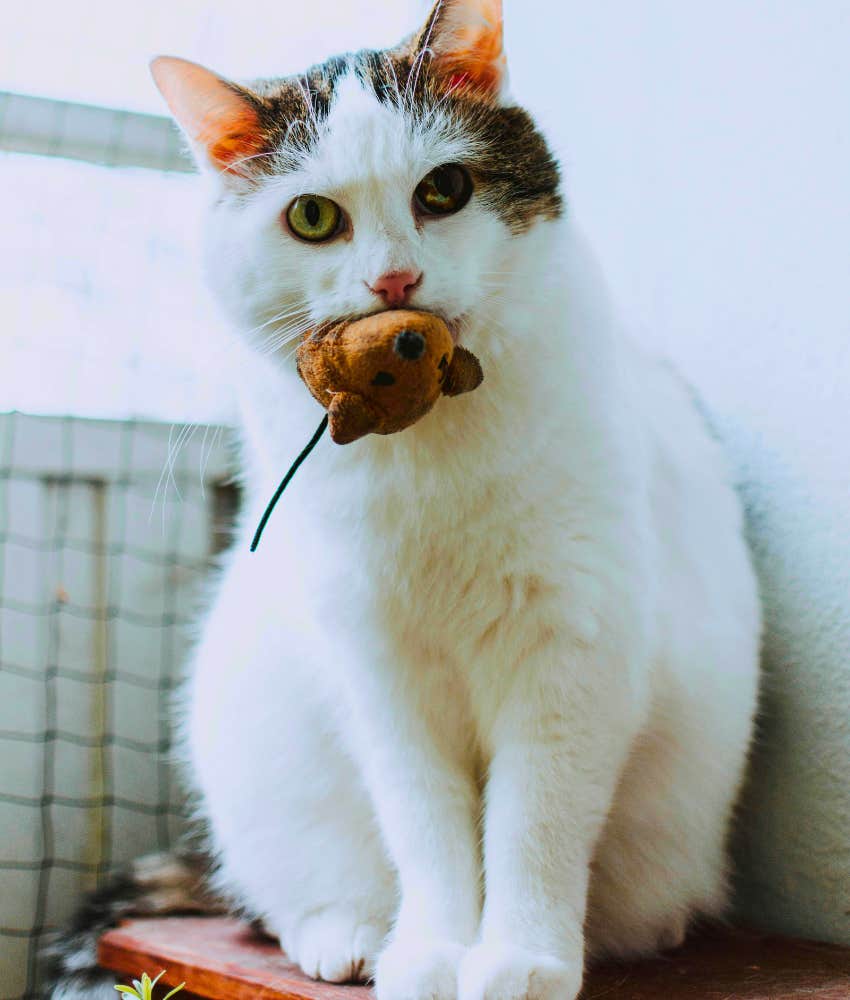
Most cat owners have had the experience of Fluffy bringing them toys, household items, or, if you're particularly lucky, a mouse or bird they've killed and left in front of the door or in the bedroom.
This charmingly disgusting behavior is often thought of as an offering of sorts, but scientists say it's more likely related to behavior cats would perform in the wild: Taking their prey away to a private, safe space where they know it won't get stolen by another animal.
But going one step further, scientists say this is also often part of the process of teaching kittens how to hunt. So not only do they feel certain you're too young and helpless to steal their treat from them, but they also think you could stand to learn a thing or two about pulling your weight around here!
2. They groom and bump heads with you
 Sofiia Potanina | Getty Images | Canva Pro
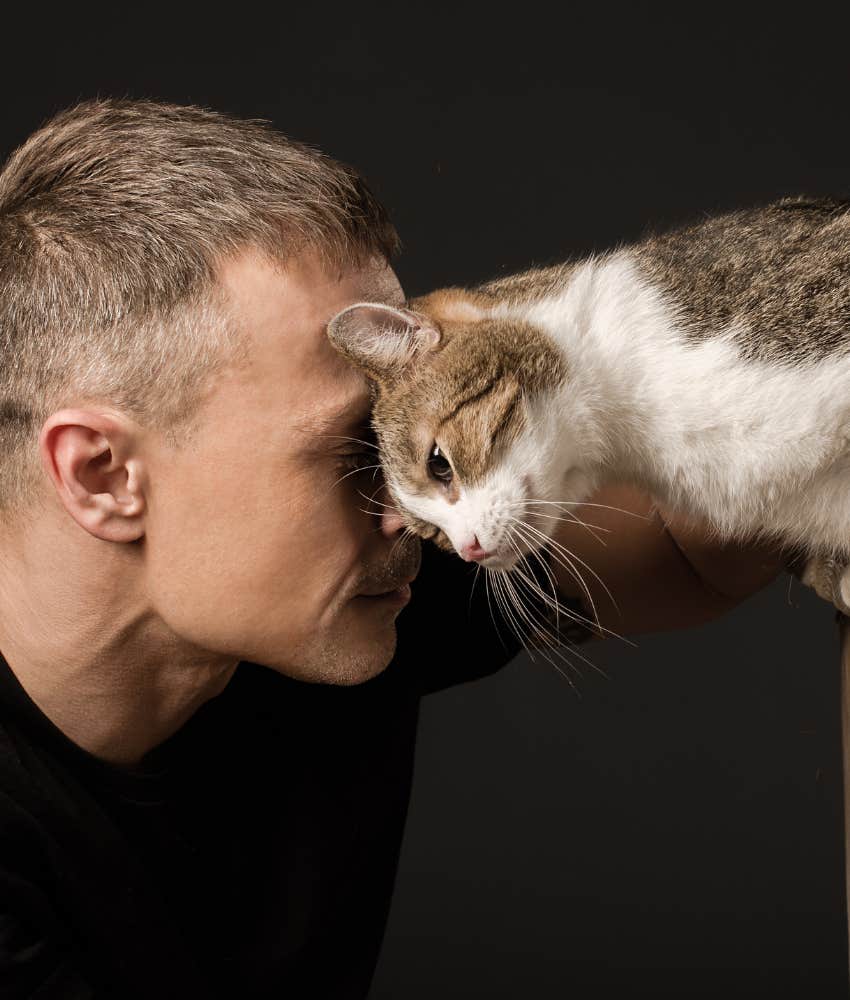
Those sweet head butts and deeply weird licks that cats give you? They're not just giving you a hug and a cuddle; they're likely grooming you like they would their babies.
This is in part because these behaviors, as well as rubbing up against your legs or your personal possessions, release pheromones onto you or the object, marking it as your cat's property.
But these behaviors also help cats bond with their kittens when they're little, so their kittens recognize their parents' scent as safe and secure. So yes, it's affectionate, but it's also part of the burden of parenting you, their big, dumb, giant kitten.
3. They try to sleep on your head
 cottonbro studio | Pexels | Canva Pro
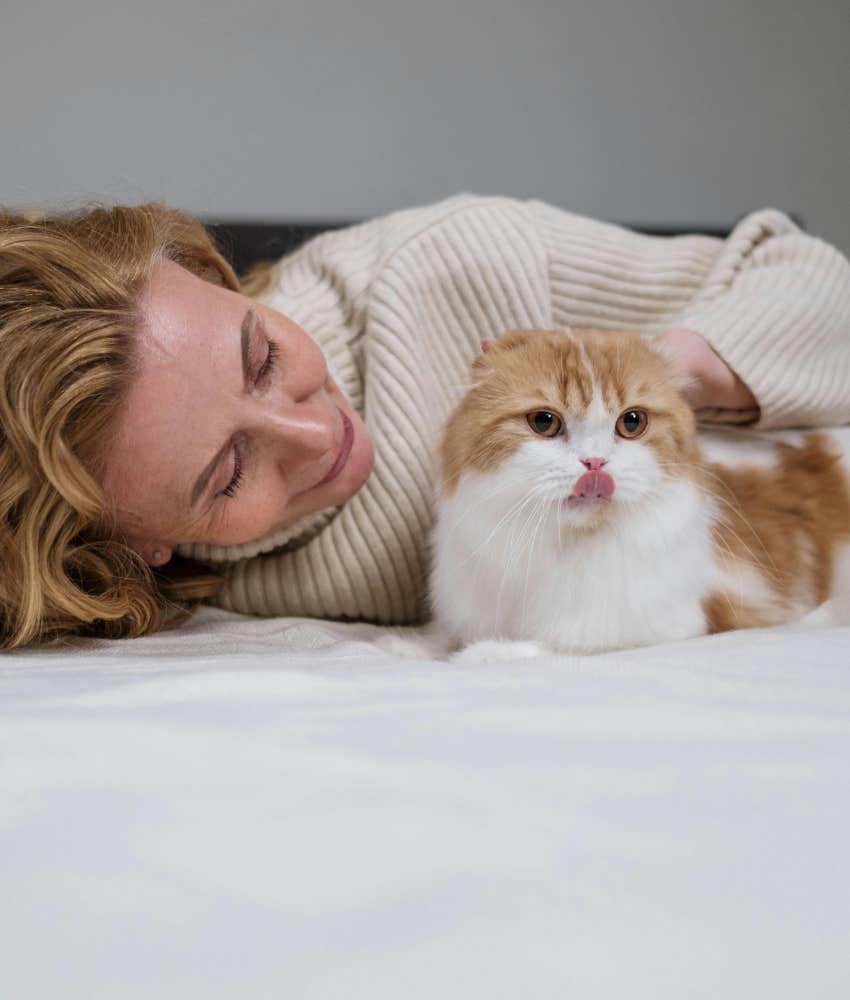
Your cat's habit of sleeping on top of your head isn't just an annoying, weirdo quirk. It's what they do to protect their kittens. Adult cats will often place themselves above their young so that they can keep an eye on them while sleeping or at rest. Similarly, they will often place themselves beside the kittens to act as a barrier between them and any approaching predator.
So when your cat insists on curling up between the headboard and your noggin or won't move from your side while you nap or relax, yes, they want to be really close to you because they think you're a huge baby that is going to get eaten by a wildebeest or whatever.
Kneading is another behavior that shows cats think humans are giant cats.
Kneading is perhaps the behavior that most shows your cat thinks you're a giant cat, though in the other direction: Kneading or "making biscuits" is something young cats tend to do to their mothers, not the other way around.
Making biscuits is something young cats do to their moms' bellies to signal that they should continue producing milk. So if your cat's a biscuit-making pro AND bringing your dead birds and licking you a lot? Well, they might be really, really confused about who's the baby and who's the parent, but in the cutest way possible.
John Sundholm is a writer, editor, and video personality with 20 years of experience in media and entertainment. He covers culture, mental health, and human interest topics.
