
Customer Claims They Were Forced To Leave A Tip In Order To Complete A Pizza Pickup Order
 PeopleImages | Shutterstock
 A customer revealed online that they were forced to leave a tip when placing an order for a carryout pizza. People found it a bit absurd to ask for a tip on an order that wasn't even being delivered.
Most customers expect to tip when someone waits on them or delivers their food. But lately, tip prompts have been popping up in places where the service doesn't feel that above and beyond. Instead, people are being asked to tip when they're just grabbing an order. And even the apps that restaurants claim make life easier for customers are sneakily forcing them to tip when they shouldn't have to.
A Papa John's customer claimed they were forced to leave a tip in order to complete their pickup order.
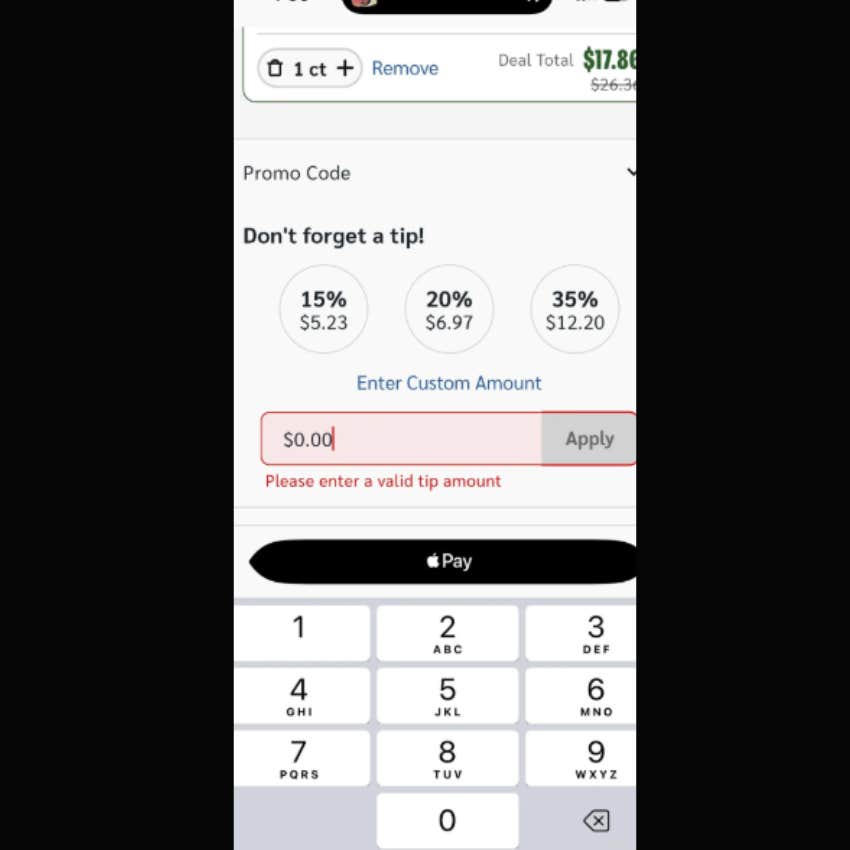
Posting to the subreddit "r/EndTipping", the customer explained that the debacle happened when trying to place a carryout order at Papa John's. Right before they could confirm their order, they were asked to leave a tip and weren't allowed to move on until they did so.
"As the title says, of course I get to the end and it asks for tip. I was doing carryout so there's no reason to tip. Their system doesn’t recognize 0 as a valid entry, so I gave them one cent just to complete my order," they explained, posting the photo of the Papa John's app where customers were prompted to leave a tip before completing their order.
 Reddit
They pointed out that it's "one thing" for people to tip their delivery drivers, given they're coming all the way to your door, but questioned why there was a need to tip the people making the pizza.
"When I only had one brief interaction with them?" they insisted. "Do these companies expect us to pay all of their employees?"
Customers shouldn't be encouraged to use a restaurant's app if they'll incur hidden fees.
Over the last five years, mobile apps for popular fast-food chains like McDonald’s, Taco Bell, and Wendy's have become increasingly popular.
The premise of these apps promises customers a more seamless experience, placing an order and not having to wait in the long lines, both in-store and in drive-thrus.
In fact, research has shown that customers find using the apps to be more convenient than traditional ordering. However, there's definitely a cost to convenience. Mobile apps can easily obtain your personal information, even when you're not using them.
 PeopleImages | Shutterstock
In McDonald's privacy policy on their app, the company tells customers that they must agree to their policy before placing an order and notes that it may use "inferences drawn from [collected data] to create a profile about a consumer reflecting the consumer’s preferences, characteristics, psychological trends, predispositions, behavior, attitudes, intelligence, abilities, or aptitudes."
By that design, these fast food mobile apps can tailor their marketing to make you want to place an order. Then there are all of these hidden fees that are pushed through the app, like forcing customers to tip when there should be an option not to.
All in all, it's a way for these fast food businesses to just get more money out of their customers by creating a system that makes it seem as if they're saving both time and money when, in reality, they're probably only saving on time.
Most Americans have become extremely fatigued by the tipping system.
Bankrate published a 2024 survey of tipping results for different kinds of services. It isn't just tipping at restaurants, fast food chains, or even coffee shops that are leaving people feeling agitated. The survey results found that 67% of those who go to sit-down restaurants always give tips to servers.
A much smaller share of adults who go to coffee shops are tipping baristas all the time, or when they have to pick up their takeout food.
Thirty-seven percent of adults said they "feel like businesses should pay their employees better rather than relying so much on tips," per Bankrate's results. Thirty-five percent of adults said "tipping culture has gotten out of control." When it came to things like tipping at sit-down restaurants and leaving tips for their hair stylist/barber, most people did that with no issue.
 Dejan Dundjerski | Shutterstock
It was only when people were asked to leave tips when picking up their takeout or when going to a coffee shop that there was an issue. Most of the time, we're tipping out of guilt, especially when an employee flips the tablet to face us as we're paying.
There are definitely instances where leaving a tip should be non-negotiable. But at the same time, tipping for a service that doesn't feel personal or just going to Papa John's to grab a pizza is where people seem to draw the line.
Nia Tipton is a staff writer with a bachelor’s degree in creative writing and journalism who covers news and lifestyle topics that focus on psychology, relationships, and the human experience.
