
Jeff Bezos Says Your Answer To This One Question Determines Just How Successful You’ll Be, & Psychology Agrees
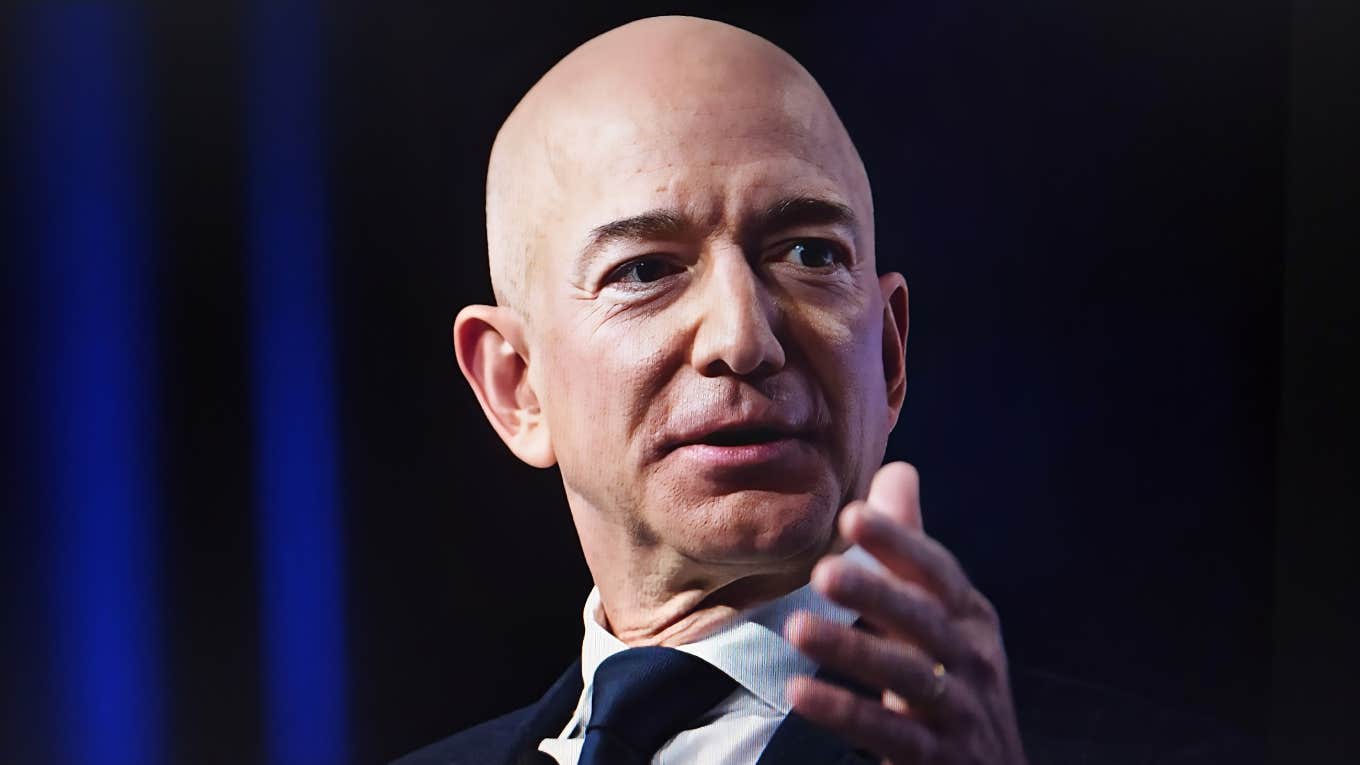 FotoField | Shutterstock
 According to a former Amazon executive, Jeff Bezos believed the way someone answers his "favorite" interview question reveals just how successful they'll be. And, it turns out, psychology backs him up.
Imagine just how overwhelming it would be to be in a job interview with Jeff Bezos, one of the richest and most powerful men in the world. To make matters even worse, it turns out that Bezos doesn’t always stick to the traditional interview questions. I’m sure he asks about candidates’ work experience and skills, but there’s also one unexpected question that he throws in. It’s a little unconventional, but he insists that it can determine how successful someone will be.
A former Amazon executive shared Jeff Bezos’ "favorite" job interview question.
Dan Rose, who worked as an executive at Amazon for almost a decade and is now an investor, revealed the interesting question Bezos would always bring up in interviews in a post on X. “When I worked at Amazon [from] 1999-2006, Jeff Bezos’ favorite interview question was ‘are you a lucky person?’” he said.
At first, it may seem strange to ask someone if they consider themselves lucky in a job interview. After all, job performance is usually measured by concrete deliverables and metrics, not your luck. But Rose argued it was brilliant. “What a great way to filter for optimists and people who manifest success,” he added.
There’s actually evidence that suggests asking someone about their luck really does tell you a lot.
Business journalist Jessica Stillman reported on Bezos’ propensity for luck and shared that it is meaningful. When we hear the word “luck,” we tend to think of superstitions, but that’s not what Bezos was after.
Venture investor Patrick Mayr addressed the interview question in a blog post, in which he called it a “great question.” He continued, “For someone to acknowledge that they have benefitted from luck is a sign of modesty and confidence.” Basically, if you’re willing to admit that you’re lucky, it means that you aren’t taking credit for all of your accomplishments yourself.
 sturti | Getty Images Signature
Furthermore, Stillman noted that lucky people tend to have a more open mindset that leads to “initiative.” This was illustrated by an experiment conducted by researcher Richard Wiseman. He said he gave newspapers to people and asked them to count how many pictures were in them.
Unlucky participants completed the task in about two minutes, while lucky ones only took a few seconds. It was all because they were the ones who noticed a message on the second page that read, “Stop counting. There are 43 photographs in this newspaper.” As Wiseman concluded, “Unlucky people miss chance opportunities because they are too focused on looking for something else.”
Despite the evidence that seems to support the use of the question, people are still skeptical.
One Reddit user took to the site’s r/AskHR forum to describe their own experience. “They asked me how lucky I am on a scale from 0 to 10 as the last question in the interview,” they recounted. “What just happened? What were they asking?”
 Tima Miroshnichenko | Pexels
One commenter noted it was “very hard to tell what they wanted.” Another suggested it was “a sign that the interviewer has no idea what they’re doing.” Still, others tried to make sense of the question. “I think this is actually a question about optimism,” someone said. “If you perceive yourself as lucky, you will tend to view events favorably. It may also reflect wise life decisions leading to a pattern of successes.”
The question is admittedly a bit strange, and it makes sense that it would throw someone off during a job interview. But Bezos understands that people who think they are lucky have quiet confidence and a sense of competence. That sounds like something every leader would want in a team member.
Mary-Faith Martinez is a writer with a bachelor’s degree in English and Journalism who covers news, psychology, lifestyle, and human interest topics.
