
Kids Today Don’t Get Enough Credit For Doing These 5 Things Better Than The Generations Before Them, Say Teachers
 Jose Calsina / Shutterstock
 One user posted on Reddit asking teachers what they think this current generation of students does better than previous generations. While the user admitted, "We all complain about what this generation of students can’t do," the teachers who responded to the post had some wholesome things to say.
Every generation gets its fair share of criticism, and today's kids seem to be constantly in the spotlight. From claiming that they're too glued to screens to saying they're not prepared for the real world, it can be easy to overlook what they're actually doing right.
Kids today don't get enough credit for doing these 5 things, according to teachers:
1. Respecting each other's hobbies and interests
In the past, it was normalized to only like whatever was popular. Now, there's less pressure to be into the same things, especially when bullying isn't as prevalent. Kids feel like they are allowed to enjoy nontraditional things and be passionate about them.
 ViDI Studio | Shutterstock
"Far less judgy. People gloss over this but it’s one of the biggest changes," said one teacher. "Sure, there’s always going to be people who aren’t accepting, but the current generation of students is much more tolerable overall. Being a nerd isn’t a bad thing, being popular isn’t everything, while there’s still “band kid” stereotypes just being in band or in the musical isn’t a bad thing. Playing football doesn’t automatically make you king. Being popular doesn’t automatically make you king. Cliques aren’t as bad as they used to be."
2. Being open-minded and inclusive of everyone
Most kids are exposed to diverse environments growing up, whether it be different races, religions, cultures, genders, abilities, or backgrounds. They are taught that people should be respected for who they are, which wasn't as common in older generations.
One teacher mentioned, "Involving the [special education] kids in things," with another replying, "And not judging them nearly as much as in decades past. If anything, they’re collectively more likely to protect them than try to bully them."
3. Promoting mental health awareness
Kids today have made mental health far less stigmatized. They talk about their struggles and emotions more openly, where previous generations were usually told to "tough it out." Setting boundaries and seeking outside help is socially acceptable, and kids are often more supportive of each other.
 New Africa | Shutterstock
"They understand and empathize with the mental struggles of today’s world better than anyone," a teacher shared. "I heard a kid yesterday say, 'she’s struggling because her parents make her feel inadequate. Her standoffish attitude is just a trauma response, don’t take it too personally.' No one I went to school with ever talked like that."
4. Taking accountability
Expectations around responsibility are clearer. Kids are encouraged to understand the impact of their actions and admit when they mess up. Self-accountability is no longer seen as a weakness but as a strength.
According to one teacher, "They hold their friends accountable academically and they scold each other for acting up in class/not doing their work. 'Are you seriously late again bro? It’s not hard to be here in five minutes!'"
5. Prioritizing individuality
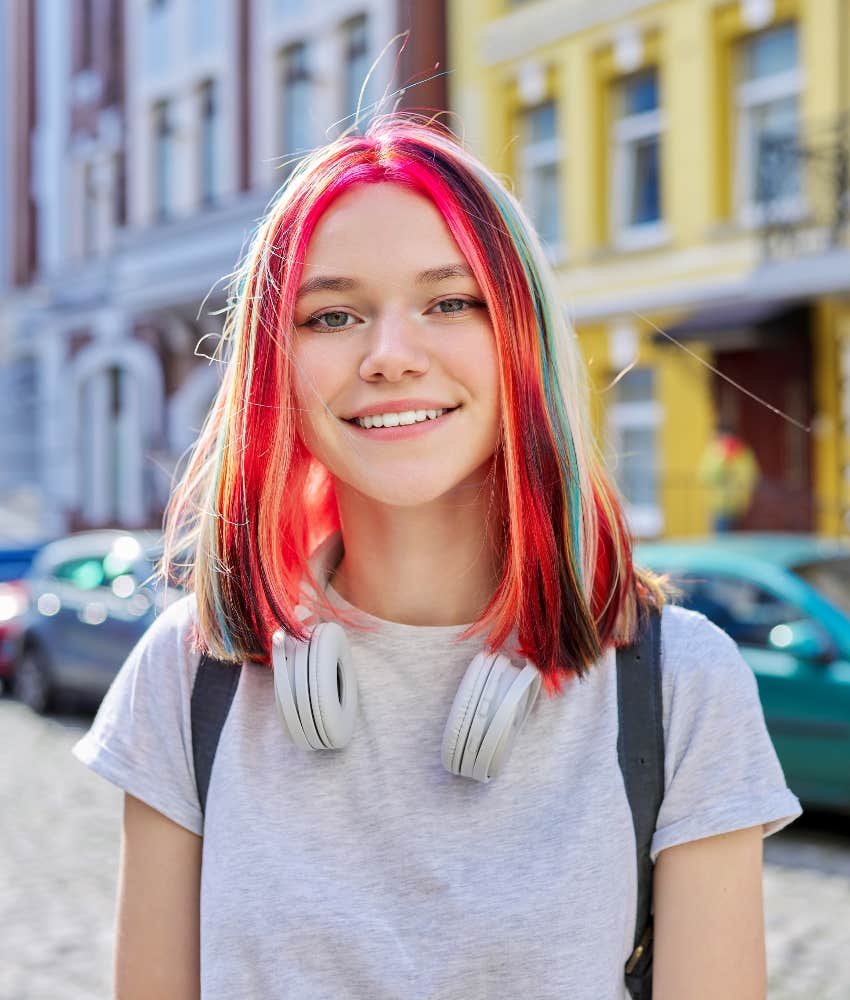
Younger generations tend to value self-expression and authenticity over fitting in. They prefer to engage in what they truly like rather than trying to maintain a curated, fake version of themselves just to impress others.
 VH-studio | Shutterstock
A teacher wrote, "Individuality in general. In whatever metric you want from how they dress, to openly embracing childlike interests, to having diverse friend groups, there is a lot less cookie cutter kids for the most part than in years past.
Kayla Asbach is a writer currently working on her bachelor's degree at the University of Central Florida. She covers relationships, psychology, self-help, pop culture, and human interest topics.
