
Parents Who Protect Their Kids From A Specific Part Of Life Are ‘Destroying The Fabric Of Society,’ Explains A Former Teacher
 AYO Production | Shutterstock
 There's undoubtedly a difference between kids raised watching old Disney movies and those raised watching new Disney movies. Basically, one cohort was exposed to the less-than-pleasant parts of life ("Bambi" is still haunting us), and the other is shielded from those difficult things.
Most of us would assume that shielding kids from things that make them feel uncomfortable is a good thing, and obviously, to an extent, it is. But life is hard, and being a child doesn't offer immunity from those things, unfortunately.
Teachers are the first to have noticed this shift, with the results appearing in the classroom, but the behavior is rooted far deeper than habits picked up at school. According to former teacher Mike Bonitatibus, the true reason is permissive parenting, which he argued makes kids more prone to giving up at the first sign of struggle.
Former teacher Mike Bonitatibus said parents who protect their kids from hard things are 'destroying the fabric of society.'
In the 21st century, parents have stepped away from the authoritative parenting style, and that's a good thing. The pendulum may have swung too far in the opposite direction, however. Now, reprimanding kids for bad behavior is rare.
Instead, there has been a rise in permissive parenting, often mislabeled as gentle parenting. For Bonitatibus, the permissiveness, or what he also described as protecting kids from hard things, is wrongfully teaching children that they can get away with anything.
Permissive parenting is exactly what it sounds like: letting kids do and act as they please without consequence. While this may make your child view you as the cool parent, keeping them happy in the short term, the long-term impact can be devastating.
Not being punished for bad behavior has created a new generation of individuals who view effort as lame and give up when faced with the slightest of hardships. Really, why should they try if the reward comes regardless?
Before quitting his long career as an educator, Bonitatibus caught onto this new shift in attitude. "[The] I don't give a [expletive] mentality was being spread," noted Bonitatibus, expressing his aggravation towards the situation.
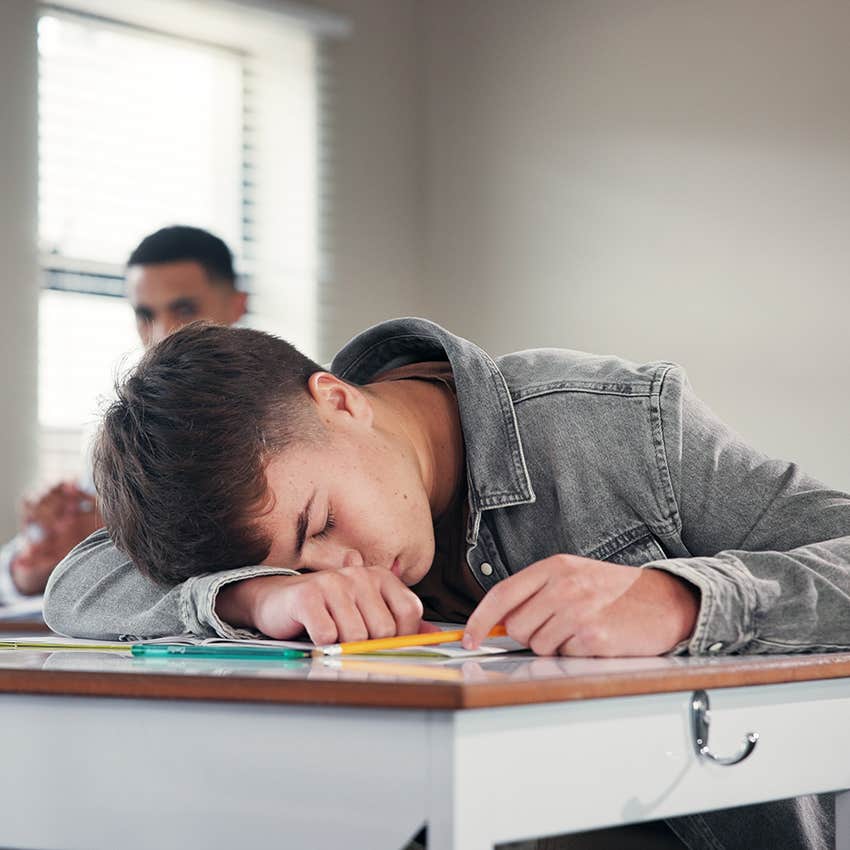
The behaviors taught at home carry over into the classroom, destroying students' work ethic and problem-solving skills.
The attitude problem within classrooms wasn't just a mere annoyance for Bonitatibus. For him and many other educators, it is the reason they quit.
In the past, when poor behavior was taught at home, it would be squashed by any disciplinary codes that were enforced at school. Now, the school system has limited the amount of action they will take in order to reinforce classroom policies.
 PeopleImages | Shutterstock
One of the reasons behind this is that schools get more funding when there are fewer suspensions and expulsions reported. Not only that, but there has been an influx of what Bonitatibus called "entitled" parents confronting administrators when discovering their kids were punished at school. Some of these cases have even escalated into lawsuits.
As a result, behavior goes unchecked, and teachers are forced to pass students who don't even put in any effort. They keep getting pushed to the next grade, never learning the material they need to succeed and eventually graduating well below the academic prowess of generations past.
Now that it's cool to not care, the kids seem to be running the classroom. This has become more of an epidemic with the rise of GenAI, which has become a shortcut for unmotivated students. With the school system becoming more lenient, partially because of the criticism coming from the parents, there's no incentive to get good grades anymore.
Bonitatibus' solution for this lackadaisical mindset is to 'leave kids behind.'
Of course, it's important to support your child as they grow and learn. However, sheltering them from discipline or hardships will build up walls within them, limiting their ability to reach for greater things. You need to let them struggle on their own when challenges arise so they can better appreciate their successes and be better able to handle problems in the future.
With the way the world is turning and so many people viewing it as the downfall of humanity, we must raise a new generation of innovators and hard workers. The idea that there is no future has been communicated to Gen Alpha, leaving them lacking drive, but practicing gratitude and a growth mindset can make all the difference.
 Drazen Zigic | Shutterstock
Bonitatibus recommends Carol Dweck's growth mindset to be incorporated within the classroom in order to provide students with the tools they need to motivate themselves. Instead of thinking "I can never do this", they'll rewire their brains to think "I don't know how to do this yet."
The former teacher explained that the brain must be exercised, just like any other muscle, and that exposing it to discomfort is the best way to grow mentally.
In order to set a strong example for your children, it's best to teach them that behaviors have consequences and that life is hard sometimes. By doing so, it'll raise a generation that takes strides to fix problems rather than walk away from them.
Gabrielle Mattes is a writer working towards a Creative Writing degree. Her focus is lifestyle, wellness, human interest, and relationships.
