
The Amount Of Screen Time Kids Have At 2 Specific Ages Affects Them For Life, According To Research
 Arsenii Palivoda / Shutterstock
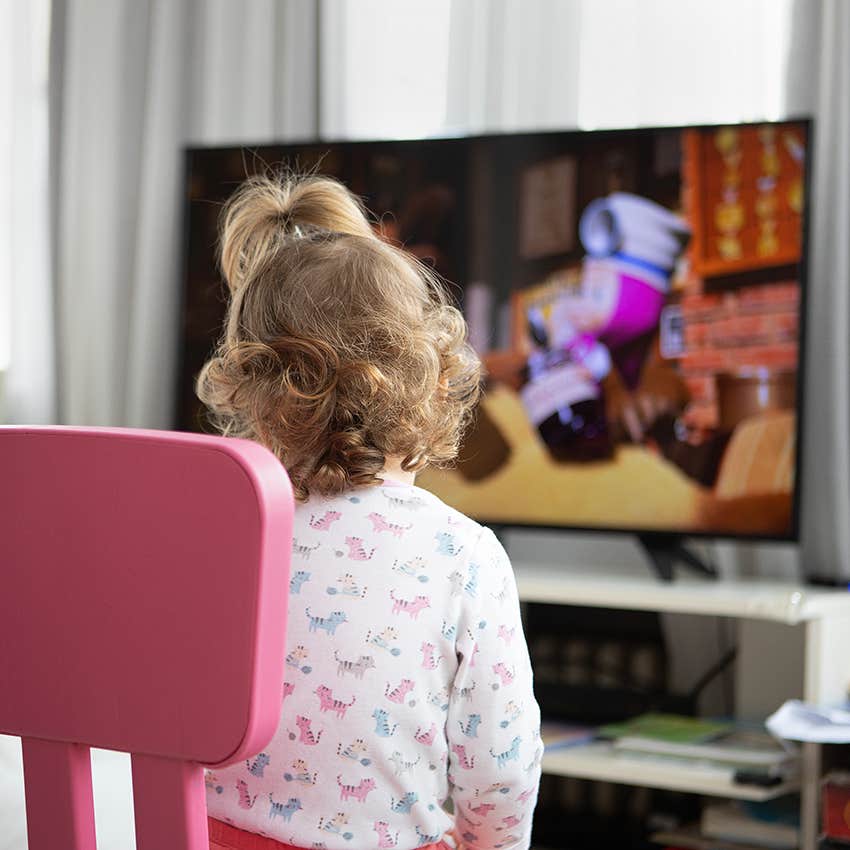
 Gen Alpha has been referred to frequently as iPad kids.
With a plethora of brightly colored apps geared toward young kids and children's shows that claim to be educational but are really surface-level, parents have to make a more conscious effort to steer their children away from screens and into the physical world.
It may seem a lot easier, as a working, busy parent, to distract your child with a YouTube playlist of videos while you get your work done, or an interactive game, but research has shown that this habit may lead to developmental issues later on down the line.
Researchers say that the amount of screen time children have at two specific ages can affect them developmentally,
While previous generations were raised on biking outside, reading imaginative story books, and playing make-believe, Gen Alpha has been spoon-fed short-form content and iPad games starting at an early age.
Teachers and parents have seen less engagement between child peers due to excessive screen time, with children being more interested in their parents' phones over making genuine connections, but now it's impacting their brain development, too.
 Petar Djordjevic | Shutterstock
To determine the correlation between screen time and child development, researchers from Inserm and the National University of Singapore conducted an investigation using data from the Growing Up in Singapore Towards Healthy Outcomes birth cohort. Parents evaluated their child's screen time in six different age ranges, and then the researchers measured academic achievement and working memory years down the line.
Of the 502 children included in the study, the results were unanimous. The higher a young child's screen time, the poorer they will do academically and the worse their memory will be. However, two age ranges stood out as most detrimental to development if you overexpose your child to screens during them.
The study recommends that children at ages 18-24 months and 2-5 years should have limited screen time so as not to set back development.
Of the ages included in the study, which ranged from infancy to middle childhood, the children with the highest screen time at ages 18 months to 5 years old were the most impacted in the future.
These ages are important for development. At 18 months, a child is displaying cognitive, physical, emotional, and social growth. Toddlers this age up to 24 months should be able to walk on their own, recognize familiar objects and people, and begin interacting with their peers.
Between the ages of two and five, children will begin copying others, showing more independence, naming familiar places and pointing to recognizable objects, following simple instructions, and creating imaginative ways to play. Children will also display behaviors such as standing on tiptoe, playing mom or dad, and openly talking about interests.
 Stock 4you | Shutterstock
When children are stationed in front of a television or iPad, they're losing the time and independence that allows them to reach these developmental milestones. Children will regress and become codependent on their screen for entertainment and communication.
"The effect sizes we saw at age 1 were the largest among all time points we examined,” explain the authors of the study. "That suggests early infancy may be a window of heightened sensitivity, when the developing brain is particularly vulnerable to the displacement of learning interactions by screen time."
While ages two to five had less significant an effect on development than 18-24 months did, researchers still caution parents to limit their child's screen time during these ages, as it will severely impact their progress in school and ability to memorize academic teachings.
You don't have to eliminate screen time from your child's routine completely, but it should be significantly reduced and replaced with more educational activities.
When you have a busy schedule, setting your child in front of a screen for an hour a day can be the small savior that lets you get things done. And while these small iPad breaks won't set your child back, when it becomes a pattern, it will create screen-obsessed children and less creative thinkers in the future. When raising a child, and even when practicing your own habits, everything is good in moderation.
From birth to 18 months, it's recommended that you completely avoid screen time as much as possible. This includes phones, computers, tablets, and TVs. The occasional screen interaction is okay, but it's best not to make a habit of it and let your child learn their surroundings in a natural, curious way.
Similar habits should be practiced between the ages of 18 months and two years. Introduce minimal screen time, and when children are engaging with screens, there should always be a parental figure watching with them. This allows you to explain what they're seeing so they can take more away from the interactions.
 PeopleImages | Shutterstock
It is only when a child reaches ages between two and five that screen time should be increased in small increments. Children should only be allowed one hour of screen time per day or less, and when they do interact with screens, it's best if you're showing them high-quality programs that will allow them to learn instead of just mindless entertainment.
Remember, if you let your child watch their favorite show or play an iPad game, you're not a bad parent. It's normal to let a child engage in screen-based entertainment in a world that's so technology-forward. However, try to let them explore other activities that introduce them to nature, book-learning, and imaginative thinking, so that your child can thrive when they enter school and be more well-rounded.
Gabrielle Mattes is a writer working towards a Creative Writing degree. Her focus is lifestyle, wellness, human interest, and relationships.
