
Teachers Say Kids Today Write In Chicken Scratch & It's A Much Bigger Issue Than Parents Realize
 Hryshchyshen Serhii | Shutterstock
 Most of us remember spending years of school learning how to write, first tracing letters, then writing our names, and eventually progressing to cursive.
But as technology has taken over, that tradition has at least partly fallen by the wayside, and education experts say it's having a major impact on kids' learning as a whole.
Even professors are noticing that college students are behind on reading skills, and the problem has been blamed on everything from the pandemic to, of course, social media. But teachers say there might be a far simpler explanation, known as the so-called "death of handwriting," which has an impact on learning in general that many parents may not suspect.
With the rise of technology, practicing handwriting is less common than ever, and teachers say it's becoming a huge problem.
These concerns are exemplified by the story of a fifth-grader named P.J., who was featured in an article by NJ.com. Although he makes good grades, P.J. is frequently told his handwriting is "bad and illegible." His n's look like r's because he doesn't quite finish making them when he writes, his sentences go off at upward angles across the page, and other problems we likely all remember having drilled out of us during handwriting lessons as kids.
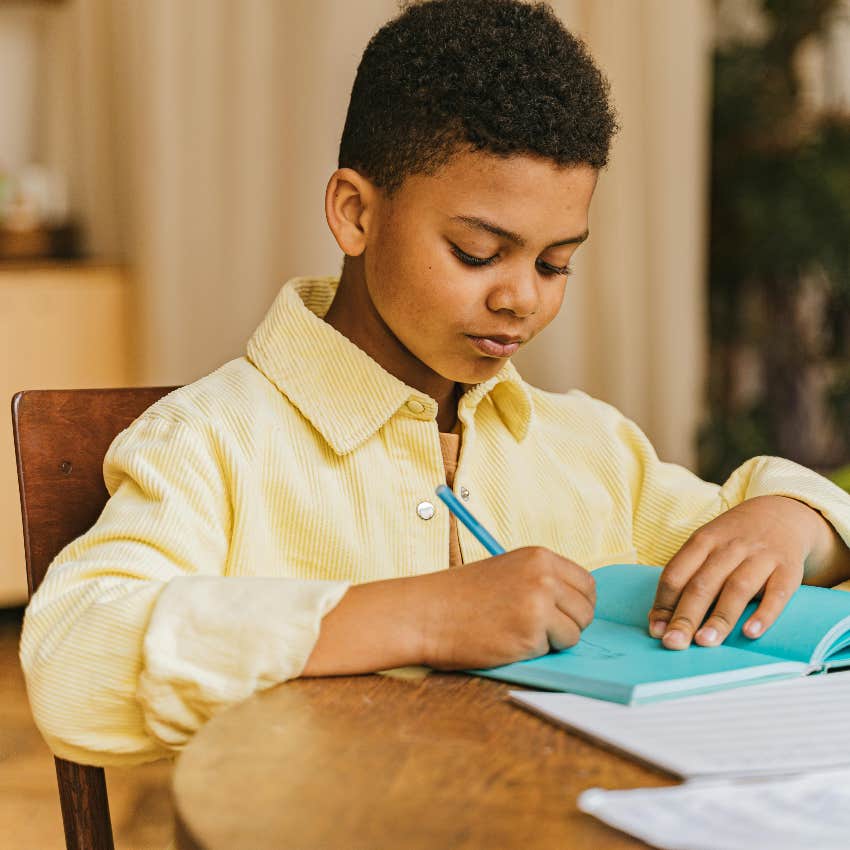 Antoni Shkraba Studio | Pexels
But he doesn't see a problem with it because, he says, he rarely writes anything by hand outside of school. Why would he, after all, in a world centered almost entirely around screens and keyboards, especially for younger generations?
Situations like P.J.'s have become so commonplace that many parents and even some teachers, P.J.'s included, don't really worry about it anymore either. In fact, his mom chalked it all up to him being in first grade during the pandemic. A 2021 survey of elementary school teachers found that 83% noticed a significant negative impact on handwriting skills after a single year of online schooling during lockdowns.
However, handwriting is tied to everything from fine motor skills to reading ability and learning in general, and some experts think it is the key to good literacy skills.
Sure, handwriting might seem petty in a world where everything we do is typed out anyway. But experts say this actually runs counter to how our brains work, especially if we have any kind of neurodivergence.
Even those who are neurotypical, however, learn best with a variety of sensory approaches, called multisensory learning. It's why you did a bit of reading, writing, speaking, listening, singing, and dancing every single day in elementary school. It's quite literally how our brains work when it comes to acquiring skills and information.
Handwriting is a hugely important part of this because the interactions between the hands and eyes impact the language-processing parts of the brain. And that, in turn, impacts reading skills. Research has shown that practicing handwriting has a direct positive impact on literacy that keyboarding, by contrast, has been shown to lack.
But why should handwriting matter so much when everyone's is different to begin with?
Just like anything else, handwriting styles cycle through different trends, which can be seen in the way past generations recorded things in a way that seemed purposefully attractive. Everyone also has the power to change their individual handwriting at any point in their life if they see something that inspires them to do so.
 Mikhail Nilov | Pexels
Teachers and experts say kids don't need to go back to lessons on how to perfectly and uniformly produce letters that all look flawless, let alone learn cursive. However, learning to handwrite legibly is still important, especially since keyboarding does not seem to replicate the same skills.
After all, keyboards have only existed for a tiny, minuscule fraction of the time we humans have existed, and our brains clearly haven't caught up yet. Teaching kids the old ways of doing things, even if they rarely use them, just might be the way to bridge the gap.
John Sundholm is a writer, editor, and video personality with 20 years of experience in media and entertainment. He covers culture, mental health, and human interest topics.
