
People Who Basically Meditate By Listening To Their Cat Purr Usually Experience 5 Scientifically Proven Benefits
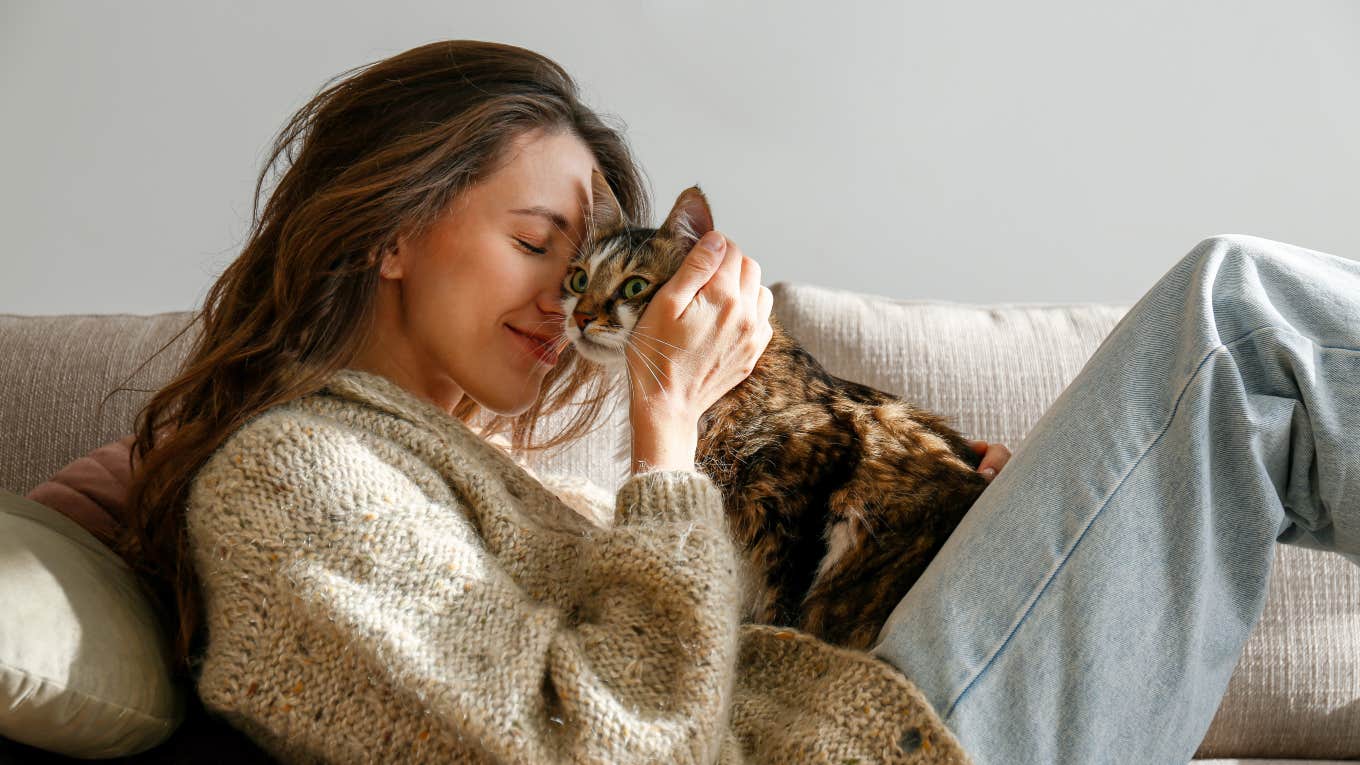 evrymmnt / Shutterstock
 The sound your cat makes when it purrs is distinct from any other noise. Some cats purr softly, like a gentle hum, while others have a loud purr that sounds more like an engine rumbling.
Yet all cats’ purrs share certain qualities that can make their owners feel better, mentally and physically. It might seem like magic, but it's really just a biological healing mechanism that can help both cats and humans.
Here are 5 ways a cat’s purr has ‘healing powers’ for their human:
1. The sound reduces stress
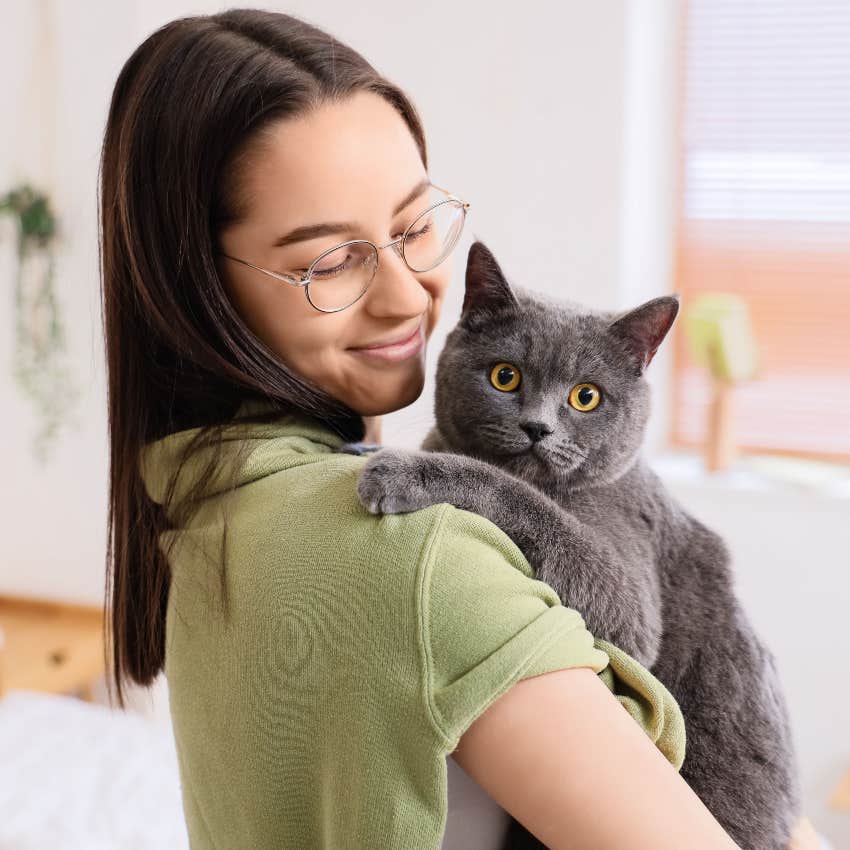 Pixel-Shot | Shutterstock
Research done on cat anatomy posits that their purr comes from the muscles in their larynx. As those muscles contract and relax, they tighten and loosen the part of the larynx that surrounds the vocal cords. The air vibrates as your cat breathes, producing that sweet, calming purr.
You might notice that petting your cat elicits this purring sound from them. This could be because they’re content, sitting on their person’s warm lap, receiving affection. Purring offers comfort, making you feel like you’re less alone, and you are because you’re spending time with your furry friend.
Petting your cat can increase serotonin and oxytocin, hormones that make us feel happy and calm. Hearing your cat purr also produces those hormones, which can help to lower your stress levels. So, when your cat purrs as you’re petting them, you’re getting a double dose of feel-good chemicals.
2. The vibration heals bones, skin, & tissue
A cat’s purr vibrates at a frequency of 25 to 150 Hertz, and those vibrations might hold actual healing properties. The frequency of a cat’s purring corresponds to known healing frequencies for humans.
Bones, particularly, respond to 25 to 50 Hz, and skin and soft tissue respond to around 100 Hz, all well within the range of a cat’s purr. It’s possible that purring stimulates bone growth and repair, as the sound stimulates the cells responsible for healing bones.
A cat’s purrs might help heal fractured bones and promote the formation of new bone tissue. It’s also possible that the vibrations from purring can increase bone density, which is especially helpful for older people, who are at a higher risk for osteoporosis.
3. The sound lowers blood pressure
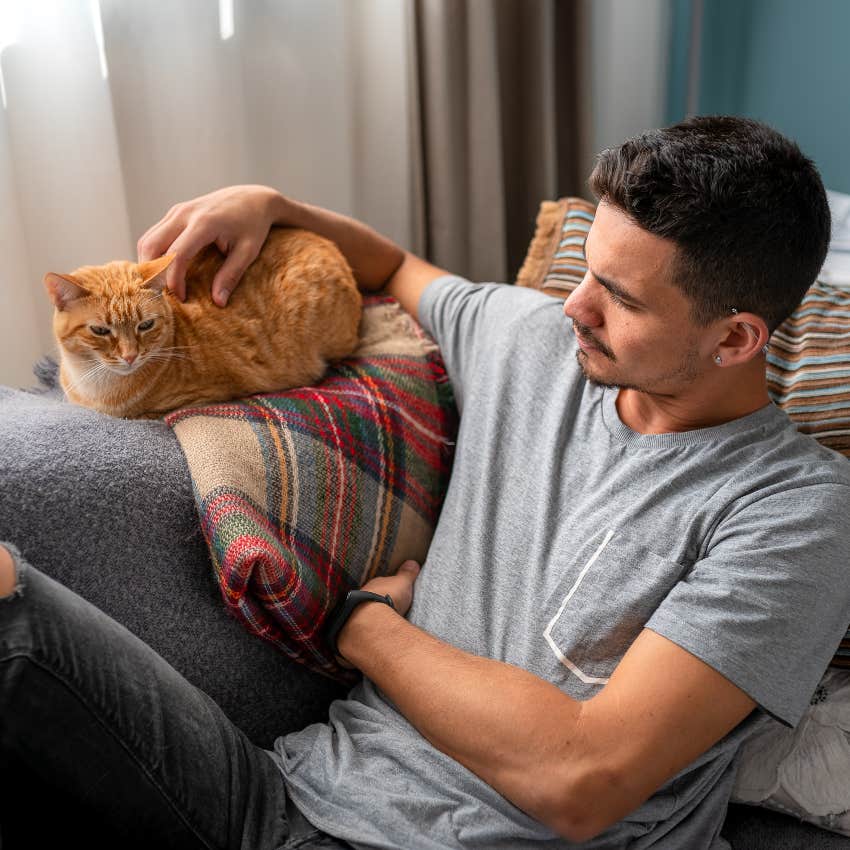 Magui RF | Shutterstock
Listening to the rhythmic hum of your cat purring is also great for your heart. Petting a cat and hearing it purr is a calming act. It can soothe your stressed-out nervous system and even lower your blood pressure.
Nancy Martin, LCSW and Outpatient Behavioral Health Therapist at Inspira Medical Center Bridgeton, shares, "This calming effect lowers cortisol levels — the stress hormone associated with high blood pressure—and can help alleviate pain, easing chronic discomfort." A decreased heart rate and blood pressure relieve strain on the cardiovascular system, making you less at risk for developing heart problems.
4. The vibration helps heal strained muscles
Because your cat’s purr can help soft tissue growth, they might be able to help heal muscle strains and other connective tissue injuries. Your cat’s purr vibrates from their body outward, so if you’re sitting near them, you’ll both hear the noise and feel the sensation, and you can benefit from the healing properties a purr holds.
The purring vibrations increase blood flow to injuries, which brings oxygen and nutrients to damaged areas, promoting quicker healing. And cats can sometimes sense when you're hurting, even if you can't, so if they tend to curl up in one specific spot, think about getting it checked out.
5. The sound lowers heart attack risk
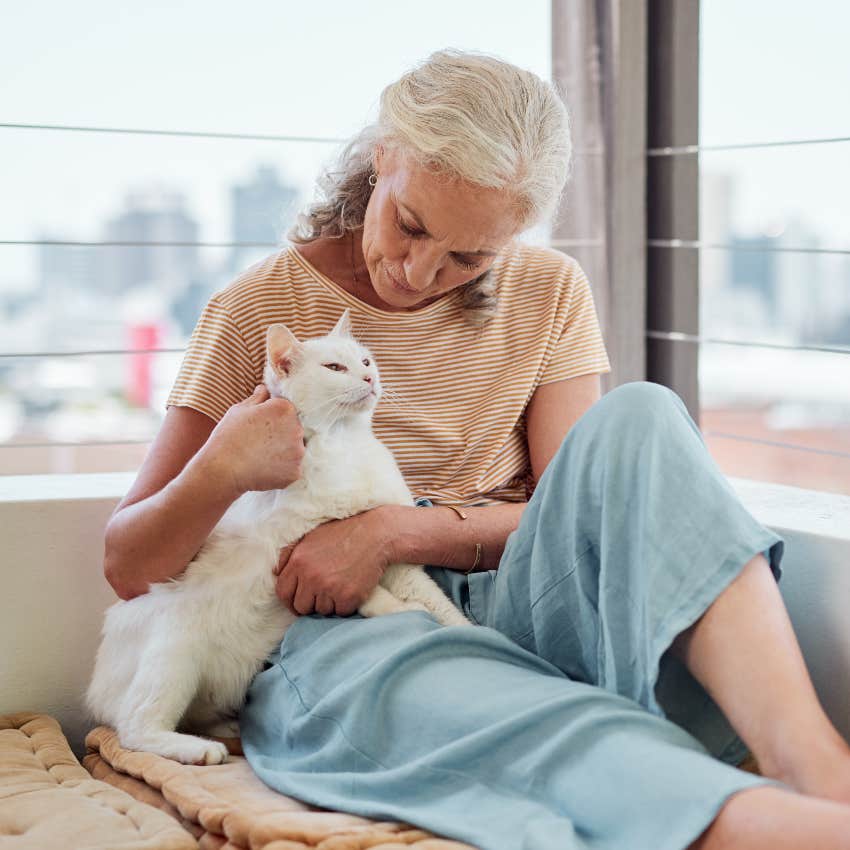 PeopleImages | Shutterstock
According to a study published in the Journal of Vascular and Interventional Neurology, your cat could reduce your risk of having a heart attack. Researchers discovered that cat owners have a 40% lower risk of having a heart attack than people who don’t own cats.
This study also found that previous cat owners still saw a reduced risk of cardiovascular disease over those who never had cats before. If you need another reason to let a fuzzy, adorable, four-pawed creature into your life, your heart health is it!
Purring is your cat's way of letting you know they care.
Cats start to purr when they’re only a few days old as a way to help their mother find them when it’s time for feeding. Some cats continue their dinner-time purr habit well into adulthood, letting you know they’re just so hungry and it’s time to eat.
But their purrs are more than a communication tool to tell you when they’re hungry or happy. Purring is a way that your cat can heal you. So, the next time your cat starts to purr, let the sound wash over you, healing your heart, body, and soul.
Alexandra Blogier, MFA, is a staff writer who covers psychology, social issues, relationships, self-help topics, and human interest stories.
