
People Who Still Like To Play Board Games Usually Have 4 Increasingly Rare Personality Traits
 Impact Photography | Shutterstock
 It turns out there's so much more to board game enthusiasts than just wanting to foster community and have some fun with friends. Researchers found that those who love playing board games in adulthood possess four increasingly rare personality traits. The study was led by Dr. Gray Atherton and Dr. Liam Cross, lecturers in the University of Plymouth's School of Psychology, who sought to find out how board games could be used in health and social care interventions.
Through their findings, they deduced that those who still play board games actually carry traits that could be valuable to one's mental health. So, the individuals who keep board games alive for themselves and the people around them might be at an advantage compared to those who no longer enjoy playing.
People who still play board games usually have these 4 increasingly rare personality traits:
1. Confidence
 BearFotos | Shutterstock
Board games are usually low-pressure, which allows people to take risks, try out new strategies, and even speak up more without fear of embarrassment. Those who enjoy playing board games can build their confidence and even start trusting their own instincts more. Even when luck is the only reason for a win, there's still that satisfaction of knowing that you made the best choices with the information that you had.
Confidence also grows through learning and being able to absorb the rules of a game, and even improving your skills over time. Research has even shown that playing board games can result in higher levels of self-efficacy and life satisfaction. The confidence that develops from playing board games isn't over-the-top; it's rooted in being sure of yourself and in learning more about your own intelligence and skills.
2. Assertiveness
The whole point of playing certain board games is having to speak up, whether you're declaring the next move you're making or even trying to get clarification on a certain rule. Even a game like Pictionary or Charades requires players to shout out their guesses without much time for hemming and hawing.
Assertiveness while playing a board game is less about aggression and more about being direct. Those who may have struggled with speaking up, even for the littlest things, may have been able to find their voice just from playing Uno or Taboo with their friends.
Over time, that habit can carry into everyday interactions, where someone might've once held her tongue but has learned that speaking up has its advantages.
3. Real-life social engagement
 Pearl PhotoPix | Shutterstock
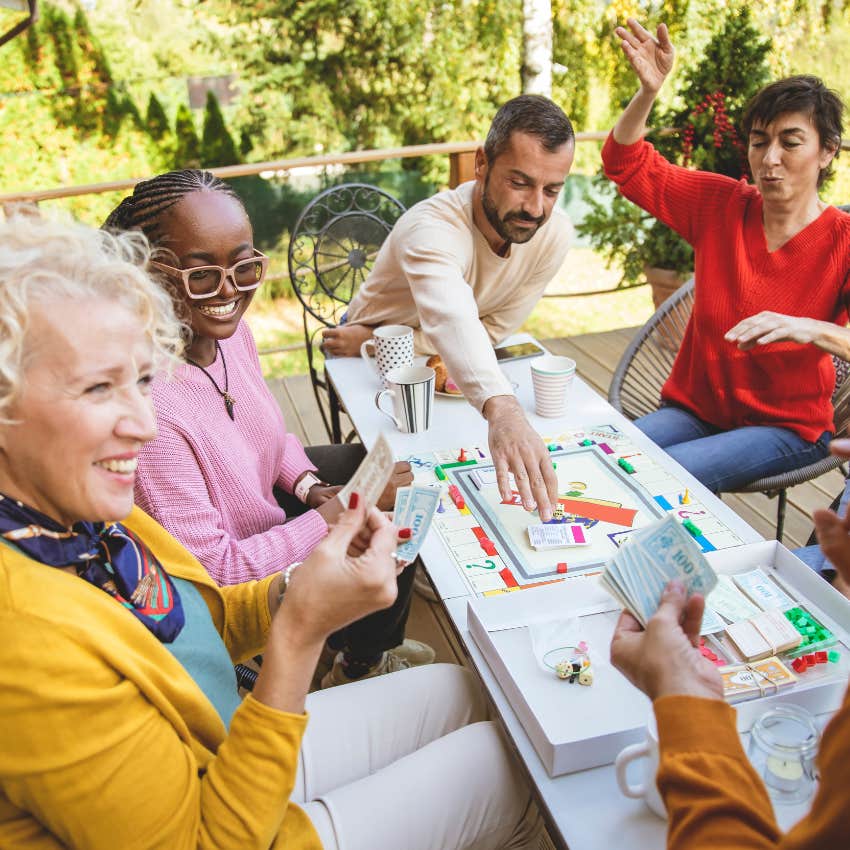
When you're sitting around a table with a game in front of you, there's no avoiding being present with the people in that room. There's eye contact, good-natured ribbing, unsaid alliances formed, and inside jokes being made, which are all the things that can get lost if you're not interacting with people in real life.
Board games can even engage specific social skills, including cooperation, turn-taking, and other prosocial behaviors. Considering a lot of interactions we have with people tend to happen behind a screen, it's almost as if we've lost the art of socializing in person.
But for those who enjoy playing board games, it means they get that all the time. Playing board games encourages funneling time and care into community and maintaining the relationships you have with people through the simple act of having a game night. It's an intentional reason to gather together and stay engaged as you participate in some healthy competition.
4. Conflict resolution
Disagreements tend to be inevitable when you're playing a board game with people. But the good thing about it is that the game provides a safe space for people to navigate through it. Those who enjoy playing board games are usually masters at resolving tension without any serious consequences. Playing fosters effective communication, even while under pressure.
Rather than yelling or completely shutting down when a move doesn't go their way, they're forced to actually explain their perspective, listen to others, and come to a solution without getting too dramatic or over-the-top about it. That skill ends up translating to how people might handle conflict in their everyday relationships.
So, if you love board games, you are probably a pretty awesome person! And if you haven't played in a while, here's your chance to set up a game night. Who knows? You might just find your next great hobby!
Nia Tipton is a staff writer with a bachelor’s degree in creative writing and journalism who covers news and lifestyle topics that focus on psychology, relationships, and the human experience.
