
People Who Don’t Show Up To Protests Are Often Helping In These 4 Equally Powerful Ways
 Lomb | Shutterstock
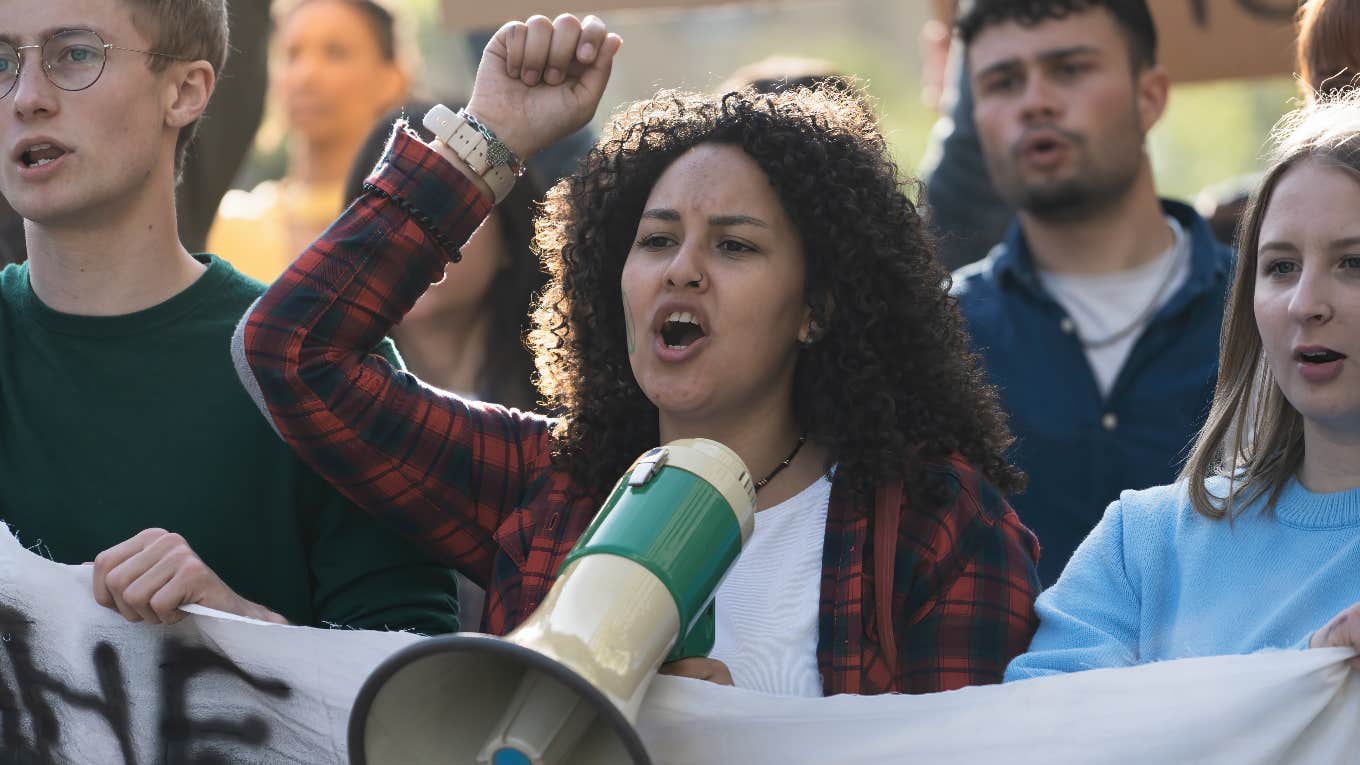
 Protests have been making the news a lot lately as Minnesotans take a stand against the presence of Immigration and Customs Enforcement in their state, and other Americans have joined in around the country to express their similar displeasure.
A lot of people seem to be under the impression that if you don’t show up to a protest, it means you simply don’t care, but that couldn’t be farther from the truth. Many people don’t or can’t participate in protests for various reasons, but that doesn’t mean they’re sitting on their hands doing nothing. There are quite a few ways people can make their voices heard without actually showing up to a protest. A content creator named Kiore shared some of the powerful things people can do outside of protesting in a recent TikTok video.
People who don’t show up to protests are often helping in these 4 equally powerful ways:
1. They educate others
 William Fortunato | Pexels
Protestors may be the most visible members of a social movement, but educators are the backbone of the movement. Without people actually explaining what’s going on and why it matters, very few additional people will join the cause. If there were only protests and no education, people would know there was an issue that deserved some attention, but they wouldn’t actually be able to explain the reasoning behind it.
According to the National Education Association, this education can start as young as childhood. They noted that it is a teacher’s duty to get students ready for life as an adult, so “creating a space to discuss and debate” helps them “become engaged citizens.” While kids may benefit from learning about social issues, there’s no age limit on receiving that kind of education.
In 2017, Deepa Iyer created the “Social Change Ecosystem Framework,” which highlights the different roles people play in movements for social change. One role is that of a guide, which could very easily be applied to those who participate in educating others. People can make a lot of noise, but someone has to cut through that noise if they really want to make a difference.
2. They create connections
Working towards social change can feel a bit like networking at times. It’s great when a lot of people are really fired up about a certain topic, but if no one actually takes the initiative to organize people and introduce them to those who are like-minded, a movement could fade pretty quickly. This could be represented by the weavers category on Iyer’s framework.
A group of researchers studied why communication is important in social movements. The paper they wrote was published by RAND, and they concluded, “Our results show that communication technology that increases spontaneous interaction helps to ignite social movements, while improvements in networking technology are more effective at accelerating the growth of social movements in their intermediate stages.”
With such great evolutions in technology and social media, it’s easier than ever for people who share certain beliefs to connect with each other. There have to be people involved who are intentional about making this happen, though.
3. They share resources
 cottonbro studio | Pexels
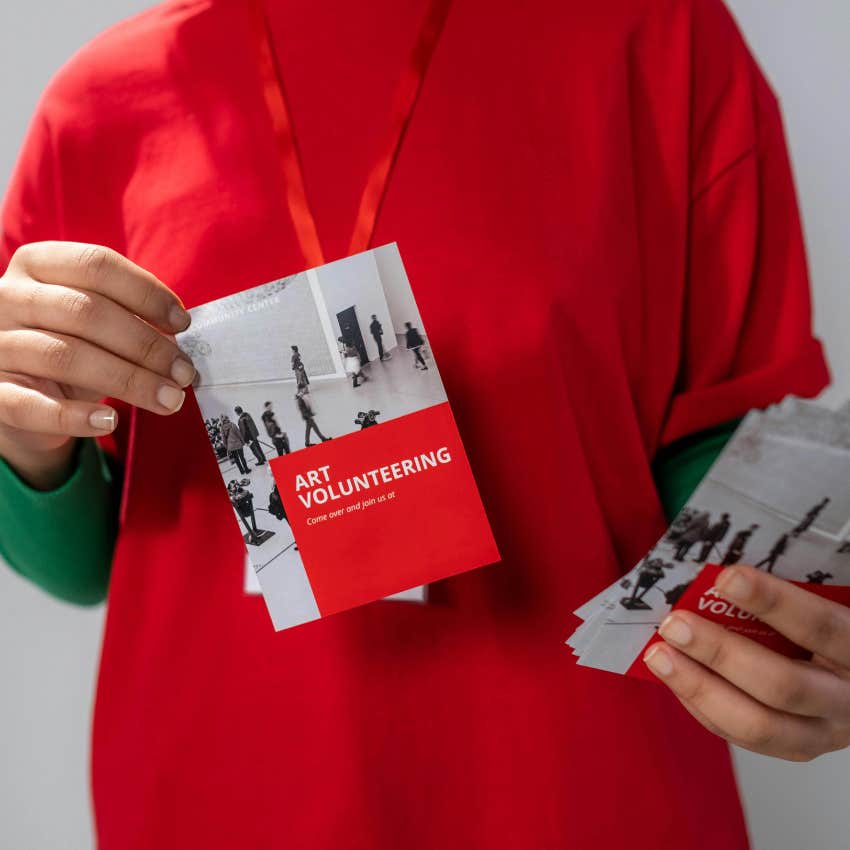
Holding a protest is, of course, not the only way to contribute to a social movement. If all people ever did was hold protests, it’s unlikely that a lot of change would occur. They also have to spread accurate information, fundraise, and get the word out. This is where sharing resources comes in. There have to be people who are just as passionate about sharing information as others are about showing up in large numbers.
In a paper published by EBSCO, researcher Simone I. Flynn explored the impact of resource mobilization theory. “Resource mobilization theory argues that social movements succeed through the effective mobilization of resources and the development of political opportunities for members,” she said. “Social movements can mobilize both material and non-material resources.”
A movement can’t really be a movement without relevant resources. People can show up to protest, but their beliefs won’t make it very far and be shared with the world at large, which is essential for a social movement to flourish.
4. They make meaningful art
People truly underestimate the power that art can have on a social movement. But, when you think about some of the most powerful movements of the past, it is probably visual art, songs, and media portrayals that come to mind. Artists, who Iyer would call the visionaries, devote their time and energy to creating something that moves people and makes them want to take a stand.
A study published in PLOS Global Public Health examined how art could be used in the global health movement. Researchers said, “Art can elevate voices that have historically been relegated to the sidelines of global health conversations. Artists from marginalized populations offer unique insight into personal, social, and political forces in their communities.”
The use of art is obviously not limited to global health, nor is it only meaningful when created by a professional. Anyone can express their opinions through art and create something really moving that represents a social issue well. Some people thrive more in this kind of environment than by protesting.
Protests are very powerful tools to enact social change, but they aren’t the only things people can do to get involved in movements that matter. It’s just as important to work to build connections within a community of like-minded individuals, create symbolic art, and teach people about what’s going on. Don’t assume that someone who doesn’t show up to a protest doesn’t care or isn’t involved, because chances are they’re doing something just as helpful.
Mary-Faith Martinez is a writer with a bachelor’s degree in English and Journalism who covers news, psychology, lifestyle, and human interest topics.
