
Cats Protect Their Sleeping Owners In 7 Pretty Remarkable Ways
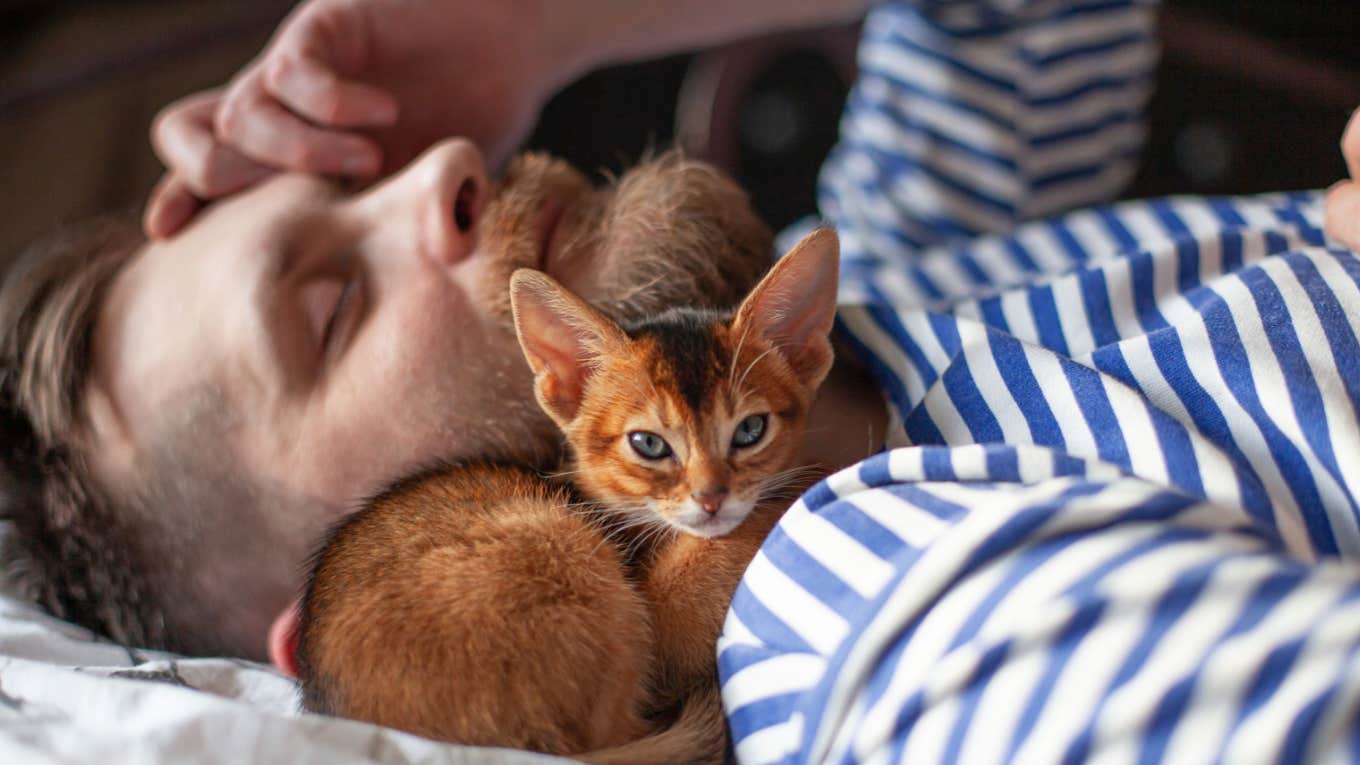 Nataliabiruk | Shutterstock
Cats have been sharing their lives with people for 12,000 years. It's not really surprising that they're the most popular house pet. But to call them pets is a bit of a stretch, as any cat lover knows. They're more like demanding house guests.
There's something behind their eyes, though, that goes beyond the cute and cuddly and delves into something magical. They're protectors, both physically and mystically, and that instinct makes them guard their owners when they're most vulnerable at night.
Impressive ways cats protect their favorite humans while they're sound asleep:
1. They are usually awake at night, so they stand guard while their owner is most vulnerable
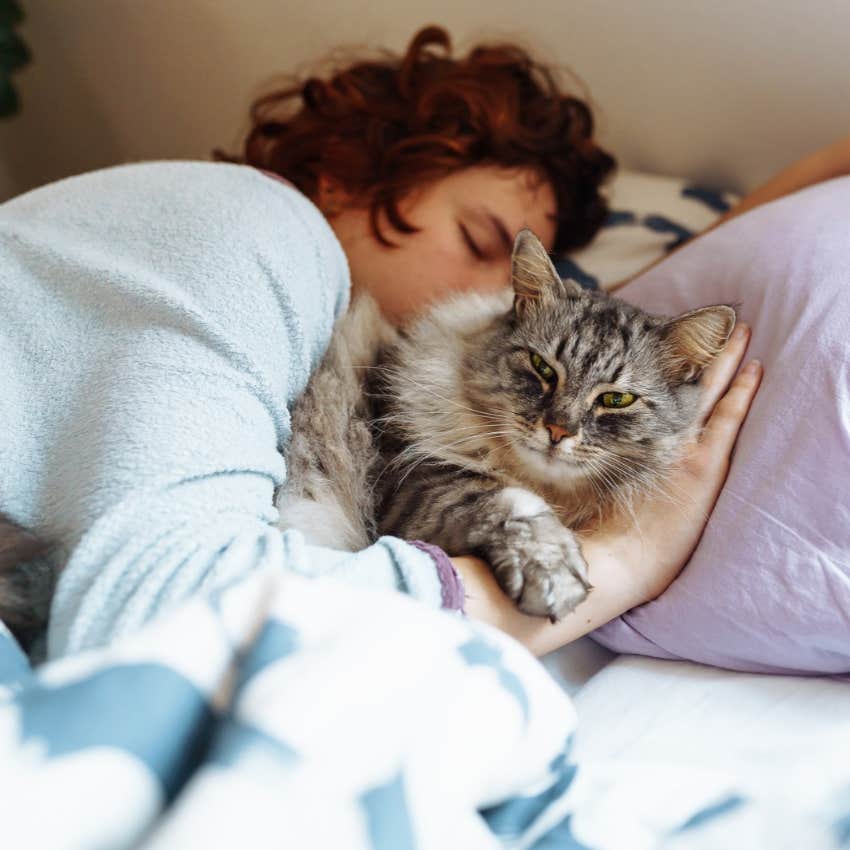 larisa Stefanjuk | Shutterstock
Cats are crepuscular, which is like nocturnal light. They are awake well into the night and during the early dawn hours while their owners are still fast asleep. That's when they instinctually hunt. But just because they're pampered and fed regularly doesn't mean that instinct goes away. Instead of staying awake to hunt, however, they stay awake and watch over their owners.
Cats view their relationship with their owners as a mutual one. They know their owners watch out for them, and they do the same back. They also understand that sleep is when any animal is at its most vulnerable. That's why they take this role so seriously.
2. If their owner is having a medical emergency or breathing disruption, they can sense it
Cats aren't exactly trained to detect illnesses or be alert animals like dogs, but there has been a whole lot of anecdotal evidence that cats can tell when something isn't right with their owners, and scientists are starting to examine these findings more closely.
Veterinarian Dr. Emma Choi explained to Newsweek, "Illness can alter a person's body chemistry. In a way, [a cat's] sensitive olfactory system can detect the subtle chemical or hormonal changes experienced by their human." She added, "Cats can sense indirect indicators such as the heart rate through auditory cues and the person's breathing pattern, as cats are known to be sensitive to subtle shifts in behavior."
3. They will sleep at the foot of the bed so they can spring into action if they need to
Cats are more active at night and at early dawn, but they still need to sleep. When they do, they usually situate themselves at the foot of the bed because it offers the best opportunity for them to alert if there's danger.
Cats are classified as mesopredators, which is just a fancy way of saying they have the instinct to hunt, but they are also prey in the wild. Sure, they're safe and sound in a house and don't have to worry about owls or bears, but the instinct is still there. That means even when they are asleep, they're still ready to jump into action. When their owner is asleep too, they like to position themselves strategically so they can offer the most protection. That's why they choose the foot of the bed. They're watching out for you.
4. They can sense rodents, which often carry diseases
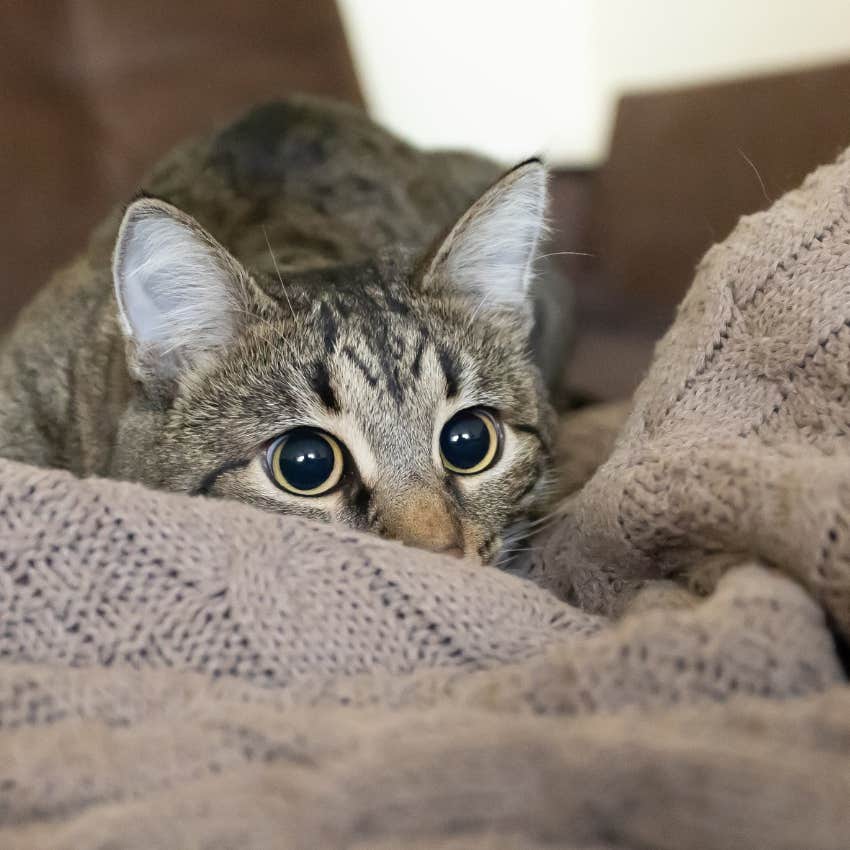 Nadezhda Gerasimova | Shutterstock
Maybe you didn't see that mouse scurry across the hallway, but your cat sure did. We all know that cats are going to be better at sensing the little pests and critters in a home than we are. Their hearing, vision, and ability to detect movement make them pretty good at noticing small animals that might otherwise go unnoticed. In fact, cats have been used to help control rodent populations throughout history.
Pests like rats and mice can carry diseases. No one wants these creatures roaming freely in their walls while they're asleep. Cats aren't going to let that happen without at least investigating. Of course, having a cat doesn't mean your home is automatically pest-free, but their hunting instincts can certainly come in handy.
5. They constantly do perimeter checks around the house looking for disturbances
Not only do cats investigate the little sounds they hear around the house, but they also spend time checking their surroundings throughout the night. That's because these furry sentinels are hypervigilant.
In the wild, cats have to constantly monitor their surroundings for predators and creatures bigger than them. These instincts stick with them even if they're spoiled little royals now. So, while you're sleeping, your cat might be checking doorways and other familiar spots around the house, paying attention to anything that seems out of place.
6. They can hear little things you can't and will investigate anything threatening
Cats, like dogs and other animals, have way better hearing than we do. Their ears can pick up on much higher-frequency sounds than human ears can, which is especially useful when it comes to detecting small animals like mice.
So, while you're sleeping through the night, your cat might hear something you wouldn't even notice if you were awake. They may not know exactly what they're hearing, but they're likely to notice it. And if that sound gets their attention, they might start investigating, making some noise, and waking you up in the process.
7. They act as natural alarm clocks so you'll never be late for work
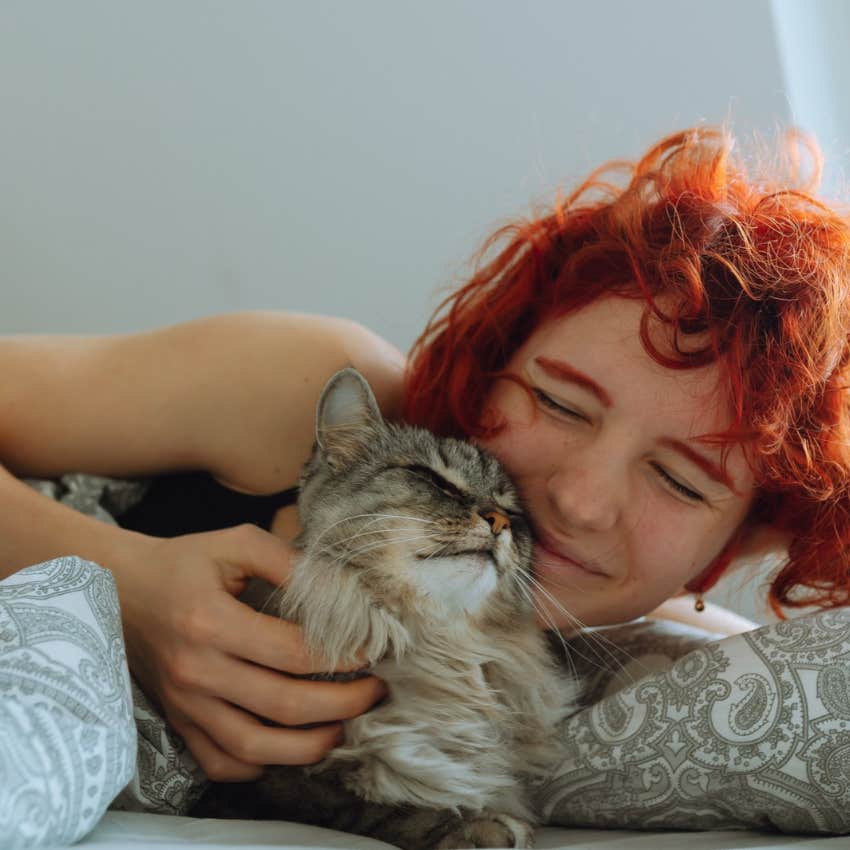 larisa Stefanjuk | Shutterstock
Okay, okay, I wanted to throw a fun one in and maybe have you see the more positive side of your cat's most annoying trait. Think about it: If your cat weren't waking you up every morning right at 5 a.m. for breakfast, you might've slept late and missed an important meeting.
Think of it as your cat holding you accountable. Sure, they probably aren't thinking about your schedule or trying to help you get ahead in life, but at least someone in the house is making sure you get out of bed!
Julia McNulty is a writer with a Master’s degree in Literary & Cultural Studies who specializes in lifestyle, relationship, culture, and human interest topics.
