
6 Reasons So Many Kids Today Think Going To School Is An Option, Not A Requirement
 Zamrznuti tonovi | Shutterstock
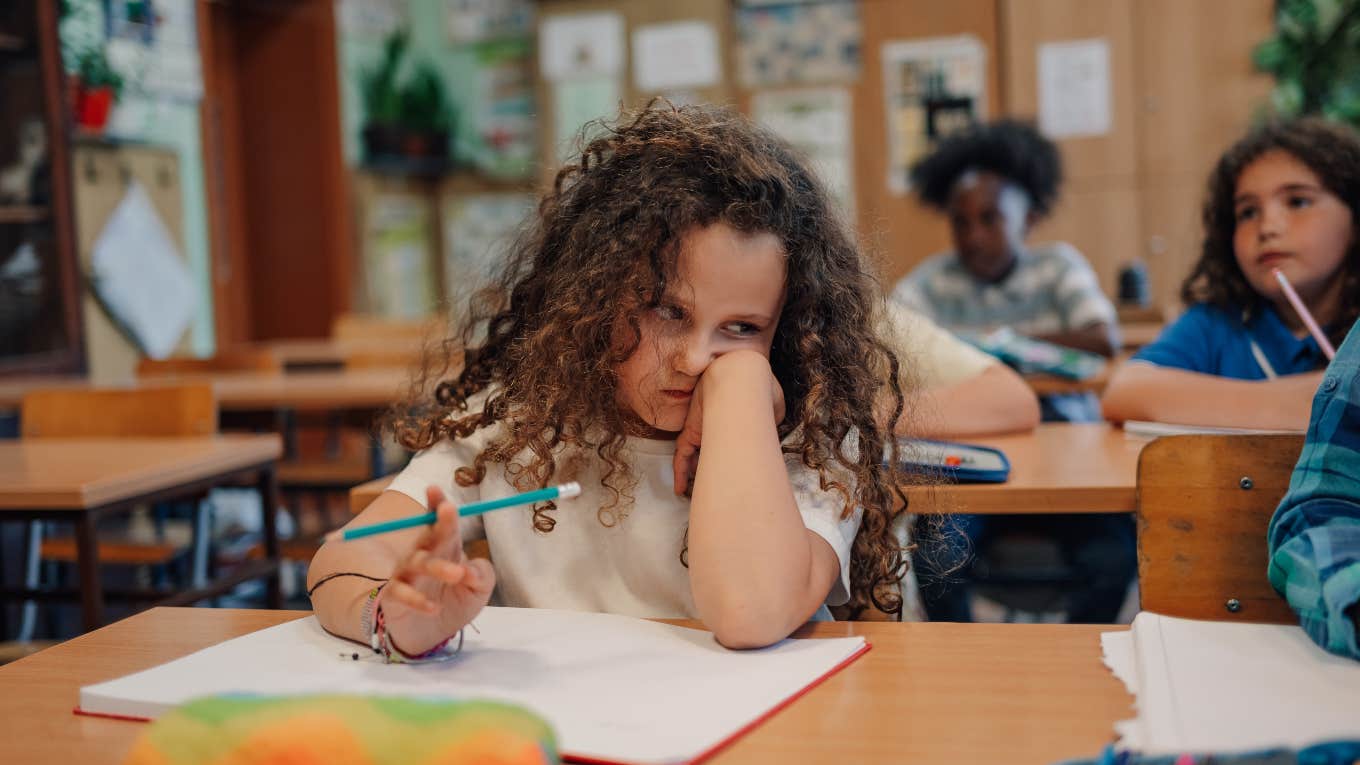
 It seems like kids these days think going to school is more of an option than a requirement. Chronic absenteeism, which the U.S. Department of Education defined as missing at least 10% of the school year, is on the rise like never before.
Of course, there’s no question that this was a significant problem during the COVID pandemic, when students and parents alike were concerned about being exposed to the virus, but data shows it’s an ongoing issue. For the 2022 to 2023 school year, the Department of Education reported that chronic absenteeism rates were still at 28%.
The truth is, a lot of kids just don’t think they have to go to school anymore. Why would they, after spending so much time at home and learning that you can do school work online? Kids see school as an option they can choose if they feel like it, but many definitely don’t think it’s a requirement anymore. There are a variety of reasons for this mindset shift.
Here are 6 reasons so many kids today think going to school is an option, not a requirement:
1. The pandemic made it seem unnecessary
 August de Richelieu | Pexels
Chronic absenteeism did not begin with the COVID pandemic. Reporting for Education Week, Caitlynn Peetz Stephens said that 16% of students were actually chronically absent during the 2015 to 2016 school year. However, as the Department of Education noted, the pandemic is when it “emerged as a serious challenge.”
Everything was put on hold during the pandemic, and pretty much everything that was considered non-essential shut down to keep people safe. This included schools. Instead, students attended classes on Zoom and completed their assignments on online portals. This left a mark. Students got used to staying home, and when it was time to return to school, they just didn’t see it as a necessity.
2. They aren't interested in learning
Another reason many kids don’t go to school anymore is that they just really don’t care. School has only ever been really exciting to a select few. But, now more than ever before, students’ hearts just aren’t in it anymore. This complete apathy for school makes it hard to get out of bed early in the morning and show up to class.
Alena Zachery-Ross, the superintendent of the Ypsilanti School District in Michigan, told the New York Times that they were doing everything they could to reignite students' interest in school, from holding pajama days to giving away warm clothes in the winter. It didn’t help much.
Part of the reason students may not be interested anymore could be connected to the focus of school. These days, school is framed as the pathway to college. Zach Hrynowski, a senior education researcher at Gallup, said, “Even the kids who are like, ‘I don’t want to go to college,’ what are they hearing the most about? College.” Schools have to accept the fact that not every student is destined for college, and that doesn’t make them any less worth teaching.
3. They have familial obligations
 cottonbro studio | Pexels
There seems to be a serious systemic problem with kids and their families just not having the support they need in place. Sara Miller, a counselor at South Anchorage High School, told the New York Times that some of their students are expected to take care of younger siblings at home. Or, if they miss the bus, their parents are either working or don’t have any means of transportation for them.
To people from generations past, this probably sounds outrageous. Their thinking would be that each child has to attend school, and things like caring for siblings are not a valid excuse for not doing so. But families are struggling in the modern-day economy. Some just don’t have the means to ensure everyone gets what they need. If there’s no support system for families, kids are going to feel like school is more of an option for them.
4. They are struggling with health problems
One of the biggest issues facing students today is health challenges. A report from the RAND organization cited illness as the top reason kids missed school. It makes sense, especially after we all learned how dangerous it can be to go out in public sick during the pandemic. The Department of Education noted that chronic absenteeism encompasses both excused and unexcused absences, so even if a student had a doctor’s note or a documented chronic condition, they could still be considered chronically absent.
It’s not just physical health that’s making it hard for students to attend, though. The CDC reported that 21% of kids between the ages of three and 17 have been diagnosed with a mental or behavioral health condition. It’s hard to go to school when you’re struggling with anxiety, but New York Times reporters Sarah Mervosh and Francesca Paris said it often doesn’t help to stay out of school. “Anxious students may avoid school, but hiding out can fuel their anxiety,” they said.
Health challenges are a double-edged sword because you can’t focus and learn when you’re not feeling well, and you shouldn’t be at school when you’re contagious. But where does that leave you if it’s a chronic or recurring issue? There really is no clear answer.
5. Parents don’t encourage them
 Karola G | Pexels
Remember the old days when your parents told you that you had to go to school? They might have even thrown something in there about how if you didn’t attend enough they would go to jail. Things aren’t nearly as serious now. Education philosopher Justin Baeder, PhD, said this is exactly where the problem lies in a post on TikTok.
“We need to not ignore the elephant in the room, and it’s this: Parents are no longer making their kids come to school,” he said. He argued that teachers are really helpless unless parents do their part. “No amount of making the curriculum interesting, of caring about kids,” will fix that problem, he said. If there are no consequences at home for not going, then there’s really no reason to go.
6. They graduate anyway
Another reason Baeder offered for why kids see school as optional now is that it won’t have any effect on whether or not they pass their grade or even graduate with a diploma. In another TikTok video, he shared statistics from public schools in Washington DC, where truancy stands at 88%, yet the graduation rate is 70%.
“Like, what is going on here if 70% of students are graduating — perfectly respectable sounding graduation rate — but most of the students are not there most of the time?” he asked. “It’s been known for years that teachers are pressured in these schools to pass kids even if they do not come to school at all.”
The whole point of going to school is being able to graduate with a diploma. But, if you don’t even have to attend to get that diploma, why would you go?
A lot of kids today do not see going to school as the everyday requirement that previous generations knew it as. They don’t want to be there, and a lot of things make them think there really isn’t a good reason to be there at all. For them, school is optional, something to do if they feel like it. And, more often than not, they don’t.
Mary-Faith Martinez is a writer with a bachelor’s degree in English and Journalism who covers news, psychology, lifestyle, and human interest topics.
