
CEO Wants To Charge People $20K A Year To Work For Her & ‘Get A Foot In The Door'
 Roman Samborskyi | Shutterstock
 It's no secret that getting a career started in basically any field is a herculean feat nowadays. Many companies are hiring for fewer entry-level roles now, and there's stiff competition for the ones that do exist.
This is creating a major problem for people who are new to the workforce and trying to build the foundation of their careers. One doctor thought she had just the idea to help new graduates get their foot in the door. Her unorthodox approach to mentoring new talent definitely got people excited, but for all the wrong reasons.
A Minneapolis doctor and CEO proposed charging people to work for her to gain entry-level professional experience.
Dr. Joy Frestedt, a doctor whose company specializes in clinical trials, regulatory processes, and other aspects of the medical industry, intended to address the all too common problem of being at the beginning of your career because you have no experience, but also finding that nobody will hire you for your first job because you have no experience.
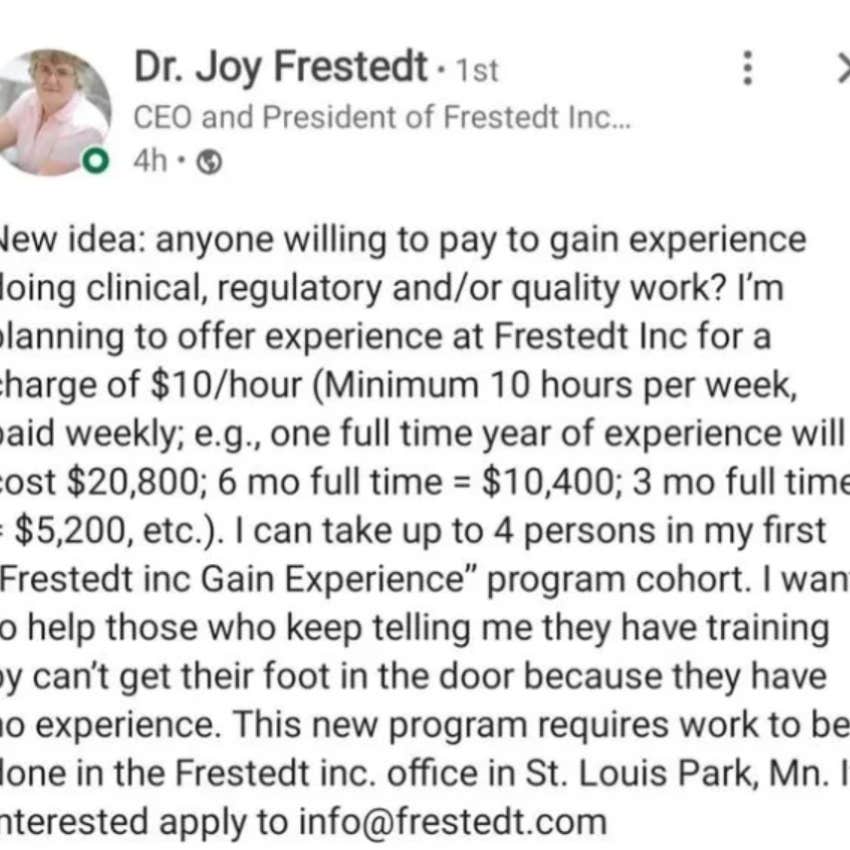
In a since-deleted LinkedIn post, Frestedt said she was open to generously allowing people to work for her for a minimum of 10 hours each week, as long as they paid her $10 per hour.
 LinkedIn
"New idea," her post began. "Anyone willing to pay to gain experience doing clinical, regulatory, and/or quality work?" She then announced her plans to "offer experience" at her company, as long as the worker was willing to pay for it.
Helpfully, she then tallied up just how much this would cost. "One full year of experience will cost $20,800; 6 [months] full time = $10,400; 3 [months] full time = $5,200, etc," she stated. Oh, is that all?!
Frestedt went on to say she wants "to help those who keep telling me they have training [but] can't get a foot in the door because they have no experience." That's certainly one way to approach the problem! Whether it's a good, or ethical, or reasonable way is up for debate.
People online thought Frestedt's proposal was ridiculous and predatory, and many called it a 'scam.'
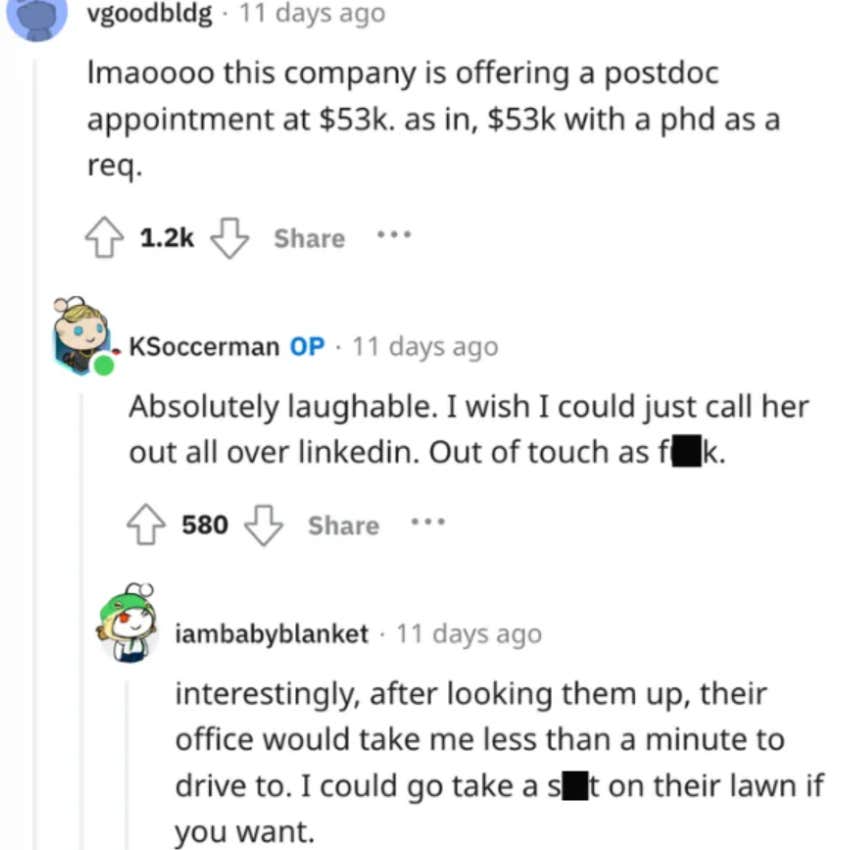
It's no surprise that Frestedt's unconventional idea ended up being discussed on Reddit. There, internet sleuths started looking deeper into some of her other business practices, like her low rates of pay for PhD-holding professionals in prestigious post-doc positions at her company, and they only got angrier about her proposal.
 Reddit
Some Redditors even proposed a targeted campaign to get Frestedt's business shut down, calling her a scam artist and suggesting they band together to "review bomb" her business with negative feedback on sites like LinkedIn and Google. Others wondered if what Frestedt was proposing was even legal. It's a valid question given the laws around internships, which Frestedt's scheme essentially is.
The legal side of what Frestedt proposed is a bit murky because, well, no one really does that.
No employer should really be charging any fees to work for them beyond what may be required for equipment or training. If a company does want a worker to pay them, the job is most likely a scam, but some people do still put their money on the line because they're desperate for work.
The whole thing sounds like an unpaid internship on steroids. Those are, of course, growing increasingly unpopular, although working for the benefit of experience doesn't sound nearly as bad as paying for it.
 David Gyung | Shutterstock
In 2018, the Department of Labor changed its approach to unpaid internships by instituting what it calls a "primary beneficiary test" for internships at for-profit companies like Frestedt's. The test determines whether the intern or the company is actually benefiting most from the arrangement.
The standards essentially center on whether the work being done by the intern is similar to educational coursework and whether or not the intern's work would normally be done by a paid employee. If it's the company that is the "primary beneficiary" of the intern's labor, then the intern meets the definition of “employee” laid out in the Fair Labor Standards Act , and the company must pay the intern accordingly. Unfortunately, these rules are pretty frequently evaded or go unenforced.
Given that Frestedt's wild plan is a step above that, in which people would be paying her for the opportunity to do the work she needs completed anyway... well, we're not lawyers, but let's just say it's not exactly a mystery why people have used the word "scam" to describe her proposal.
John Sundholm is a writer, editor, and video personality with 20 years of experience in media and entertainment. He covers culture, mental health, and human interest topics.
