
After Using Tarot Cards To Accuse Professor Of Idaho 4 Murders, TikTok ‘Psychic’ Calls Her $10 Million Punishment ‘Ridiculous’
 Pixel-Shot | Shutterstock
 TikToker Ashley Guillard officially owes a University of Idaho professor $10 million, all because she said tarot cards told her the professor was guilty of the murders of four college students, per the Idaho Statesman.
The now-infamous murders took place on November 13, 2022, when four University of Idaho students were stabbed in a house in Moscow, Idaho, according to Fox News. Bryan Kohberger has since pled guilty to the crimes, but Guillard insisted that someone else was responsible. Now, she’s paying the price for it.
Professor Rebecca Scofield was awarded $10 million in damages after she brought a defamation suit against Guillard.
Guillard posted the first inflammatory video in which she accused Scofield of the murders just a few weeks after they took place, and she didn’t let up until August 2025, after she received cease-and-desist letters and the Moscow Police Department issued a statement in which they said Scofield wasn’t involved at all. Kohberger actually made his plea deal in June 2025, but Guillard’s bizarre accusations continued for months after.
 Mikhail Nilov | Pexels
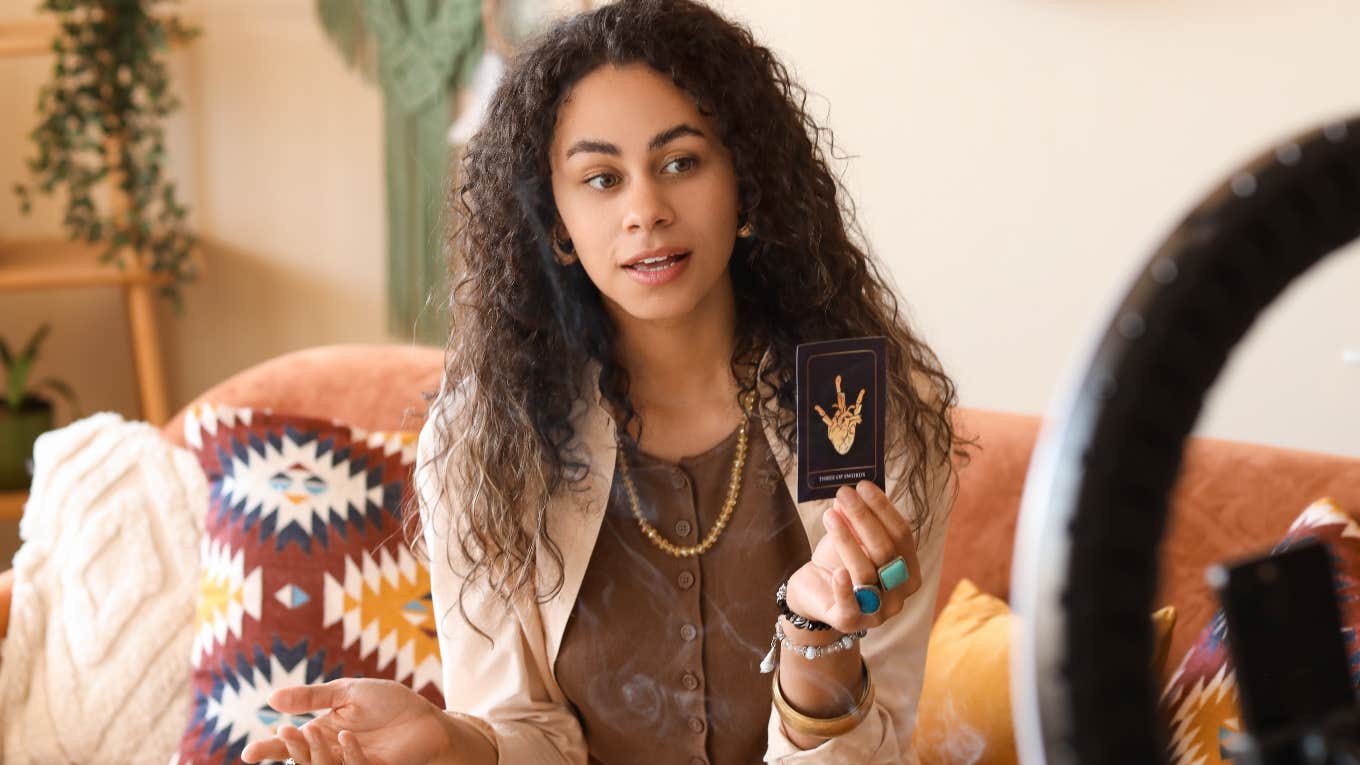
Guillard claimed that Scofield was involved in the murders because she was in a relationship with one of the students, but her evidence was a bit questionable. She shared videos of tarot card readings, which she said indicated that Scofield was guilty.
Scofield, who is the chair of the history department at the University of Idaho, alleged that Guillard’s unfounded accusations not only seriously damaged her career but also led to “severe anxiety, PTSD, and nerve pain throughout her body.” In reality, she didn’t know the victims and was not in town when the crimes occurred.
The psychic called the astronomical sum ‘ridiculous,’ although her credentials could be described in the same way.
She defended herself during the trial, and, in a move the Idaho Statesman referred to as “unique,” called herself to the witness stand and conducted her own cross-examination. Guillard explained in court that she previously served in the Army and worked in HR before embarking on a “spiritual journey.” During this time, she learned how to read tarot cards by watching YouTube videos and practiced by predicting the results of different reality shows.
During her testimony, Guillard insisted that tarot readings are “opinion at best,” and that she didn’t “have to hold facts or documents to exercise speech.” In one part of a series of TikTok videos she posted after the verdict was handed down, Guillard called her punishment “ridiculous.”
In the same video, she made allegations that the case was handled improperly because one of the jurors had worked closely with Scofield’s attorney before, so he was bound to be “biased.” The Idaho Statesman did mention that one of the jurors served as “co-counsel” with Scofield’s attorney “on an unrelated case,” but did not present this as a conflict of interest.
While Guillard may have believed her words were protected as free speech, she actually did break the law.
The lawyers at Kohrman, Jackson, and Krantz, LLP, explained that the concept of freedom of speech is protected by the First Amendment, but it is “not absolute.” They added, “Freedom of speech does not protect individuals purposefully publishing false statements to destroy another person’s reputation,” which is basically the exact definition they gave for defamation.
We live in an age in which anyone can go on the internet and quite literally say anything they want. In a University of Portsmouth survey, 60% of respondents said they trust influencers’ recommendations. This may not be the biggest deal when they’re sharing suggestions on new beauty products, but situations like this can determine the course of someone’s life.
No one should be subjected to this kind of harassment, and it is certainly not a so-called psychic’s place to solve a crime. Some matters really do need to be left to credible experts. Luckily, Scofield got the justice she deserved.
Mary-Faith Martinez is a writer with a bachelor’s degree in English and Journalism who covers news, psychology, lifestyle, and human interest topics.
