
If This One Phrase Was Common In Your House Growing Up, You Probably Understand People Really Well Now
 ketut subiyanto | Pexels
 Children will typically see things in a binary way — good/bad, right/wrong, happy/sad, etc. In part, it’s because they haven’t had the life experiences to understand the gray areas of life. Even as adults, we have a hard time looking at situations as non-binary. It’s much easier to put things in one category or another. Unfortunately, life experiences aren’t binary. They’re multi-layered and have to be explored deeply.
“How can I develop empathy in my kids?” This phrase conveys a desire to instill one of the best human qualities, which is commendable. But it comes as no surprise that research showed a link between parenting and raising empathetic kids who understand people well.
Children who grow up being good at understanding people are more socially capable with a more advanced social understanding. They tend to have fewer difficulties when compared with less empathic children. The study also suggested parents who are warm, responsive, and supportive model empathic behaviors and tend to use reasoning with their children to encourage empathic thinking and perspective taking.
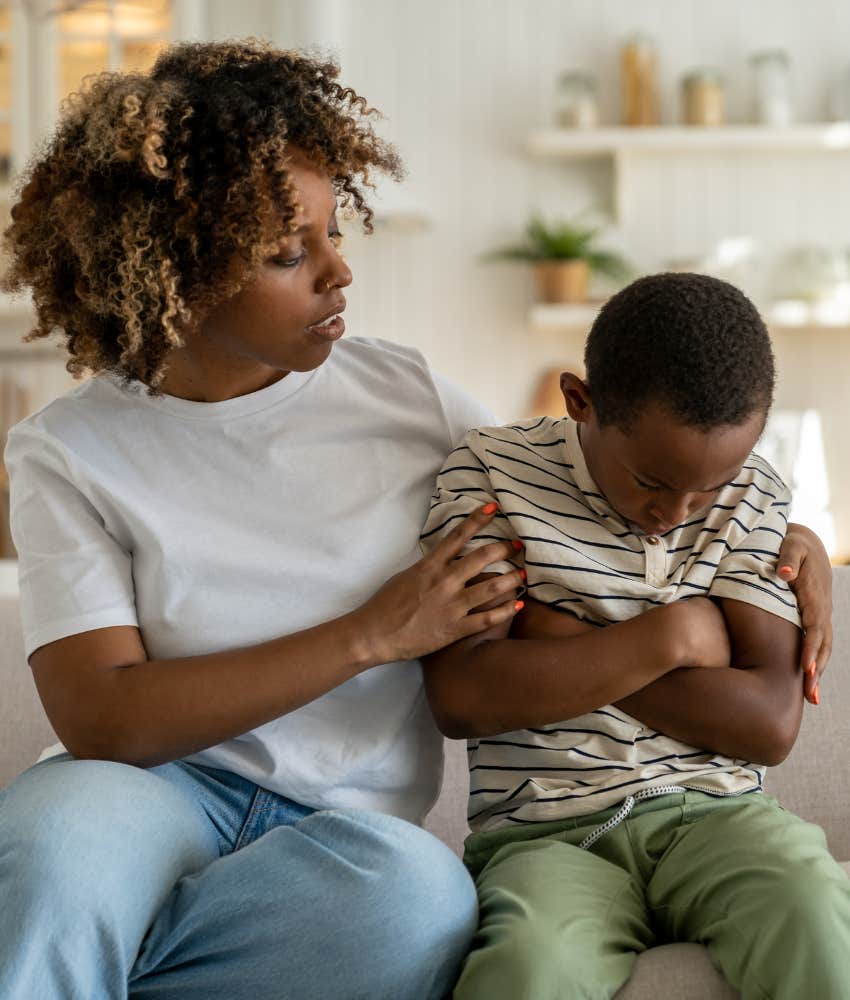
If this one phrase was common in your house growing up, you probably understand people really well: 'We don’t know their story.'
 DimaBerlin via Shutterstock
The development of empathy isn’t the same in every child
Some children will show signs of empathy as early as 2 or 3 years old. For some children, it may take much longer. In general, most children in the early childhood years have difficulty fully understanding the perspective of another. They are wired to think for themselves first.
As they grow, they begin to adopt a more you and me or we mindset. This is developmentally appropriate if we consider how children develop. To be empathetic requires some ability to think abstractly. Children under age 6 are concrete thinkers. Abstract thinking begins to develop around 7.
We have to remember that empathy is a process, and it needs to be taught, cultivated, and explored. It’s not the same as saying, “Oh, now they can walk.” It constantly changes as children continue to grow. Empathy teaches us how to foster kindness and compassion in our relationships. We have to be able to concern ourselves with how someone else feels. Additionally, it allows us to consider our own choices and the impact they can have on others.
"Kindness is a decision you make at the moment to make someone's life better," explained career and life coach Lisa Petsinis. "With one smile, one look of understanding, one gesture, or one word, you can change a life. Make a difference and show your kids what kindness looks like and how they can be kind themselves. When you've shown your kids that kindness matters, they will be responsible members of your community and get more joy out of life."
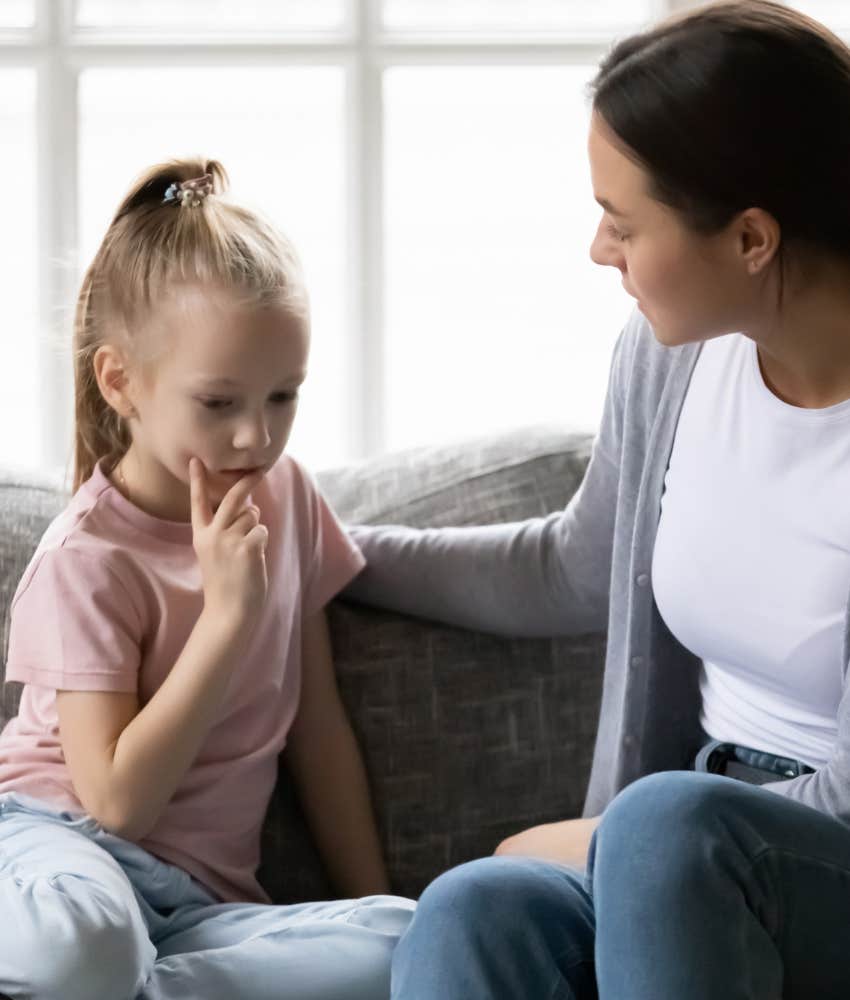
Saying 'We don’t know their story' sparks empathy
 fizkes via Shutterstock
"If you know you're happy, annoyed, distracted, angry, or hurt, you can take steps to take care of yourself," suggested clinical social worker Lyssa deHart, "Shifting from an egocentric outlook focused solely on 'my own emotions' to embracing the concept of 'insights' will enable you to recognize how others are experiencing their own feelings. Your understanding of your emotions helps you to read and understand other people's feelings."
When attempting to cultivate empathy and kindness in my kids, here’s what I said: "We don’t know their story." It’s simple, but it’s powerful because it’s true. My children would come home from school and say, “Oh, this boy in my class is always getting in trouble. He’s really bad.”
This is a common statement and appropriate if we consider the binary framework mentioned earlier. The brain loves making easy, clean conclusions. In this case, the boy made choices that didn’t align with what the teacher wanted; this means he’s bad. I told my daughter, we don’t know his story. She said, what do you mean?
I explained: "Well, just like you, everyone has a story, and all of our stories are not the same. Some kids have two parents in one house; some don’t. We like and dislike different things; certain things can make one person sad, while others might not feel sad. Or some children learn in unique ways, and there are aspects of school that are harder for them. Think about it this way: When something is hard, how do you feel? Are you patient or frustrated?"
She said, "Frustrated."
"Do you sometimes make choices that are not the best choice when you feel this way?"
"Yes."
"Does that mean you’re bad?"
"No."
"So, back to your friend in class. He may be making choices that are not great, but it doesn’t mean he’s bad. Remember, we don’t know his story."
In our home, this phrase has been used continuously throughout the years to keep an open heart and show compassion
With a now almost 18-year-old and a 15-year-old, they still say, we don’t know their story. Anytime we use this phrase, we leave room for empathy and compassion. It also allows kids to explore a reality different from their own. When we approach it from this standpoint, something in us softens, and judgment is diminished. Instead, it’s replaced with openness and understanding.
As my kids got older, we continued to use this phrase, but in a different way. If one of their friends was going through their day, making undesirable choices, it was important that my children could establish healthy boundaries. Maybe that person is not someone you want to be best friends with, but it doesn’t mean that he’s terrible, and we cannot make a definitive conclusion about who he is. Remember, we don’t know his story. It doesn’t excuse poor choices, but we have to leave room for compassion and empathy.
Again, resist the knee-jerk reaction to use a binary approach here. You can decide someone is not a good friend while simultaneously showing grace and compassion for them. The human experience is complex and layered, and it manifests differently in all of us. We can’t expect our kids to fully understand the totality of what someone else might be going through.
In daily life, research explained how we usually react with empathy from positivity rather than negativity, and we often feel empathy for those we are in close relationships with, and not strangers. This experience of empathy has a way of improving our well-being and prosocial behavior. When we start with the simple statement, "We don’t know their story," we begin the journey of keeping an open heart, exercising empathy, and showing compassion. We must uphold a willingness to understand and appreciate each one of our unique stories.
Albiona Rakipi is the founder of The Parenting Reframe, a writer, a mom, and a parenting consultant in the Metro Detroit Area.
