
'I Don't Like Lying' — Parents Debate Whether Santa Causes Kids Trauma
 Eterna Images | Shutterstock
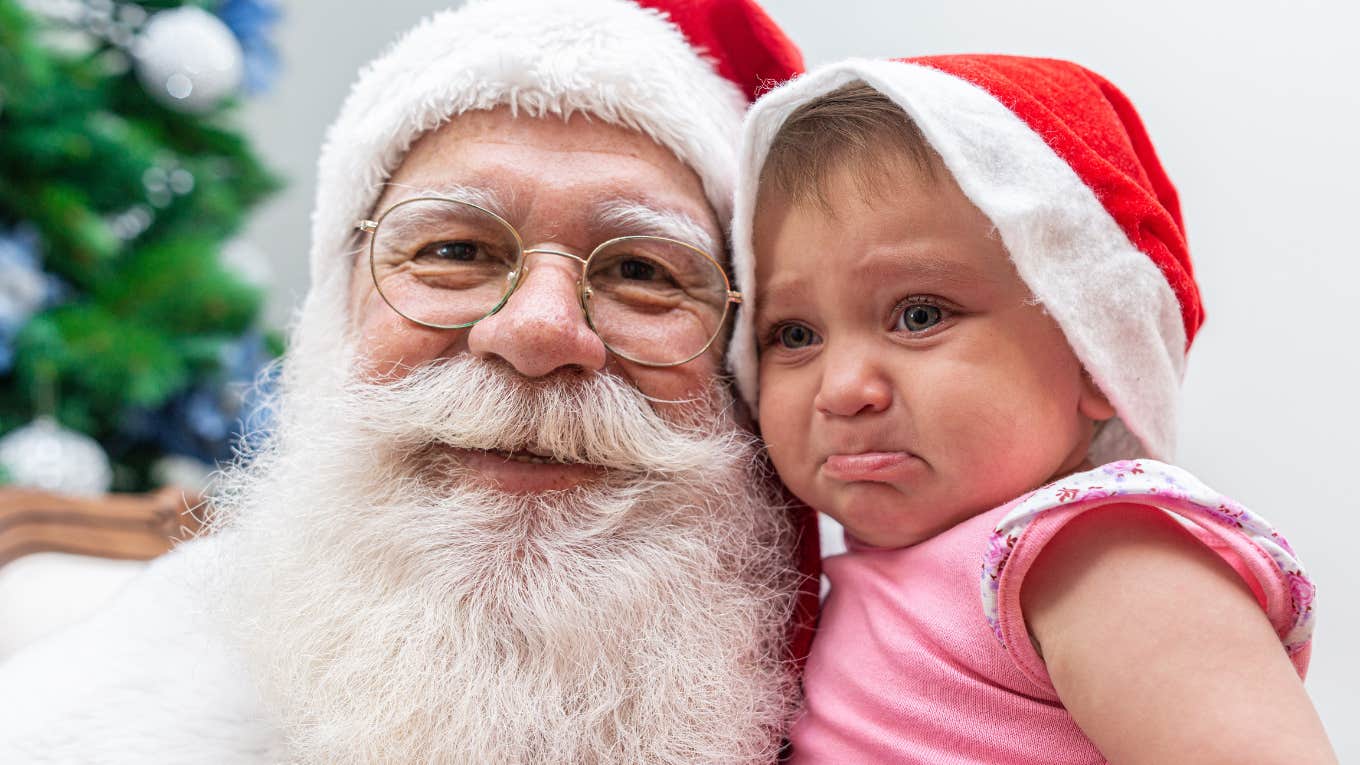
 Christmas is quickly approaching, and many children are writing their lists and preparing for Santa Claus’ arrival. However, some families are choosing to break the tradition of promising their children gifts from Santa.
They claim that their decision is to protect their children from trauma. While most kids figure out the truth on their own, usually much earlier than parents think, some parents are prioritizing more realistic holiday expectations that don't involve St. Nick and flying reindeer.
Some parents believe that Santa causes trauma to children.
The fictional man in the red suit was once a source of excitement for many children celebrating Christmas. Now, some families fear that incorporating Santa into their holidays is causing trauma to their children since they are being fed lies that a man at the North Pole “sees you when you’re sleeping,” and “knows if you’ve been bad or good.”
Parents took to TikTok to share that while they still allow their children to participate in holiday festivities, including writing wish lists, baking cookies, and watching Christmas movies, the Santa Claus myth is something they choose to be honest with their kids about.
Mom Josy is one of the parents choosing this route. In a video captioned, "Never doing the Santa thing for Christmas," she explained her reasoning.
One mom shared that as soon as her kids started questioning if Santa is real, she told them the truth.
Jillian Taylor is another parent who is debunking Santa Claus for her children and reveals that she recently informed her seven-year-old that Santa is entirely fictional.
“I do this with all of my kids once they get to a certain point when they’re just trying to debunk the myth and they’re extremely aware of their surroundings,” Taylor explained.
She said that she gently breaks the news to her kids that there is no Santa; however, she emphasizes that it does not diminish the magic of Christmas. “I tell them what is real about Santa is the magic and the Christmas spirit, which is such a beautiful thing, and it’s so fun to be a part of that, so I allow them to be a part of it with me.”
Taylor also advised her children not to spoil the truth about Santa for those who still believe and acknowledges that every family has different holiday traditions they follow.
Kids don't need to believe in Santa to have a magical Christmas.
Other TikTok users agreed with McKenzie and Taylor. “I grew up without the magic of Santa and I’m fine lol. He was just like a character in a movie for us. Doing the same for my children,” one user shared.
“That’s exactly what I did, and my kids didn’t believe in Santa. I don’t like lying to my kids. I believe in telling them the reality of life and not a fairytale,” another user wrote.
Others revealed their own reasons why they choose not to celebrate Santa in their households, one reason being that some families could not afford extravagant gifts from “Santa,” while others woke up to mounds of gifts under the tree. “I didn’t want my [kids] bragging about what Santa got them and their friends wondering what they did wrong to not get the same,” one user pointed out. “Same here. Where was Santa when Mom and Dad were working to buy those presents?” another user mentioned.
 Dmytro Hai | Shutterstock
Take a moment to think back to your own childhood Christmases. How old were you when you sort of forced yourself to still believe because you didn't want to grow up and face the fact that you knew Santa was just your parents? It was undoubtedly a whole lot younger than your parents suspected. The thing is, that's totally okay too. That's the beauty of the season. Every family can create the magic of the holiday in any way they want — with or without Santa.
Some parents criticized the mothers for seemingly robbing their children of the “magic” revolving around Santa Claus, and that they should let kids be kids. “I’m going to just let my children grow out of it just like I did,” one user expressed. "It’s the magic of Christmas, baking cookies, elf on the shelf, polar express ride."
Just like a favorite fictional character like Big Bird, Santa is as real or as pretend as any family chooses to celebrate, and that's perfectly awesome. “I loved my Christmases and the magic of believing in Santa. Finding out Santa wasn’t true didn’t give me trauma either,” another user argued. The important part of the season is spending time together. Choosing love and laughter instead of screens and stress.
Megan Quinn is a writer with a bachelor's degree in English and a minor in Creative Writing. She covers news and lifestyle topics that focus on justice in the workplace, personal relationships, parenting debates, and the human experience.
