
I Love My Kids — But Loving Them Doesn't Mean Absorbing Every Mood Swing Or Meltdown They Have
 Didi Paul | Pexels
 In 2015, The New York Times Motherlode published a post called, Parents of Teenagers, Stuck Taking Out the Emotional Trash. Author and psychologist Lisa Damour talked about the importance of parents shouldering the weight of uncomfortable teenage emotions.
She gave the example of herself when she was a teenager, calling her mom to complain about homesickness. After the phone call, she went out with a friend, relieved, while her mom couldn't sleep, worried sick about her daughter.
The article explains, "Both neuroscience and common sense tell us that the teenage years are often characterized by intense and erratic emotions," and "Psychologists have long observed that teenagers sometimes manage uncomfortable feelings by passing them off to their parents." Aren't teenagers rude to their parents because they need to figure out who they are and prepare for independent adulthood?
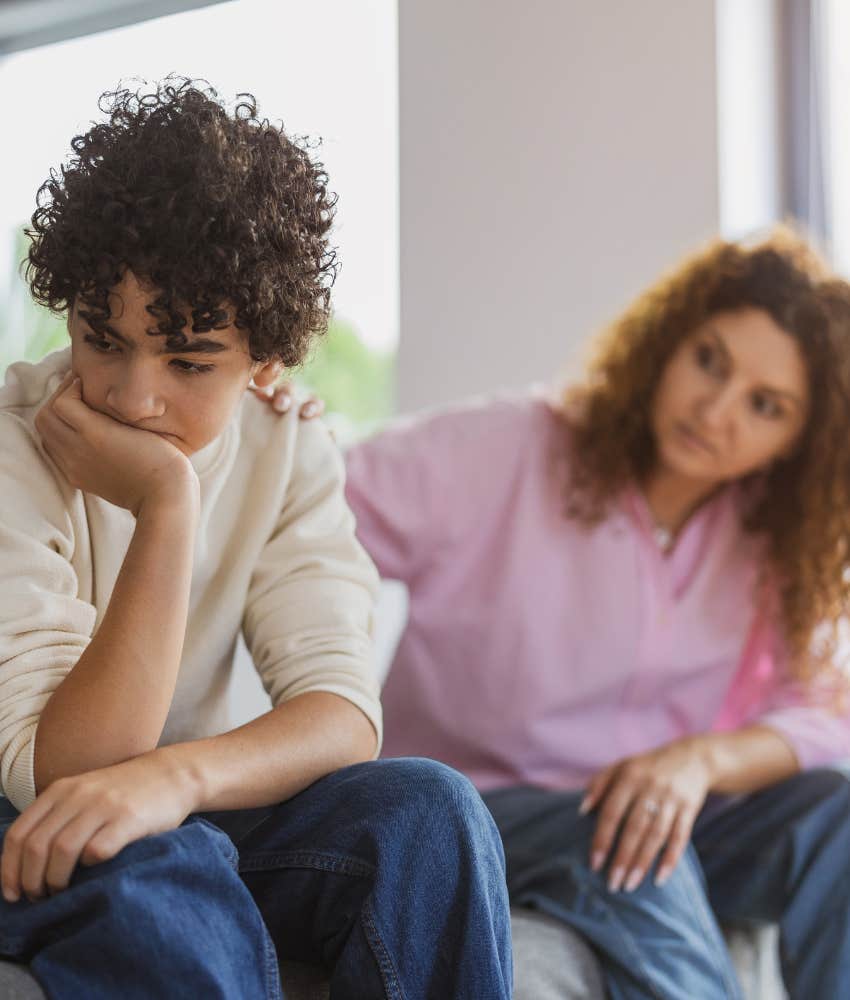
I love my kids — but loving them doesn't mean absorbing every mood swing or meltdown they have.
 pikselstock via Shutterstock
When I was going through adolescence, I was the embodiment of every single teenage stereotype on Earth: moody and aloof.
I must have uttered the phrase, "But you just don't understand!!!" a million times every day. Only as an adult did I understand the pain I must have caused my mom during this time.
My eldest is now six, but if her toddler years are any prediction for her teenage years, I'm doomed. Her terrible twos tantrums were sudden, explosive, and intense. I was often lost, confused, and in immense pain, which was physical more than emotional.
When she started screaming, my sensitive ears were hurting, and my head was pounding. I felt a wave of nausea washing over me.
The Internet was telling me I was supposed to reflect these emotions and model how to manage them so that my children would learn to do the same.
 PreciousJ via Shutterstock
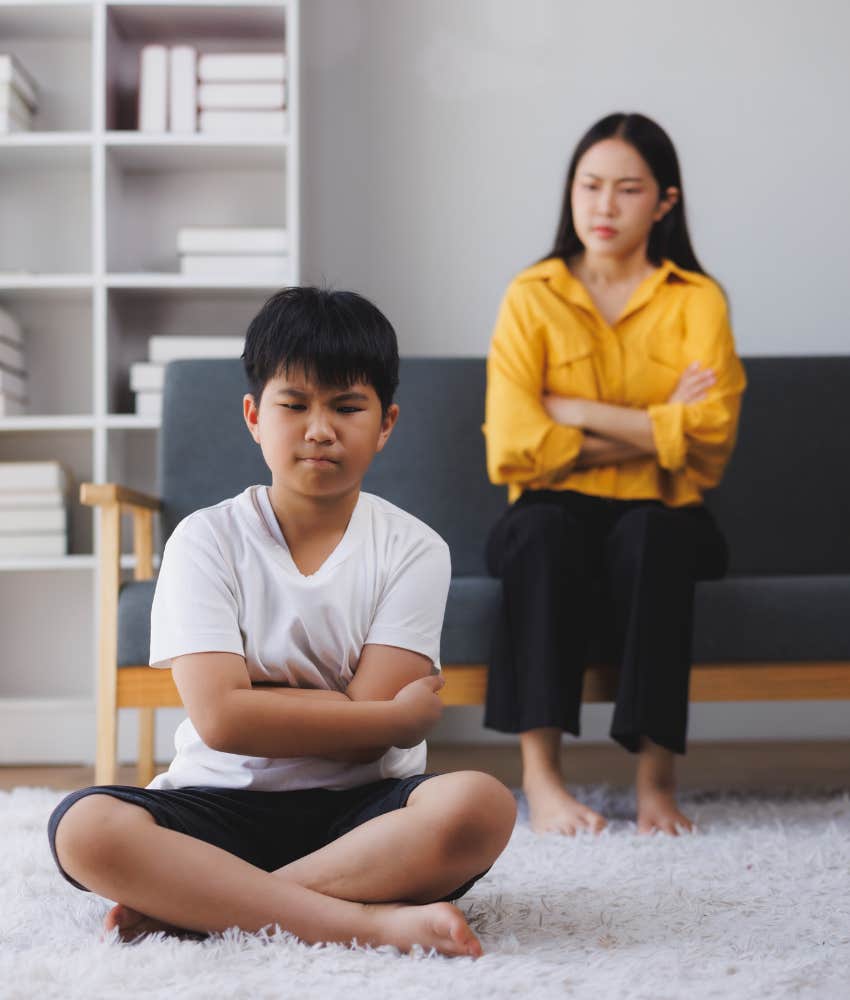
"But setting limits on children's behavior doesn't mean we need to set limits on what they feel," says Laura Markham, Ph.D., and author of Peaceful Parent, Happy Kids: How To Stop Yelling And Start Connecting, explaining why children need to experience emotions to learn how to regulate them. But I couldn't do it.
My daughter was fine after the tantrum, relieved even, but I was anything but. Her screams felt like kicks to my stomach. Sometimes, she'd actually kick me, her little fists banging on my arms, head, or back in frustration. Then, I knew what to do: I would hold her very tight and tell her, "We don't hurt people."
I was too anxious to use the same approach with her screams and tantrums. After all, I read the research, and I knew that children needed a way to freely express their confusing and overwhelming emotions. If that didn't happen, they would grow up to feel they can't really trust us as parents.
Sometimes, I would feel myself overflow with emotion, both mine and my child's, and couldn't stand it anymore.
So I began yelling at my husband. I was heartbroken by the look of pain on his face. I thought I was getting rid of these painful and uncomfortable emotions healthily (by passing them on to someone else), but instead, I was hurting him the same way my daughter hurt me.
I began telling my daughter, "When you scream at me, my belly hurts, my head pounds, and I get sick. I can't help you when I'm sick." As much as it pains me, I need to make sure that the tornado that is my daughter doesn't walk all over me. She doesn't mean to be this way, but she doesn't know when to stop. She has no idea she's hurting me; she only wants these intense emotions out of her system.
And one of the most important things I can teach her is that we don't hurt people. Just as I'm teaching her to get dressed, to cook, and be more and more independent, I need to teach her to carry and get rid of her emotions, without hurting others.
"Remember how your toddler wordlessly handed you her wrappers and empty juice boxes, and you reflexively accepted them, even when both of you stood right next to a wastebasket?" the article asks. That's not at all what I did with my toddler. When she was trying to give me her waste, I showed her how to open the wastebasket and how to throw the things away.
I'm not an emotional shock absorber for my children.
I'm a human being with feelings and emotions. Just because I'm a mother doesn't (or shouldn't) mean that I can handle whatever my children throw at me. It's OK to feel certain feelings, but it's definitely not okay to act on all of them.
I'm not allowed to take out my emotions on my husband or my children. They, in turn, are not allowed to take them out on me. Parents shouldn't have to act as wastebaskets. Instead, they should teach their children how to get rid of their own trash — both physical and emotional.
Olga Mecking is a blogger, writer, and translator who writes about everything she is passionate about: Beauty, wellness, sports, cooking, fashion, travel, health, and more.
