
I Bit Into A Piece Of Chicken And Realized Just How Bad America's Fast Food Problem Has Become
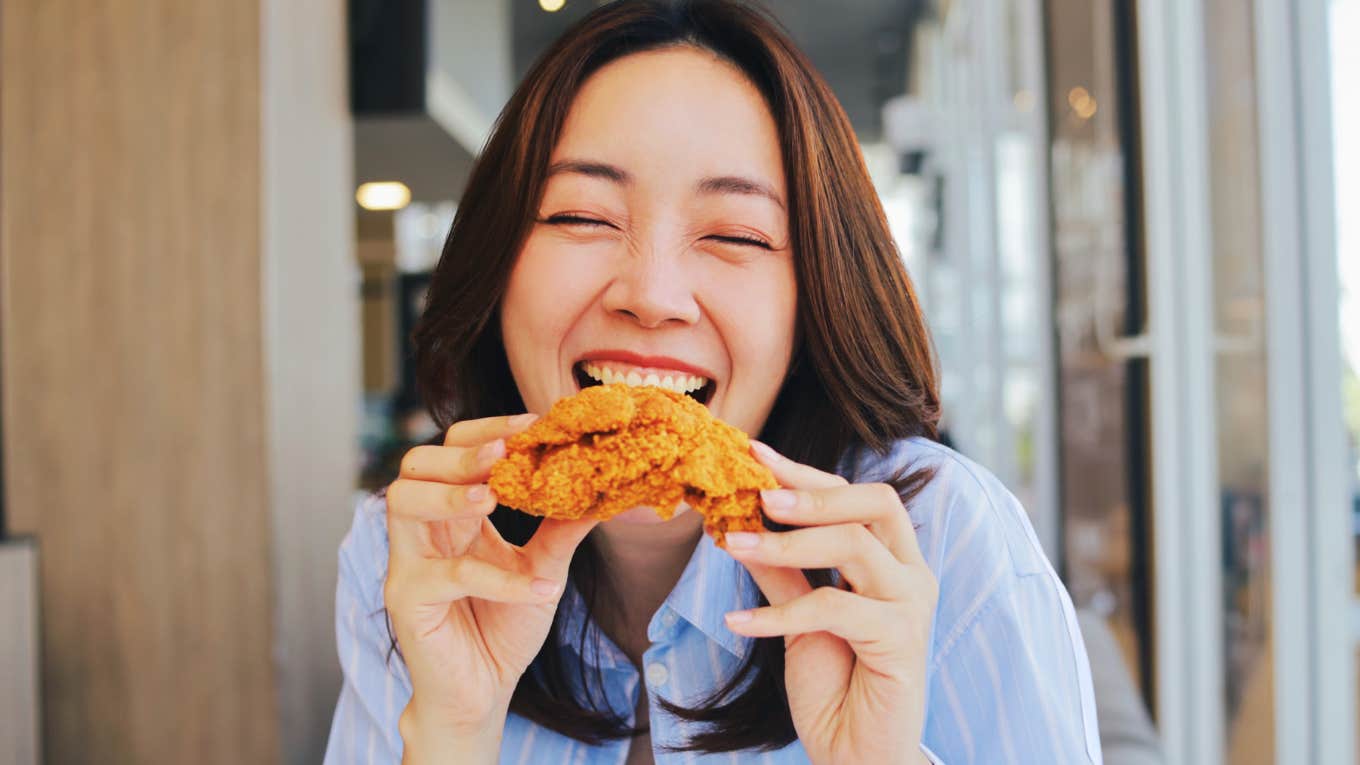 Mallika Home Studio | Shutterstock
 A bad chicken meal made me realize America's fast food problem has spread way past the drive-thru.
A few weeks ago, we made the mistake of going to a fast-casual restaurant known for its "wild wings" and sports bar vibe. Now, I'll be the first to say that I was a massive, massive fan of Buffalo Wild Wings back in the day. I was stoked. I was ready to buy my favorite sauce: Caribbean jerk. Yum.
We sat down, ordered our food, and then it arrived. It looked starkly different from how it had looked on my last visit. The boneless wings were small, sad little lumps with sauce poured over them. Even the sauce looked wrong. Caribbean Jerk usually had a rich, red-brown color. This sauce was abysmally orange and kinda smelled like cat food. My husband's wings were not much better.
I tried them. They tasted like cat food. Specifically, the wet cat food I tasted for the cats that I rejected. (I won't let my cats eat anything I don't approve of.) I tried to power through it. My husband ate two of his and then stopped.
We chose to pay and leave the restaurant. I felt sick the rest of the night. The wings were so tough that my mouth bled after I bit into one. My husband and I sat in the car after throwing out the wings, feeling embarrassed for the staff there and for ourselves.
Sadly, this is not the first time this has happened to us at a fast-casual restaurant in recent years. We also experienced this at Chipotle, Qdoba, and similar places. We both agreed that fast-casual was no longer on our menu. Most people know fast food places like McDonald's have started to feel overpriced and underwhelming.
What we didn't expect was for this trend to hit the fast-casual chain restaurant circuit, too. After all, the majority of the appeal of fast-casual sit-down chains like Buffalo Wild Wings and Applebee's was that they weren't McDonald's. They were supposed to be better. A little higher quality, a little more upscale, a little more capable than fast food. They were still supposed to have speedy service and a casual setting, but they weren't places to wait in line for a teen to send your food over a counter. And yet, here we are, seeing the same business mistakes of Mackey-D's hitting places like B-Dubs.
Fast-casual restaurant chains, in general, are facing an apocalypse.
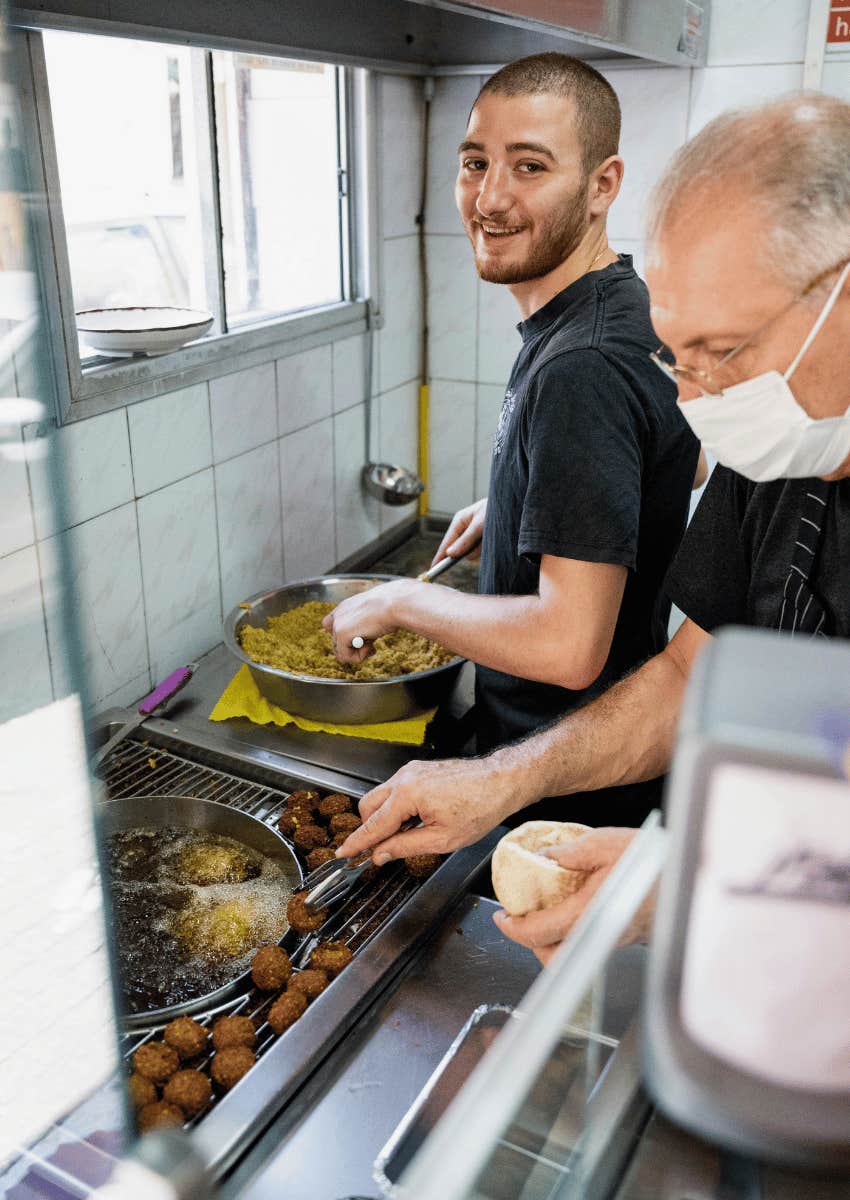 Peter Pryharski / Unsplash
It's no secret that chain restaurants are struggling these days. Think about the last time you went to an Olive Garden, a P.F. Chang's, a Ruby Tuesday's, or even Chipotle. If you're like me, it's been a hot minute. But why? There are many reasons.
Chains keep lowering quality to save money
During the 1980s and early 1990s, restaurant chains were full-fledged restaurants that did everything in their kitchens. While restaurants like Red Lobster had their own proprietary mixes, the meals were still prepped in-house with legit cookware.
That started to slow down in the mid-90s, only to go into full swing by the 2010s. Applebee's became the butt of a long-running joke about "Chef Mike," a nickname for the microwave. Others started to cut corners too.
Eventually, many menu items started to feel like frozen meals that had simply been unpacked and reheated. Why pay $50 for a meal for two when you can get the same microwaved stuff at home for $6?
Fast-casual prices are getting harder to justify
This is the same issue McDonald's has today. Fast casual was a bargain meal when it first started. It used to be that you could get a good meal for two at a typical fast-casual chain for $20 to $45.
Today, the cost of a night out at Red Lobster in my area is around $70 for two people. Our Buffalo Wild Wings bill came out to nearly $50 without alcohol. Even Chipotle leadership acknowledged portion-size concerns after customers complained that some locations were giving smaller servings.
People liked fast-casual because it was affordable yet delicious. It was not meant to be an upscale, froo-froo meal. As in, it's one step over fast food. It's a restaurant, but not a place where you get Happy Meals. Did they forget that somewhere along the way?
According to USDA data, 13.7% of U.S. households were food insecure at some point in 2024. So when millions of people are already struggling to afford groceries, a $50-$70 chain-restaurant meal stops feeling like a casual treat and starts feeling like a bad financial choice. Fast-casual chains were supposed to be the easy middle ground, but once they lost the bargain part, they lost a huge piece of what made people love them.
The food quality doesn't feel reliable anymore
This is not entirely the fault of the restaurant chain. Many franchise owners care about quality because it directly affects whether people come back. If they could, many would likely reverse some of the choices hurting quality.
So why is quality an issue? A lot of the pressure comes from the expectation that publicly traded companies must keep showing growth. As a publicly traded company, you have to maximize profits.
This is particularly true with the profits you show investors. Investors may not care whether the wings taste good if the numbers still look good. They just care that they are cheaply made and sold at a profit.
If enough people stop eating at those venues, investors will start to care. Of course, investors and companies can't always put toothpaste back in the tube. Generally speaking, once a chain loses its reputation for quality, it can be hard to win people back.
It's hard to get in the good graces of high-end distributors once you write them off. It's also hard to scale up food portions without raising prices even further, especially when commercial property rents are skyrocketing.
Chain restaurants were once popular because you could rely on them for decent food. The decent meal you'd get in California was supposed to be the same decent meal you'd get in Arkansas. Unfortunately, most became known for universally bad quality.
So, that's where most companies are right now. They dropped their quality in hopes that people wouldn't mind and hoped no one would stop going to their restaurants. People noticed, and now a lot of them are less excited about chain restaurants.
According to the National Restaurant Association, 49% of restaurant operators reported lower customer traffic in April 2026 than in April 2025. The same report found that April marked the 14th time in 15 months that operators reported a net decline in customer traffic, which makes it pretty clear that diners are pulling back.
Franchise fees make the whole business harder to run
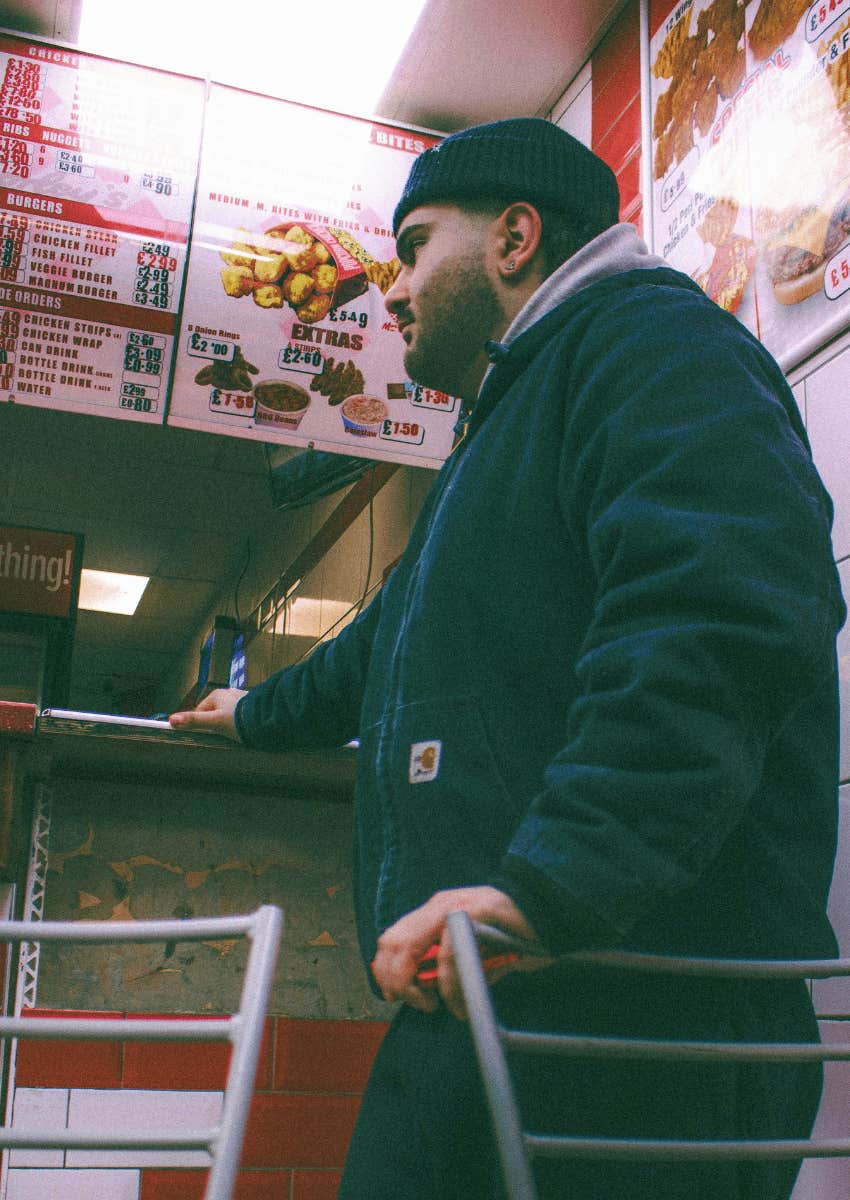 Ant / Unsplash
Did you ever look up how much it takes to open up a fast-casual restaurant? I did. Here's the scorecard for a couple of them:
- A Buffalo Wild Wings franchise will cost between $2.5 to $4.5 million to start. That's according to the BWW site.
- A TGI Friday's costs between $2.7 million and $4.5 million to open. That's per a franchising sales site.
A good rule of thumb is that most franchises will require at least $1 million in liquid cash to get started. I also noticed that more established national chains tend to require far more than up-and-coming local franchises.
You might be wondering why franchises are so incredibly expensive to open. It's simple: many of those companies make money from the licensing. The price of insurance also increases because there are more locations, and therefore more moving parts.
Moreover, doing national advertising and marketing on behalf of franchise owners is expensive. If you don't believe me, check out how much a single TV commercial costs. The bigger and more well-known the chain is, the more it costs to keep all the locations open. All those fees add up and start slicing the profit margins thinner and thinner. Eventually, the fees make it hard to run a business, especially when the quality nosedived the way it did with most chains.
Big chains seem to misunderstand why people liked them in the first place
This is a major issue for both fast-food and fast-casual restaurants. McDonald's is the poster child for this. McDonald's global comparable sales dipped slightly in 2024, which showed that even the biggest fast-food chains were feeling pressure. Why? It's because McDonald's has no clue who their real market is or who it should be.
McDonald's has consistently made moves that push their core demographic away at a time when they should be thriving, especially in America. People loved McDonald's because it was cheap, and you still had some kind of human interaction there.
Today? We have a bunch of screens to take orders; the price of a combo meal is roughly the same as at a sit-down restaurant, but the food is lacking. There used to be PlayPlaces. Those were scrapped, giving parents little incentive to bring their kids there.
The people who were wailing about McDonald's being unhealthy were never McDonald's core demographic. They were probably already eating salads somewhere else. And yet, McDonald's made menu changes to be more "healthy." Why? Because they were afraid of losing people who rarely went there in the first place.
This may be the end of the fast-casual chain restaurant era
Big businesses have made a lot of money while ignoring what customers actually want. Unfortunately for restaurant franchises, they began killing their industry through higher prices, weaker value, and a lack of common sense.
Unlike real estate and grocery stores, we don't need chain restaurants. This is doubly true when the food is categorically worse than what one could get at a local mom-and-pop shop.
I never thought I'd say this, but I'm ready to say goodbye to the era of national chain fast-casual restaurants. They managed to destroy themselves in a truly spectacular, expensive, self-inflicted way.
Ossiana Tepfenhart is a writer whose work has been featured in Yahoo, BRIDES, Your Daily Dish, Newtheory Magazine, and others.
Editor's Note: This is part of YourTango's Opinion section, where individual authors can provide diverse perspectives on a wide range of political, social, and personal issues.
