
Parents Who Raise Kids Who Think For Themselves Use These 5 Rare Phrases Most People Forget To Say
 Acton Crawford | Unsplash
 The most important thing any parent can do if they want to raise kids who think for themselves is to have conversations with them, starting the day they're born. While genetics supplies the blueprints, how much children achieve is largely determined by how and how much parents meaningfully talk and interact with them.
In homes where there is a lot of conversation between parent and child, a study found that the kids are usually more prepared for school. They perform better academically and achieve more outside of school. And this tends to be true, regardless of where the children live, how many degrees their parents have, or how much their annual income is. As parents, we want to make our words count. So why not maximize the phrases we say every day and help our kids get smarter, faster?
Every word you say builds your child's brain. It doesn't require any additional time. By talking with your child, you transform taking a bath or peeling a banana, or cleaning up the playroom into a brain-building experience that also strengthens the bond between you and your child.
Parents who raise kids who think for themselves use these 5 phrases most people forget to say:
1: 'What should we do with the toys now that we're done playing?'
Do not say: "Put the toys away now."
This first question invites a child to think through the situation, which can lead to stronger problem-solving skills down the road. It also supports their emerging autonomy. The second is more of a demand that can make you feel like you're in control.
But in reality, research has found that using directives does little to help build your child's brain. The study showed that when mothers frequently give commands (directives), it negatively impacts children's language development. Using diverse vocabulary also helps children talk more. So, ditch the directives.
2: 'You worked really hard'
 fizkes via Shutterstock
Do not say: "You're so smart!"
What we really want our children to feel is that they can overcome any challenge if they don't give up. It's called grit, and it's what distinguishes people who succeed from people who do not. Developing perseverance and staying motivated expands the brain, especially when you praise the process.
When we talk to our children about how hard they worked, we turn "smart" into an action. And we let them know it's an action we want them to repeat again and again and again.
3: 'Will you be my helper?'
Do not say: "Will you help me?"
Never underestimate the power of words to encourage a positive self-image. It turns out researchers discovered that young children, three to six years of age, were more likely to clean up a mess when they were asked to be helpers than if they were asked to simply help. Try this simple rephrase the next time your child spills his glass of milk or doesn't want to put away her toys.
However, another study cautioned that calling them "helpers" works well initially, but experiencing setbacks (like accidents) makes them feel like a "failure," reducing their desire to keep trying
4: 'That was a very bad thing to do'
Do not say: "You are so bad."
Ultimately, we want our children to know right from wrong, to grow up, and make healthy life choices. It all starts by focusing on the behavior when they're young. Criticizing a specific behavior helps children learn exactly what not to do without hurting their sense of themselves.
Learning to fix a mistake becomes doable and desired. Believing that you're bad takes a long time for a child to unlearn. Research has explored the impact negative criticism can have on children and lead to feelings of shame and guilt, which can impede social development.
5: 'Put the blanket on the bed'
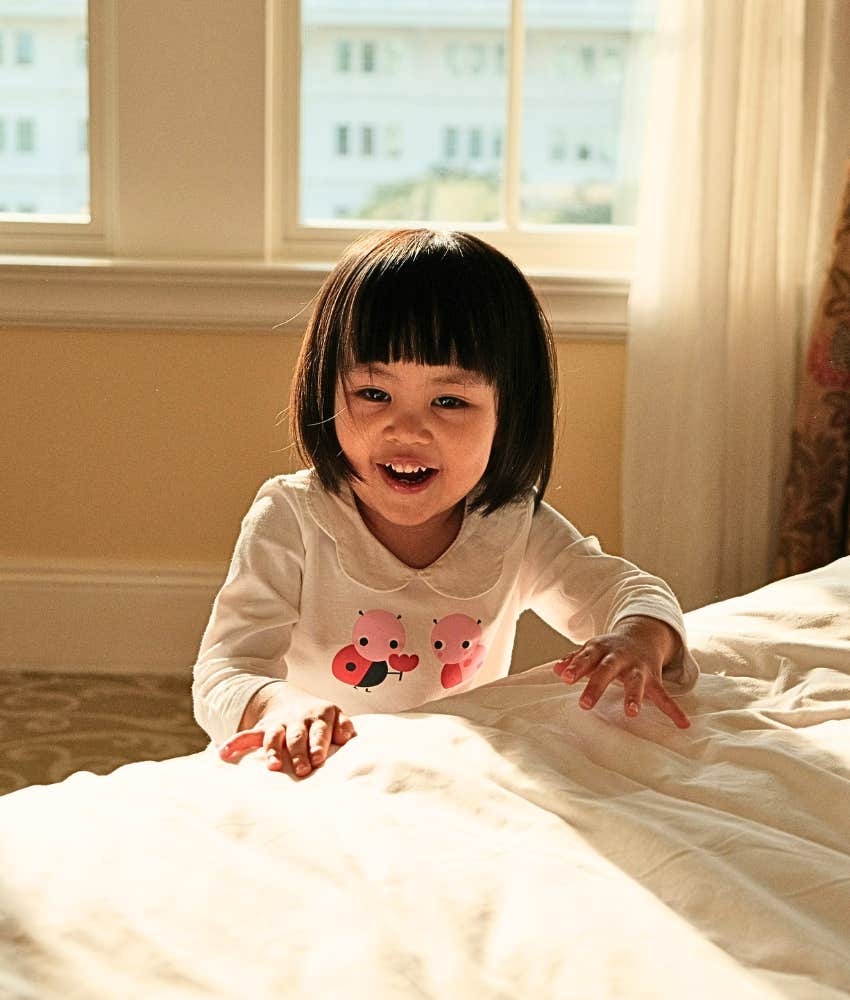 Photo by kian zhang on Unsplash
Do not say: "Put it there."
Our children need every chance to learn new words and make the connection between the words we say and the environment they live in. "It" comes naturally to us as adults. We know what we mean after all. But every word and every description helps to build your child's brain, so be as specific as possible.
The more we can use specific labels for what we're talking about — the kitchen chair, Uncle Charles, your red tricycle — the more our children will understand, and the richer vocabulary they will have.
At the end of the day, when it comes to raising kids who think for themselves, what matters most is that we say more, not less.
Dr. Dana Suskind is Professor of Surgery at the University of Chicago, Director of the Pediatric Cochlear Implant Program, and Founder and Director of Thirty Million Words.
