
My Father's Death Is Inextricably Linked To The Death Of My 6-Month Marriage
Losing love and learning to let go.
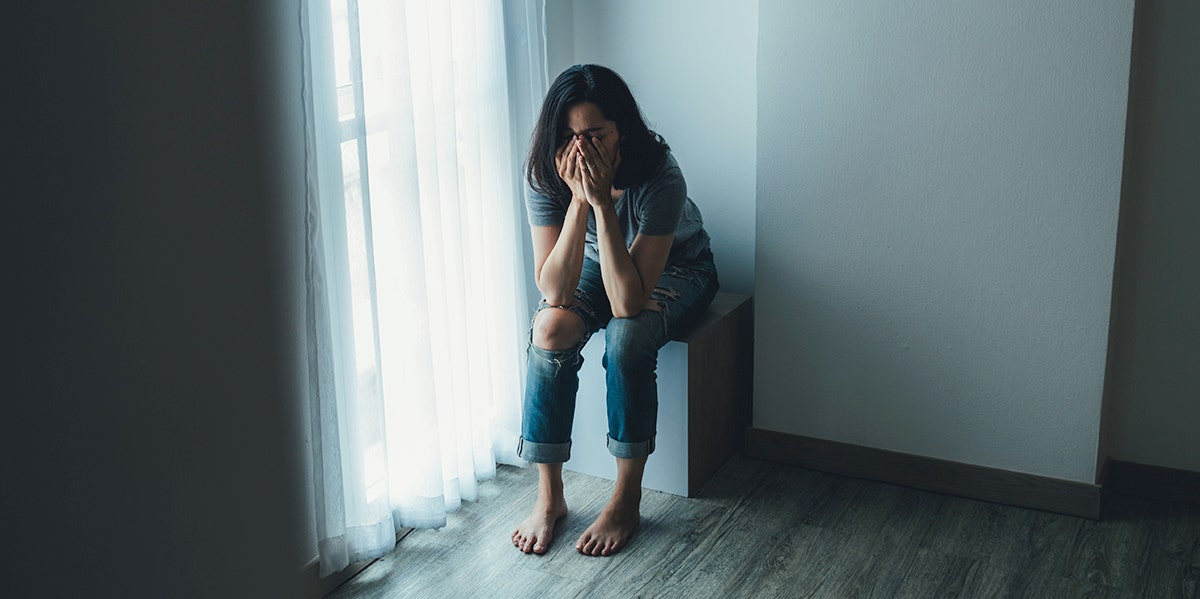 panitanphoto / Shutterstock
 The night nurse came and woke me where I slept fitfully on top of the musty Peter Max coverlet in my sister's old bedroom.
The clock glowed 4:30 a.m. "Your daddy passed just now," she said, as I stumbled up the stairs into my parents' room where my mother was standing vigil over what had been my father. I now know the meaning of deathly quiet. It filled the room like nerve gas, obliterating my mother's sobs and the birds twittering outside at the encroaching dawn.
The machine-like gurgle of the death rattle, impossible to escape in that big house for what seemed like days, had finally stopped.
I didn't touch my father, didn't kiss him goodbye. He was long gone, his body curled in on itself, desiccated and yellowed with the disease. I wandered across the hallway into my childhood bedroom and sank to my knees under a new burden of relief and rage.
By the time the funeral-home people carted my father out, zipped inside a green vinyl bag, my mother and I were huddled in our floral nighties in the living room listening to Mozart's Requiem. She averted her eyes, but I had to watch as they heaved him past his beloved wooden sculptures of Don Quixote and Sancho, down the stairs beneath the hotly colored Huichol yarn paintings bought in Mexico forty summers before.
Like some flickering newsreel, I saw him prancing around in his tennis shorts and hilarious terrycloth headband; bearing his huge Oxford English Dictionary to the dinner table to pillory some lexically challenged soul; picking up invisible lint from the rug in his impossibly fastidious way.
The thought of this house without him was truly more than I could grasp.
Besides, there was so much to do. Jews need to be buried right away; there were arrangements to be made, a million people to call. And the man I loved was arriving on a plane from New York that afternoon and would need a ride
When my father's cancer spread from his stomach to his liver, he declined further treatment and decided to die at home. Somehow, my parents had neglected to tell me this. (When I found out, years later, it reminded me of the time I came home from college and discovered the family cat missing. I
got out of the car and called to her in the garage, expecting her to come bounding out as usual. After I noticed my parents furtively whispering to each other in the doorway, they confessed that they had simply forgotten to tell me she had been put to sleep several months before.)
Flying back to Santa Cruz, I was on a mission to heal my dad. I was prepared to smooth the sheets and stroke his brow and cook the soup and make him well.
The house had been familiar, unchanged, but as I stood in the empty dining room beneath the canted ceiling, the iridescent throat of a hummingbird suspended above the bottlebrush just outside the window suddenly caught my eye, glinting in the silver sunlight, and I remembered that my father was languishing in the back bedroom.
For years, my mother had quietly battled the debilitating effects of a benign tumor on her cervical spine, and now the strength and agility of her arms and legs were rapidly deteriorating. She hadn't asked me to abandon my life, to quit my job, to leave my roommates stranded and my lover's bed empty.
But it made sense to me that I, the youngest and least encumbered, should be the one to return to our parents' home. I knew she needed me.
I don't remember who picked my boyfriend up from the airport after my father died. My sisters must have arrived from either end of the state by that point, so the house was already bustling with the kind of inevitable activity that swarms around death. It was right before Easter, conveniently coinciding with the academic spring break, and my boyfriend's trip west had been planned for some time.
My first glimpse of him was a tonic. Three months in Santa Cruz meant I'd seen more than enough surfers, hippies, and Hare Krishnas. With his black ponytail and Delancey Street motorcycle boots, he was New York incarnate, and planning to go to medical school. After nearly two years together, he felt like home, my home, the home I'd abandoned for this one that had now ceased to resemble anything I ever knew.
One minute my parents were in love, traveling, teaching, throwing parties, and the next my father was dead and my mother on a slippery slope to quadriplegia.
Although I had chosen to live thousands of miles away, they had always represented certainty and continuity. So when my boyfriend proposed to me that night as I was getting out of the shower, my answer was a foregone conclusion. Here was a chance to begin a new family, now that mine was disintegrating before my very eyes.
We had met through work. His sister was one of the designers in a fashion show I was producing, and he was managing part of her business. I noticed him because he was both shy and sexy. I flirted with him on the job, although I was living with someone at the time. One night we both attended some industry function, and the flirtation exploded.
I still remember him ripping off my vintage brown-lace dress. I moved into a new apartment shortly thereafter and we fell madly in love. He was very smart and very gentle and seemed to understand my reckless spirit. His father was a Cuban immigrant who became a successful psychiatrist and died several years before we met. We ate in little Polish restaurants in the East Village, listened to bands, entertained friends, and began to plan for the future.
My mother and sisters received the news of our engagement with pleasure but without a great deal of fanfare. There was so much else going on. At the funeral, I sat next to my middle sister as she writhed in discomfort at the initial contractions of protracted labor.
We buried my father on Easter Sunday, and my nephew was born the following afternoon. It was like inhabiting an O. Henry story.
My boyfriend bought me a little diamond at a store downtown, and a few days later I drove him to the airport in the gray Toyota that still smelled of my dad. The plan was for me to stay with my mom through August, and he would come out and live with us while taking pre-med courses at UCSC summer school.
I spent the days babying the lettuces I had planted in the back garden and moving like a bee from rosemary bush to lavender patch to fig tree.
I did newfangled aerobics at the gym and watched PBS with my mother. I talked on the phone to friends in New York and tried to remember what it was like to have a job and ride the subway and worry about money. But mostly I worked hard to ignore the raw anger that sloshed around in my gut like battery acid.
I couldn't fathom why, at the age of 64, with an adoring wife and rewarding work, my father had just given up.
During those final months, I could tell he wanted to die and to me, that meant we weren't worth living for. Once he was gone, I labored under the shame of my failure, hating myself for letting my father go. He would not witness my marriage, celebrate my successes, or hold my children. I loved him, I missed him, I blamed him.
By the time my boyfriend returned, I was cooking up a storm. Tarts of roasted tomatoes and eggplant from my garden. Fresh corn pudding. Blackberry granita with fruit I picked on hikes in the mountains. Every night I presented my mother and him with some obsessively orchestrated meal, but I was constantly cranky and moody. They bonded over how mean I was to them both.
My mother even set aside her disdain for nicknames and profanity and fell into calling me "Kitchen Nag" as he did. I felt my separateness from others very acutely, as though my skin did not so much contain me as protect me from contact. I slept in my own twin bed, and my fiancé endured this without much complaint, seeming to understand that I needed space. I wanted to be taken care of but rejected sympathy.
At the end of September, I wrenched myself away from the terrifying sight of my mother standing alone in the doorway of her empty home and went back to New York.
I moved in with my husband-to-be and began reinventing my life with a new respect for its possibilities. I was happily planning our nuptials, slated for the end of December in Santa Cruz, but I had nightmares that were black holes echoing with sneering voices, and I woke sweating and tearing at the sheets.
By day, I flew off the handle at the slightest provocation, throwing tantrums that later embarrassed me. When the cats peed all over my Tod's driving loafers, it was somehow my fiancé's fault. When he had an opinion about the wedding — the calligraphy on the invitations, cocktails versus punch — I accused him of not trusting my judgment.
I hated myself for the way I was acting, but I hated him more for not putting a stop to it. The dread of the wedding began to seep into the corners of my mind. I watched him juggling his schoolwork with a night job bussing tables and I pictured a life of deprivation. He seemed endlessly needy, emotionally and financially dependent. I felt like the success of our relationship, our social life, and the management of our household, all rested upon me.
I never shared any of this with him. I was ashamed of seeming weak or petty or overly demanding-the very things of which I accused him. Nor did I confide to friends, having decided that my fears must be a normal reaction to such a huge commitment. Then, a few weeks before the blessed event, I met a close friend of mine for drinks in Union Square.
I admitted to having blocks of ice for feet. He laughed it off, saying, "All the great divas have at least one brief, failed marriage," and advised me to forge ahead.
Lots of friends and family came to the wedding. I was only the second one in my crowd to walk down the aisle, so it was still a pretty novel affair. My mother, looking beautiful in her raspberry silk dress, was unable to stand. My boyfriend and I each lit a candle for our fathers.
We made our vows and sealed them with a kiss and it was all over in a blur of cake and flowers and wine and tears. That night we boarded a plane for Mexico on our way to the Caribbean coast. We arrived in time to celebrate the New Year, washing down a Snickers with champagne from the minibar. I remember feeling wiped out, tired to the bone, and frighteningly empty.
I sulked my way through Mayan ruins, pretended to doze on the world's most beautiful beaches, and tried to hide my revulsion when my husband made love to me beneath the thatched roof of our palapa in Tulum. In our most intimate moments, I could focus only on how incapable he had become of seeing the real me, and it made his touch unbearable.
He seemed pretty much oblivious to this, although he must have felt the distance between us. There was a lot of silence that neither of us attempted to fill. I sensed that he was afraid of me, of my irritability, my peevish nature. But he had too much pride or self-preservation to actually confront me. We were both bewildered that our honeymoon felt nothing like it should, and we tried to fake our way through it.
Our marriage lasted six months.
I was unhappy, dissatisfied, resentful, and certain that it was mostly (if not all) his fault. Leaving him promised relief from all the horrible feelings, all the fear and sadness, and anger. When I marched out of our little apartment on the fourth of July, I experienced the pure rush of freedom.
Many weeks later, I agreed to meet him in an Indian restaurant so we could talk. Over lamb curry, I could feel his eyes scouring my face for some sign of recognition or warmth.
I had none to offer. I had already found another man to love, one who much more closely resembled my father in his perverse inaccessibility, and I had no thoughts of turning back. "So," he said, "are we going to work this out or not? I need to know."
I couldn't understand what he thought we had left. He was a stranger to me, someone who belonged to a past I wished to leave behind. I gave him a sad little smile and shook my head and he let me off like a gentleman — or a coward. We left our food congealing on the plates and went our separate ways.
A lawyer acquaintance in our building arranged the world's quickest divorce. I agreed to let my husband sue me for abandonment. There was nothing to divide, just vows to nullify and possessions to reclaim, and plenty to forget. Although I never really could.
Nearly a decade passed and, poised to leave New York for a different life in Los Angeles, I felt an overwhelming urge to contact him and try to explain, to apologize. In the intervening years, friends of mine had bumped into him in a bowling alley in Brooklyn, so I knew he had remarried and become a doctor.
It wasn't that long ago, but somehow I can't quite remember how it went — did I leave him a vague voicemail? Did I follow that up with a wordy letter? I think I did both, but there was no response. I sent those men culpas out into the world and always wondered if they'd found their target.
I never thought such a modest act of contrition made me worthy of forgiveness — I still don't.
And I've since realized that only I can absolve myself. There's a particular stretch of pavement in Chinatown that brings back memories of my first husband. A song by the Cure will always make me think of him.
But the legacy of our marriage, and of my father's death has been revealed most clearly in the love I've experienced since I left that Indian restaurant: in relationships that required forgiveness on both sides, and in the knowledge that the choices we make aren't just about the people we're with.
It took me years to see that my father's decision not to fight his cancer wasn't a rejection of me. I hope it didn't take my ex-husband as long to understand the same thing about my inability to fight for our future.
Laura Chavez Silverman is a contributor to YourTango who writes on heartbreak and loss.
